
0LFKDá'ĊEHN*
Are assessment and emotions connected
with a building conditioned by its external appearance?
Attitudes towards formally differentiated architectural objects
Introduction
During the process of designing physical environ-
ments, buildings or housing estates, the specialists, who
are responsible for the shape of the surrounding space,
often try to design objects which are potentially per-
ceived in a positive way – preferred, friendly and sat-
isfying needs. Architectural or industrial design and to
some extent also spatial planning belong to particularly
GLI¿FXOW GRPDLQVEHFDXVH DPRQJ RWKHUWKLQJV DXWKRUV
should skilfully combine artistry with meeting human
needs, ideas, expectations and images.
Designing is in fact a continuous process of creation
and meeting the needs of people (investors, future users,
‘not engaged’ observers, etc.) or in brief – designing is
a process of creation for people. When creating something
we often ask ourselves questions such as ‘what emotions
will my work arouse?’; ‘what will the users think about
the environment designed by me?’; ‘how will the people
for whom I design feel in this environment?’; ‘will my
UHFLSLHQWVLQVSHFL¿F FLUFXPVWDQFHVFKRRVHOLNHSUHIHU
this object and not another one?’ We can constantly ‘keep
in touch’ with our recipients and their needs (real ones
or assumed by us) thanks to this self-control. By asking
questions of this type we are in the essence of the design-
ing process, nevertheless, we still create certain hypoth-
eses with regard to our recipients. But it is good. Such
DFWLYLWLHVRIWHQJLYHXVWLPHIRUDXWRUHÀHFWLRQWKHUHIRUH
we make things better, we correct them or even change
designs so that – as it seems to us – they could be ‘better’,
i.e. perceived in a more positive way.
However, we do not usually carry out systematic ex-
aminations or measurements which would make it pos-
sible for our work to be seen with its potential recipients’
eyes in a relatively objective way, even though it is pos-
sible and quite easy nowadays. As a rule, our intuition
PXVWEHVXI¿FLHQWDOWKRXJKZHRIWHQEDVHRXURSLQLRQV
on various types of colloquial concepts of perception
and human needs. Designers who are particularly skilful,
ones who are penetrating observers of the reality, sensi-
tive to various signals, endowed with the ability to see
matters ‘from above’ and operate on high levels of ab-
straction, frequently build objects which are quite widely
accepted and highly assessed.
As a matter of fact, if we aspire to satisfy human
expectations connected with the designing process ef-
¿FLHQWO\ZHFDQQRWH[FOXVLYHO\UHO\RQRXUSHUVRQDOLQ-
sights and intuition. It must be noticed that the process
of carrying out research, developing theories and putting
forward interesting hypotheses with regard to human ex-
periences connected with various physical environments
has been taking place for many years. Such problems are
dealt with by environmental psychology – among other
sciences – a domain of psychology which was crystal-
lised in the 1970s to tackle with complicated man’s rela-
tions with the surroundings (architectural as well). More
information about the beginnings of environmental psy-
chology can be found in works by Stokols [18], while
the present status of this domain and its contemporary
challenges are discussed in more detail by, for example,
Gifford [10], [11]. Moreover, numerous researchers in
psychology have been working on conditions of percep-
tion as well as the course of this process for many years.
5HIHUHQFHWRWKHUHVXOWVRIWKLVUHVHDUFKPD\VLJQL¿FDQWO\
facilitate and order thinking about designing as a process
of meeting the needs of recipients. These research results
shall be outlined in this article.
One of the interesting perception problems that we have to
deal with on a daily basis (thinking about human experiences
,QVWLWXWHRI3V\FKRORJ\8QLYHUVLW\RI:URFáDZ
DOI:10.5277/arc120109

84 0LFKDá'ĊEHN
ZLWKYDULRXVREMHFWVLVDUHODWLRQRIDQH[WHUQDODSSHDUDQFH
RI DQ REMHFW WR LWV DVVHVVPHQW DFFHSWDQFH DQG SUHIHUHQFH
7KHDSSHDUDQFHRIDQREMHFWLVRQHRIWKHEDVLFIHDWXUHVRI
HDFKDUFKLWHFWXUDOREMHFWDQGLWDOVRVHHPVWREHRQHRIWKH
NH\ IDFWRUV FRQGLWLRQLQJ LWV DVVHVVPHQW 7KLV UHVXOWV IURP
RXUSHUVRQDOH[SHULHQFHDQGHYHU\GD\REVHUYDWLRQRIKXPDQ
FKRLFHVDQGRSLQLRQVDVZHOODVIURPYDULRXVVFLHQWL¿FHODER-
UDWLRQV)RU LQVWDQFHDFFRUGLQJWR WKH&%26UHSRUWµ3ROHV
$ERXW$UFKLWHFWXUH¶>@RI3ROHVDJUHHZLWKWKHRSLQLRQ
WKDWµQLFHEXLOGLQJVDQGVXUURXQGLQJVPDNHSHRSOHIHHOEHW-
WHU
1
$FFRUGLQJWRWKHUHSRUWDOPRVWHYHU\RQHWKLQNV
WKDWLWLVLPSRUWDQWZKDWNLQGRIEXLOGLQJVDQGZKDWVXUURXQG-
LQJVZHOLYHLQ$GGLWLRQDOO\DOVRRI3ROHVWKLQNWKDWWKH
EXLOGLQJ¶VH[WHUQDODSSHDUDQFHLVLPSRUWDQWRUYHU\LPSRUWDQW
LQWKHVLWXDWLRQRIFKRRVLQJDSODFHRIUHVLGHQFH7KHUHIRUH
WKHDSSHDUDQFHRIDQREMHFWLVSUREDEO\DQH[WUHPHO\VLJQL¿-
FDQWIHDWXUHZKLFKFRQGLWLRQVWKHZD\LQZKLFKWKLVREMHFWLV
SHUFHLYHG$Q\ZD\WKLVLVDIUHTXHQWO\GLVFXVVHGK\SRWKHVLV
>@DSDUWLFXODUO\LQWHUHVWLQJDQGFRPSUHKHQVLYHGLVFXVVLRQ
RIWKLVSUREOHPFDQEHIRXQGLQWKHZRUNVE\&ULOO\0RXOWULH
DQG&ODUNVRQ>@
7KHEDVLFIHDWXUHVRIDSSHDUDQFHRIHYHU\REMHFWLQ-
FOXGLQJDUFKLWHFWXUDO REMHFWVDUHFRORXUVKDSHDQGWH[-
WXUH $GGLWLRQDO DQG HTXDOO\ LPSRUWDQW FKDUDFWHULVWLFV
ZKLFKGLIIHUHQWLDWHDUFKLWHFWXUDO REMHFWV FDQ EHIRUH[-
DPSOH FXEDWXUH VWUXFWXUH GLIIHUHQWLDWLRQ OHYHO RFFXU-
UHQFH RIV\PPHWU\ DQG UK\WKPV DV ZHOO DVRUQDPHQWD-
WLRQ,WLVUHODWLYHO\SRVVLEOHWRREMHFWLYHO\GHWHUPLQHDQG
FRPPXQLFDWH WKHVH IRUPDO IHDWXUHV RI DQ REMHFW 6XFK
µUDZ¶FKDUDFWHULVWLFVRIDJLYHQREMHFWWKDWFRH[LVWZLWK
RQHDQRWKHULQDSDUWLFXODUZD\PDNHWKHREMHFWUHODWLYH-
O\XQLTXHGLVWLQFWIURPRWKHUVDQGIRUPDJHQHUDOTXDOLW\
RI DKLJKHUOHYHOZKLFKH[DFWO\ FRQVWLWXWHVWKHDSSHDU-
DQFH.QRZLQJZKLFKHOHPHQWVYDULDEOHVFRQWULEXWHWR
WKLV H[WUHPHO\ LPSRUWDQW JHQHUDO SHUFHSWLYH IHDWXUH RI
DQ REMHFW¶V ZH FDQ DWWHPSW WR H[DPLQH WKH UHODWLRQ RI
DQDUFKLWHFWXUDOREMHFW¶VDSSHDUDQFHWRLWVSHUFHSWLRQLQ
DVWUXFWXUDOLVHGDQGPHWKRGLFDOZD\7KLVPHDQVWKDWZH
DUHDEOHWR¿QGRXWLQZKDWZD\WKHREMHFWVFRQVLVWLQJRI
HOHPHQWVRISDUWLFXODUIHDWXUHVRIDSSHDUDQFHHJVKDSH
FRORXUDUHRUZLOOEHSHUFHLYHGE\SDUWLFXODUSHRSOHLQ
FHUWDLQFLUFXPVWDQFHV
,QWKHSURFHVVRIPXWXDOFRPPXQLFDWLRQZHRIWHQGH-
FODUHRXU LQGLYLGXDOZD\ RI SHUFHLYLQJDQ REMHFW,Q RXU
1
7KHTXHVWLRQZDVFRQVWUXFWHGLQWKHIROORZLQJZD\µ3OHDVHVWDWH
LI\RXDJUHHRUQRWZLWKWKHIROORZLQJVWDWHPHQWVRSLQLRQV¶WKHVXE-
MHFWV HYDOXDWHG WKH SDUWLFXODU VWDWHPHQWV RQ D IRXUUDWH VFDOH IURP
µGHFLVLYHO\\HV¶WRµGHFLVLYHO\QRW¶7KHVXEMHFWVKDGHTXDORSSRUWXQL-
WLHVWRH[SUHVVWKHLURSLQLRQVRQWKHSURSRVHGVWDWHPHQWV
FRQYHUVDWLRQVZHWHQGWRVD\WKDWWKLVEXLOGLQJLVµQLFH
µXJO\¶ µXQLQWHUHVWLQJ¶ µRULJLQDO¶ HWF 6XFK H[SUHVVLRQV
FDQEHWUHDWHGDVSDUWLDODQGIUDJPHQWDU\±DOWKRXJKDWWKH
VDPH WLPH YHU\ JHQHUDO ± GHFODUDWLRQV RI WKH REVHUYHU¶V
DWWLWXGHHOHPHQWVWRZDUGVDQREMHFWLH RSLQLRQV ZHUH-
DOO\ QHHG WR WDNH LQWR FRQVLGHUDWLRQ ,I ZH ZLVK WR KDYH
D WUXH LQVLJKW LQWR PXOWLGLPHQVLRQDO UHODWLRQV RI DQ RE-
VHUYHUZLWK DQREMHFWUHODWLYHO\ SUHFLVHO\GHWHUPLQH SR-
WHQWLDO HPRWLRQV WKDW D GHVLJQHG REMHFW VKDOO DURXVH DQG
¿QGRXWZKHWKHULWZLOOEHSHUFHLYHGDVDWWUDFWLYHRULWZLOO
EHSUHIHUUHGLQSDUWLFXODUFLUFXPVWDQFHVIRUH[DPSOHDVD
SODFHRIUHVLGHQFHRUDVKRSSLQJDUFDGHLWLVQRWHQRXJK
WRWDNHLQWRDFFRXQWVXFKJHQHUDOVWDWHPHQWVDVWKHDIRUH-
PHQWLRQHGµWKHEXLOGLQJLVQLFH¶RUµ,GRQ¶WOLNHLW¶:KDW
ZHQHHGKHUHLVDGHHSHUDQDO\VLVRIDSRWHQWLDOUHFLSLHQW¶V
REVHUYHU¶VDWWLWXGHWDNLQJLQWRFRQVLGHUDWLRQHPRWLRQDO
FRJQLWLYHRUEHKDYLRXUDODVSHFWVFRQQHFWHGZLWKDSRWHQ-
WLDOEHKDYLRXUWRZDUGVDQREMHFW7KHVHSUREOHPVVKDOOEH
GLVFXVVHGLQPRUHGHWDLOODWHURQLQWKLVDUWLFOH
,ILQRXUGHVLJQLQJSUDFWLFHZHDVVXPHWKHLPSRUWDQFHRI
PHHWLQJWKHUHFLSLHQWV¶H[SHFWDWLRQV±DVZHRXWOLQHGEHIRUH
±ZHZRXOGFHUWDLQO\OLNHWRWDNHLQWRDFFRXQWUHOLDEOHLQIRU-
PDWLRQFRQFHUQLQJWKHPRVWLQWHUHVWLQJLVVXH±H[SHFWDWLRQV
DQGRSLQLRQVRIUHFLSLHQWVDVUHJDUGVWKHDSSHDUDQFHRIWKH
REMHFWWKDWZHDUHGHVLJQLQJWhat would be the reception
and assessment of this objectQDPHO\ZKDWNLQGRIDWWL-
WXGHVZRXOGREVHUYHUVKDYHWRZDUGVWKLVREMHFW"&DQVXFK
IHDWXUHV DV FRORXU VKDSH DQG REMHFW GLIIHUHQWLDWLRQ KDYH
FRQQHFWLRQVZLWKSRVLWLYHRUQHJDWLYHSHUFHSWLRQRIDQRE-
MHFW",IVRZKLFKRIWKHVHIHDWXUHVDUHWKHPRVWVLJQL¿FDQW
DQGZKDWLVWKHVWUHQJWKDQGQDWXUHRIWKHVHFRQQHFWLRQV"
,VPHUHDSSHDUDQFHRIWKHXWPRVWLPSRUWDQFHIRUWKHSHU-
FHSWLRQRIWKHEXLOGLQJ"$UHWKHUHDQ\FRQ¿JXUDWLRQVRIWKH
REMHFW¶VIRUPDOIHDWXUHVZKLFKWKHUHFLSLHQWVZRXOGDVVHVV
SRVLWLYHO\RUQHJDWLYHO\LQDVWDWLVWLFDOO\VLJQL¿FDQWZD\",V
LWSRVVLEOHWKDWDEXLOGLQJZKLFKKDVSDUWLFXODUIHDWXUHVFDQ
EHDFFHSWHGSUHIHUUHGDQGDWWKHVDPHWLPHEHXQDFFHSWDEOH
GHSHQGLQJRQDVSHFL¿FVLWXDWLRQ"
7KH DIRUHPHQWLRQHG TXHVWLRQV ZHUH SRVHG LQ WKH
RULJLQDOUHVHDUFKSURMHFWHQWLWOHGµ&RQGLWLRQVRIDWWLWXGHV
WRZDUGVDUFKLWHFWXUDOREMHFWV¶ZKLFKZDVFDUULHGRXWLQ
WKH\HDUV±,QWKLVDUWLFOHWKHIROORZLQJLVVXHV
VKDOOEHWDFNOHGDWWLWXGHVRISHUFHSWLRQWKHQRWLRQ
RIDWWLWXGHVWRZDUGVREMHFWVDQGUHVHDUFKUHVXOWVRQ
DWWLWXGHVWRZDUGVVRPHSDUWLFXODUDUFKLWHFWXUDOREMHFWV
$VDFRQFOXVLRQRIWKLVDUWLFOHZHVKDOOSUHVHQWDQDW-
WHPSWDWDQVZHULQJWKHIROORZLQJTXHVWLRQdo features
of appearance (shape, colour and structural diver-
VLW\KDYHDPDMRUVLJQL¿FDQFHLQGHWHUPLQLQJWKHDW-
titude towards a building?
How do we perceive architectural objects?
7KHUH DUH QXPHURXV IDFWRUV LQÀXHQFLQJ RXU RSLQLRQ
RQ D SDUWLFXODU REMHFW LH ZKHWKHU ZH FRQVLGHU D JLY-
HQREMHFWDVQLFHXJO\ZHSUHIHULWRUQRW7KHSURFHVV
RI SHUFHLYLQJ DOVR LQ WKH FDVH RI DUFKLWHFWXUH LV YHU\
FRPSOH[,QWKLVDUWLFOHZHDUHQRWJRLQJLQWRDGHWDLOHG
DQDO\VLVRIYDULRXVFRQFHSWVRISHUFHSWLRQIXQFWLRQLQJLQ
SV\FKRORJ\DUHDGHULQWHUHVWHGLQWKHVHDVSHFWVFDQUHIHU
WRIRUH[DPSOH0DUXV]HZVNL>@+RZHYHUZHRXJKW
WRPHQWLRQWKHPRVWVLJQL¿FDQWFRQGLWLRQVRISHUFHSWLRQ
DQGH[SODLQWKHQDWXUHRIWKLVSURFHVVLQDQXWVKHOO

$UHDVVHVVPHQWDQGHPRWLRQVFRQQHFWHGZLWKDEXLOGLQJFRQGLWLRQHGE\LWVH[WHUQDODSSHDUDQFH" 85
Contemporary cognitive psychologists tend to agree
that perception is not merely a sum (or a simple com-
bination) of sensory impressions. Human observations
do not exclusively result from physical external stimu-
lation, i.e. observations such as Dom Handlowy ‘Sol-
SRO¶LQ:URFáDZµ*DOHULD&HQWUXP¶VKRSSLQJDUFDGHV
%DVLOLFD µ/LFKHĔ¶ DUH QRW RQO\ OLWHUDO WHFKQLFDO UHÀHF-
tions of physical properties of these objects. Perception
involves individually built cognitive representations –
mental equivalents of real objects. It is full of additional
information which is not directly observed in the stimuli,
IRUH[DPSOHLQDEXLOGLQJ:KDWVRUWRILQIRUPDWLRQH[-
DFWO\":HGRQ¶WNQRZWKLVLVZKDWZHDUHWU\LQJWRJHW
to know from people and it is one of the most important
FKDOOHQJHV IRU SV\FKRORJ\ WRGD\ :KDW ZH GR NQRZ LV
that each object in each of our minds is something more
than an image produced by our brain through light waves
comparable, for instance, with a photograph.
Certainly, the perceived reality has relatively objective
properties but from the viewpoint of a psychologist, ZKDW
a particular man perceives LV PRUH VLJQL¿FDQW WKDQ DQ\-
thing else. The mental representation, i.e. an individually
FRQVWUXFWHG DQG UHÀHFWHG IUDJPHQW RI WKH REMHFWLYH UHDO-
ity, is one of the key notions in cognitive psychology [16,
p. 27]. Everybody ‘carries’ in their minds their own and
unique representation of the world but every man still cre-
ates new representations of various situations in which he
LVDQGREMHFWVWKDWKHREVHUYHV:HFDQVHHWKDWWKHPLQG
consists of ‘numerous and mutually connected cognitive
UHSUHVHQWDWLRQV¶>S@:HPDQLSXODWHWKHVHUHSUHVHQ-
tations so that the perceived world makes sense and it can
effectively function. The surrounding objects – sources of
stimuli, for example architectural ones, emanate the energy
of optical waves. Each man transforms this energy in an
LQGLYLGXDOZD\, the energy that carries some objective in-
formation for sensory receptors (wavelength, etc.). In this
way, perception is created, namely: an individual, unique
representation of reality, for example, architectural one.
This is a relatively well documented hypothesis in psychol-
ogy concerning the cognitive functioning of man [16].
Thus, perception is most probably a creative process
which requires a certain kind of activity from man. It is
conditioned by a kind of a stimuli and its objective prop-
erties, physical context in which the observer found the
stimuli, subjective properties of the observer, culture and
many other factors which shall be discussed later along
ZLWK WKH GLVFXVVLRQ RI DWWLWXGHV ,W LV UHDOO\ GLI¿FXOW WR
describe this process itself – what it looks like and what
its physical course is – it takes place in the mind though.
However, we can observe the effects of the perception
process, which can be the observer’s declarations con-
cerning an object, the observer’s attitude to an object or
actually observed behaviours connected with an object
HJDSSURDFKLQJZDONLQJDZD\SXUFKDVHRIDÀDWDU-
chitectural design acceptance, etc.).
Measurement of attitudes which are observable and
enable us to make a direct comparison of perception
effects is often used in such diagnoses which examine
man’s relations with the environment. In environmental
psychology, research on attitudes, for instance, towards
various sceneries or objects is often aimed at examining
‘satisfaction with a particular place’ which is always dif-
ferent or simply: evaluation of a particular environment
[3], [4], [21].
:KDWLVWKHHVVHQFHRIDWWLWXGHVWRZDUGVDUFKLWHFWXUDOREMHFWV"
An attitude, i.e. the information we try to get from the
subjects is always ‘somebody’s’ [20, pp. 180–181] and
FDQEHGH¿QHGDVDSHUPDQHQWDVVHVVPHQW±SRVLWLYHRU
QHJDWLYH ± RI SHRSOH REMHFWV DQG LGHDV […] $WWLWXGHV
FRQVWLWXWHDQDVVHVVPHQWZKLFKPHDQVWKDWWKH\DUHSRVL-
tive or negative reactions to something [...] [1, p. 313].
A certain kind of emanation of individual (differenti-
ated) attitudes towards objects can be, for example, vari-
ous persons’ comments on a certain building. Krystian
%LHVLHNLHUVNL DQ DUFKLWHFW ZKR LV FULWLFDO RI :URFáDZ
Dom Handlowy ‘Solpol’ (shopping mall) and actively
opts for its demolition, says: [Solpol] 7KLV LV D JOLWWHU
7KH GHVLJQHU ZDV FHUWDLQO\ IDVFLQDWHG E\ WKH VSLULW RI
the époque but he forgot that architecture is supposed to
serve generations for centuries>@ZKHUHDV.DWDU]\QD
+DZU\ODN%HUH]RZVNDDFLW\UHVWRUHUVD\V,DGPLWWKDW
,DPQRWSOHDVHGZLWKWKHLGHDRIGHPROLVKLQJµ6ROSRO
, WKLQN WKDW WKH EXLOGLQJ LV D V\PERO RI LWV pSRTXH [6].
3LRWU)RNF]\ĔVNL:URFáDZFLW\DUFKLWHFWDQGDµ6ROSRO
defender refers to the building as follows: 7KLVLVWKH¿UVW
WLPHWKDWLQ:URFáDZLQWKHFKXUFKQHLJKERXUKRRGDQGLQ
the strong historical context a building has been erected
ZKLFKJHWVRXWRIOLQH [12] and This is one of the brav-
HVW DQG PRVW LQWHUHVWLQJ GHVLJQV LQ DIWHUZDU :URFáDZ
,W VKRZV WKDW ZH DUH QRW DIUDLG RI QHZ VROXWLRQV [19].
=ELJQLHZ 0DüNyZ DQ DUFKLWHFW IURP :URFáDZ ZKR
DOVRRSSRVHVWKHGHPROLWLRQRI6ROSROVDLGIRU³*D]HWD
:URFáDZVND´,ILWGHSHQGHGRQPH,ZRXOGUDWKHUWU\WR
UHQRYDWHWKHEXLOGLQJ6ROSROLVDQLQWHUHVWLQJH[DPSOHRI
post-modernism [19].
0DáJRU]DWD 2PLODQRZVND DQ DUW KLVWRULDQ ZKLOH
GLVFXVVLQJ DQRWKHU REMHFW ± %DVLOLFD LQ /LFKHĔ ± VD\V
+RWHOVDQGH[FOXVLYHUHVLGHQFHVOLQHGZLWKPDUEOHJOLW-
WHULQJZLWKJROGDQGFU\VWDOFKDQGHOLHUVOLNHIURPµ'DO-
ODV¶RUµ'HQYHU¶¿OPVHULHVPDNH/LFKHĔD&DWKROLF/DV
9HJDV DOWKRXJKLW FDQ DOVREH DVVRFLDWHG ZLWKWKH 5R-
PDQLDQVRFLDOLVWUHDOLVPDUFKLWHFWXUHRIODWH&HDXúHVFX
>S@DQGVKHGH¿QHVWKHZKROHWKLQJDVRQHRI>@
WKHPRVWLQFUHGLEOHZRUNVRIPHJDNLWVFKLQ(XURSH [13,
p. 39].
Attitudes may refer not only to buildings, but also to
objects of street furniture or widely understood organi-
sation of space (e.g. public space). For instance, a dis-
cussion about the city dwarfs which in fact are already
DWRXULVWODQGPDUNRI:URFáDZKDVEHHQUHFHQWO\LQLWLDWHG
,Q³*D]HWD:\ERUF]D´SURIHVVRU.ODXV%DFKPDQQZURWH

86 0LFKDá'ĊEHN
DERXWWKH GZDUIVAn average dwarf is good, kitsch and
¿QDQFHGE\DELJEDQN>@>@
7KH DIRUHPHQWLRQHG SHUVRQV LQ WKHLU VWDWHPHQWV UH-
YHDOLQGLYLGXDODWWLWXGHVWRZDUGVSDUWLFXODUREMHFWVWKXV
LQDQLQGLUHFWZD\WKH\WU\WRFRPPXQLFDWHWRWKHUHDGHUV
WKHLUFRJQLWLYHUHSUHVHQWDWLRQVRIWKHVXUURXQGLQJUHDOLW\
7KHDWWLWXGHWRZDUGVDVWLPXOXVLVDVSHFL¿FPHDVXUDEOH
UHVXOW RI SHUFHSWLRQ DQG DQ REVHUYDEOH RSLQLRQ RQ WKLV
VWLPXOXV:H DUH QRW DEOH WR SK\VLFDOO\ µVHH¶ SDUWLFXODU
PHQWDOUHSUHVHQWDWLRQVRI6ROSRO/LFKHĔRUGZDUIRUWKH
SURFHVV WKDW OHDG WR WKHLU IRUPDWLRQ ZH FDQQRW µPDNH
D ¿OP¶ ZLWK D QDUUDWLRQ WKDW FRPHV GLUHFWO\ IURP HDFK
REVHUYHU¶VPLQG:H RQO\ NQRZZKDWHDFKSHUVRQWHOOV
XV DERXW KLVKHU RSLQLRQV RQ SDUWLFXODU REMHFWV KLVKHU
HPRWLRQVWRZDUGVWKHP DQG ¿QDOO\ZKDW DFWLRQV KHVKH
ZRXOGFRQVHTXHQWO\WDNH
7KLVWKUHHFRPSRQHQWWKUHHIDFWRUGHVFULSWLRQRIDQ
DWWLWXGHFRQVLVWLQJK\SRWKHWLFDOO\RIWKHIROORZLQJWKUHH
DVSHFWVFRJQLWLYHHPRWLRQDODQGEHKDYLRXUDOLVDFRQ-
FHSWLQSV\FKRORJ\WKDWLVSRSXODUDQGPDGHEHOLHYDEOH
LQQXPHURXVUHVHDUFKZRUNV>S@>S@,Q
VSLWH RI VRPH FRQWURYHUVLHV FRQFHUQLQJ WKLV PRGHO DV
ZHOODVDFRQFHSWRISUHGLFWLQJKXPDQEHKDYLRXUVRQWKH
EDVLV RI GHFODUDWLRQ RI DWWLWXGHV HYHQ QRZDGD\V WRROV
ZKLFK H[DPLQH RSLQLRQV SUHIHUHQFHV DQG SRWHQWLDO EH-
KDYLRXUVEDVHGRQWKLVWKUHHIDFWRUPRGHORIDWWLWXGHVDUH
IUHTXHQWO\FUHDWHGDQGPHWKRGRORJLFDOO\DFFHSWHG
1HYHUWKHOHVV LW LV ZRUWK PHQWLRQLQJ VRPH IDFWRUV
ZKLFKPD\LQÀXHQFHWKHSURFHVVRIEXLOGLQJPHQWDOUHSUH-
VHQWDWLRQVDQGDWWLWXGHVWRZDUGVREMHFWVLHDOOWKHWKLQJV
WKDWPD\FDXVHD SDUWLFXODU SHUVRQWRSHUFHLYHDQREMHFW
LQ D JLYHQ ZD\ DQG IRUP RSLQLRQV DERXW WKLV REMHFW LQ
D VSHFL¿F ZD\ 0RGHUQ SV\FKRORJ\ KDV DW LWV GLVSRVDO
VRPHYHUL¿HGK\SRWKHVHVLQWKLVUHJDUG
6LPSOLI\LQJWKLVEURDGLVVXHWRDQDEVROXWHPLQLPXP
WKHIRUPDWLRQRIPHQWDOUHSUHVHQWDWLRQVDQGDWWLWXGHVFDQ
EH LQÀXHQFHG E\ WKH IROORZLQJ IDFWRUV VH[ DJH
SODFHRIUHVLGHQFHVRFLDODQGHFRQRPLFVWDWXV
EHORQJLQJWRDVSHFL¿FFXOWXUDOFLUFOHHJ(XUR$WODQWLF
$VLDQ HWF LQGLYLGXDO FRQGLWLRQV HJ SHUVRQDOLW\
NQRZOHGJHH[SHULHQFHDQGEHOLHIVFXUUHQWSV\FKR-
ORJLFDO VLWXDWLRQ FXUUHQW WDVNV DQG FRQWH[W SK\VLFDO
DQGVLWXDWLRQDOSV\FKRORJLFDOGLVWDQFHWRDQREMHFW
DQG ¿QDOO\ HYROXWLRQDU\ FRQGLWLRQV
7KLV OLVW PXVW
+RZHYHUWKHHYROXWLRQDU\K\SRWKHVLVLVVWLOOPRVWFRQWURYHUVLDO
EHFRPSOHPHQWHGE\YDULDEOHFRQFHQWUDWLRQSURFHVVHVRU
PRWLYDWLRQ,QWKHFDVHRIDSSOLHGDUWVGHVLJQRUDUFKLWHF-
WXUHDVLJQL¿FDQWIDFWRULQÀXHQFLQJWKHSURFHVVRIHYDOX-
DWLQJREMHFWVVHHPVWREHWKHLPSDFWRIDFXUUHQWIDVKLRQ
RQWKHGHFODUHGDWWLWXGHV%\WKHZD\RQHRIWKHJUHDWHVW
FRQWHPSRUDU\FKDOOHQJHVLQSV\FKRORJ\LVWKHSURFHVVRI
H[DPLQLQJWKHLQÀXHQFHRIYDULRXVNLQGVRIFRQWH[WVH[-
WHUQDO±VWLPXOLDQGLQWHUQDO±PHQWDORQHVRQFRJQLWLYH
SURFHVVLQJLQFOXGLQJEXLOGLQJSHUFHSWLRQV>S@
)RUH[DPSOHZHORRNDWDEXLOGLQJDQGZHEXLOGDQDW-
WLWXGH WRZDUGV LW IURPYDULRXV SRLQWV RI YLHZ GHSHQGLQJ
ZKRZHDUHZKHUHZHDUHIURPZKDWRXUFXUUHQWVLWXDWLRQ
DQGVXUURXQGLQJVDUHLIZHDUHVDGKDSS\LUULWDWHGZKDW
RXUNQRZOHGJHDERXWWKHZRUOGLVLIZHMXVWµZDQWWRVHH
ZKDWZHDUHVXSSRVHGWRGRRUZKDWRXUGLVWDQFHIURPWKH
REVHUYHG REMHFWLV DQGLQZKDWVLWXDWLRQ DFWXDORUK\SR-
WKHWLFDOWKHRFFXUUHQFHWDNHVSODFH6XFKDQDWWLWXGHFDQEH
FRPPXQLFDWHGWRWKHZRUOGWKURXJKLQWHUDOLDH[SUHVVLQJ
JHQHUDORSLQLRQVRQDQREMHFWRU±LQDPRUHVWUXFWXUDOL]HG
IRUP±GHFODUDWLRQVLQWKHIRUPRIDQVZHUVWRTXHVWLRQVLQ-
FOXGHGLQTXHVWLRQQDLUHVRQDWWLWXGHV
4XHVWLRQQDLUHVRQDWWLWXGHVDUHRIWHQGHVLJQHGRQWKH
EDVLVRIWKHDIRUHPHQWLRQHGWKUHHIDFWRUPRGHODQGFRQ-
WDLQ VHWV RI TXHVWLRQV FRQFHUQLQJ HPRWLRQV FRQQHFWHG
ZLWKDQREMHFWRSLQLRQVRQLWDVZHOODVGHFODUDWLRQVRI
SRWHQWLDOEHKDYLRXUVWRZDUGVDQREMHFW7KHUHDUHPDQ\
UHDG\ WRROVRIWKLV W\SH HJTXHVWLRQQDLUHVFRQFHUQLQJ
DWWLWXGHV WRZDUGV RWKHU SHRSOH RWKHU FXOWXUHV WRXFK\
VRFLDO LVVXHV RU DGYHUWLVHPHQWV $IWHU DOO FRPSOH[LW\
RI WKH ZRUOG UHVXOWV LQ WKH IDFW WKDW VWLOOQHZ TXHVWLRQ-
QDLUHVRQDWWLWXGHVPXVWEHGHVLJQHGZKLFKDUHEDVHGRQ
VLPLODUWKHRUHWLFDODVVXPSWLRQVDQGDGDSWHGHVSHFLDOO\WR
WKHVSHFL¿FLW\RIDQREMHFWRUSUREOHPFKRVHQLQDJLYHQ
SLHFHRIUHVHDUFK,WLVQRWSRVVLEOHWRXVHDTXHVWLRQQDLUH
RQDWWLWXGHVLQWKHFDVHRIEHOLHYHUVRIRWKHUUHOLJLRQVRU
DWWLWXGHVWRZDUGVDVKDPSRRRU DGULQNIRUWKHSXUSRVH
RI H[DPLQLQJ DWWLWXGHV WRZDUGV DUFKLWHFWXUDO REMHFWV
+HQFHWKHQHFHVVLW\IRUQHZWRROVDSSHDUVTXLWHRIWHQ
,IZHWDONDERXWWKHLQÀXHQFHRIDFXUUHQWIDVKLRQRQDQDWWLWXGH
ZH FDQ VD\ WKDW WKLV LV D VSHFL¿F FDVH RI D IDFWRU LQÀXHQFH LH
NQRZOHGJH H[SHULHQFHV DQG EHOLHIV 7KH SHUFHSWLRQ DQG DWWLWXGH
PRGL¿FDWLRQE\PHDQVRIIDVKLRQSURYHVWKDWWKHVXEMHFWNQRZVµZKDW
LV FXUUHQWO\ FRQVLGHUHG WR EH QLFH¶ NQRZOHGJH DQG WKDW WKH VXEMHFW
DFFHSWV RU QRW D FHUWDLQ ZD\ RI VHHLQJ DQG HYDOXDWLQJ WKH ZRUOG
EHOLHIV±UHODWLYHO\VWDEOHLQWKHGHWHUPLQHGWLPHFKDUDFWHULVWLFRIWKH
SDUWLFXODUFXOWXUDODUHDVRFLDODQGHFRQRPLFVWDWXVDQGOLIHVW\OH
Attitudes of Poles towards architecture – own research
7KH DXWKRU¶V UHVHDUFK SURMHFW ± ZKLFK ZDV
PHQWLRQHG LQ WKHLQWURGXFWLRQ RI WKLV DUWLFOH ZDV DLPHG DW
H[DPLQLQJUHODWLRQVEHWZHHQSHRSOHDQGDUFKLWHFWXUHDQGSDU-
WLFXODUO\WKHLUDWWLWXGHVWRZDUGVDUFKLWHFWXUDOREMHFWV
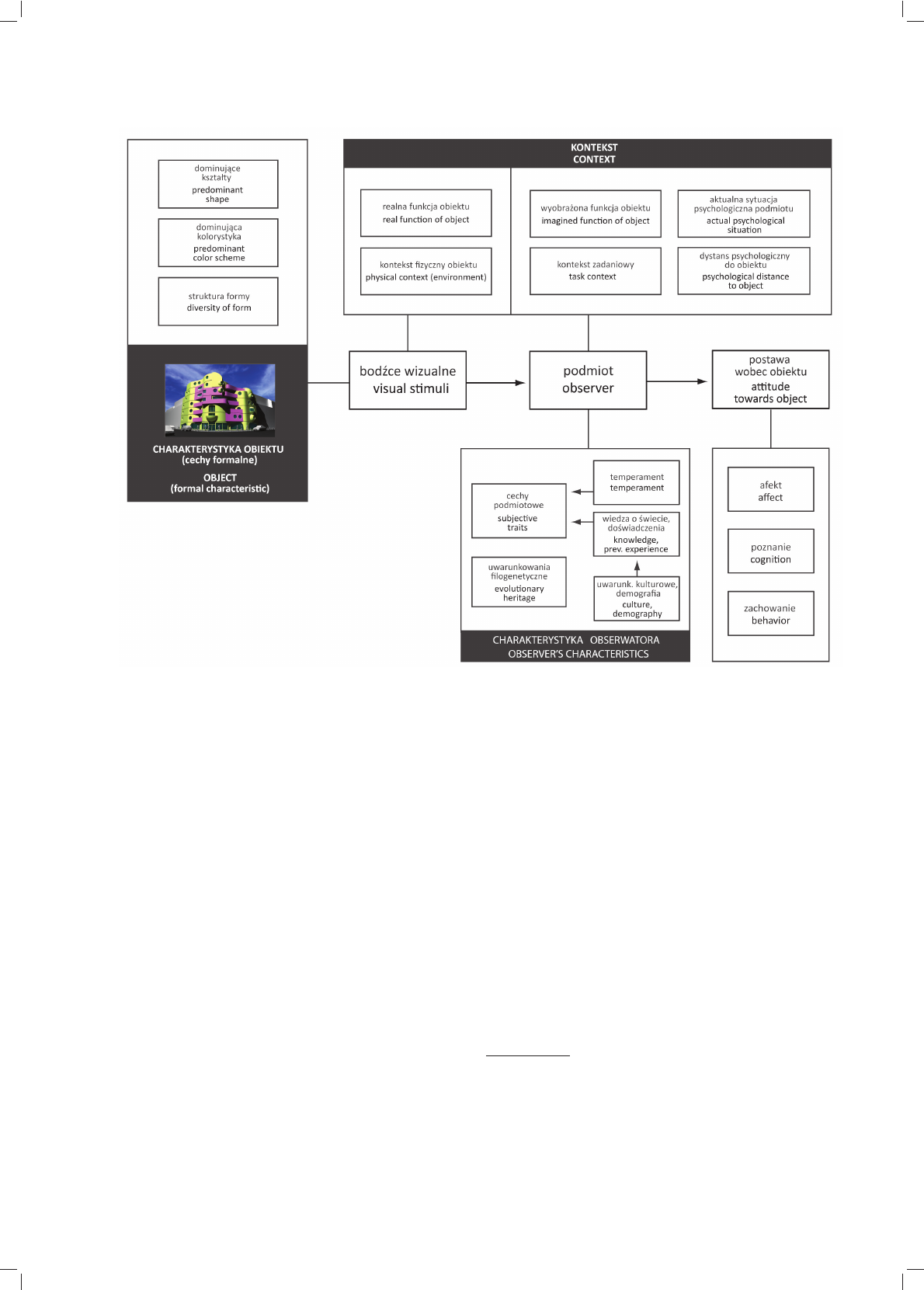
$ WKHRUHWLFDO VWDUWLQJ SRLQW ZDV WKH RULJLQDO VFKHPH
ZKLFK VWUXFWXUDOL]HG K\SRWKHWLFDO GHWHUPLQDQWV RI DWWL-
WXGHVWRZDUGVDUFKLWHFWXUDOREMHFWVDQGZKRVHVLPSOL¿HG
YHUVLRQLV SUHVHQWHG LQ )LJXUH 7KH UHVHDUFK FRQVLVWHG
LQ WHVWLQJ ZKHWKHU D SURSRVHG VFKHPH LV SUREDEOH 7KH
IROORZLQJLVVXHV LQWHUDOLD ZHUHH[DPLQHG ZKHWKHU
IRUPDOIHDWXUHV VKDSH FRORXUDQGGLYHUVLW\ OHYHORIDQ
REMHFW FDQ H[FOXVLYHO\ FRQGLWLRQ DQ DWWLWXGH WRZDUGV DQ
DUFKLWHFWXUDOREMHFWZKHWKHUDVLWXDWLRQDOFRQWH[WLQ
ZKLFKDQDUFKLWHFWXUDOREMHFWZLWKVSHFL¿FIRUPDOIHDWXUHV
$UHDVVHVVPHQWDQGHPRWLRQVFRQQHFWHGZLWKDEXLOGLQJFRQGLWLRQHGE\LWVH[WHUQDODSSHDUDQFH" 87
LVGLIIHUHQWLDWHVWKHDWWLWXGHWRZDUGVWKLVREMHFWDQG¿QDOO\
(3) whether subjective and demographic features differen-
tiate attitudes towards formally determined objects.
As it was outlined in the introduction, this article par-
WLFXODUO\ IRFXVHV RQ WKH ¿UVW DVSHFW RI WKH GLVFXVVHG UH-
search, namely trying to answer the following questions:
GRIHDWXUHVRIDSSHDUDQFHVKDSHFRORXUDQGGLYHUVLW\
RIDQREMHFWKDYHPDMRUVLJQL¿FDQFHLQGHWHUPLQLQJDQ
attitude towards a building?
7RROV
In the years 2007–2009 a reliable Questionnaire on At-
titudes Towards Architectural Objects was designed and
several models of such objects were prepared. Some pi-
lot and initial examinations were carried out (434 persons
were examined during pilot examinations).
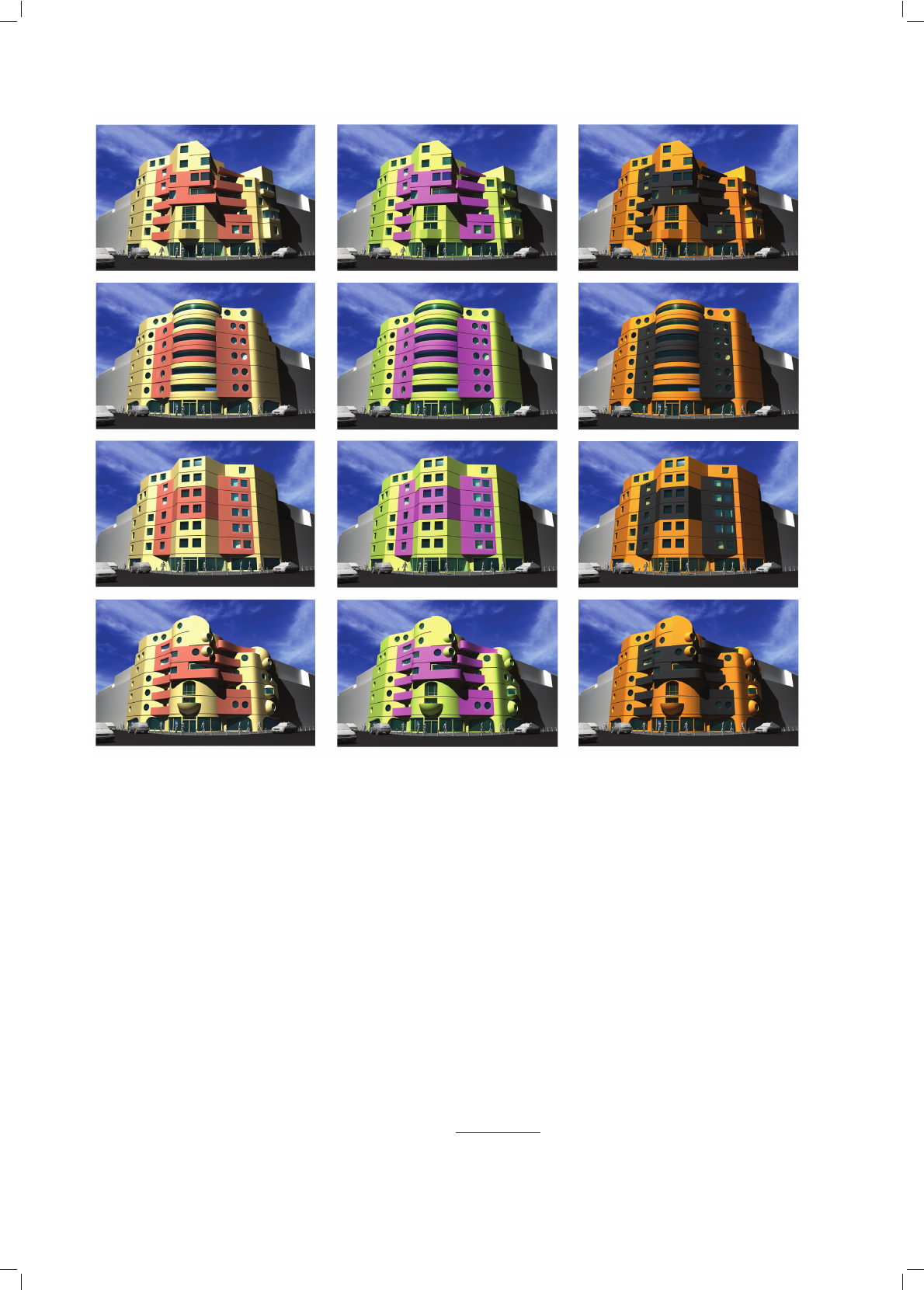
As a result of the aforementioned preparations, twelve
specially designed three-dimensional models of architec-
WXUDOREMHFWVZHUHFODVVL¿HGIRUWKHSURMHFW)LJHDFK
RIWKHPFRQVWLWXWHGDXQLTXHFRQ¿JXUDWLRQRIIRUPDOFKDU-
DFWHULVWLFV GHWHUPLQHG DV VLJQL¿FDQW RQ WKH EDVLV RI WKH
pilot research. Consequently, each object has a particular
dominant colour scheme (non-contrastive, contrastive or
aposematic
4
LV FKDUDFWHUL]HG E\ GRPLQDQFH RI FHUWDLQ
shapes (sharp or smooth) and it is diverse or non-diverse.
The subjects looked at these objects as photographs thanks
to which the same perspective was maintained (camera lo-
cation control), time of day (lighting control), the same
background, identical surroundings and, of course, the
VFDOH,WZDVUHDOO\VLJQL¿FDQW±WKDQNVWRWKLVDFWLRQLWZDV
possible to considerably reduce the impact of variables
that disturb the results (confounders). The objects differed
only as regards their colour scheme, dominant shapes and
structure diversity.
,QRUGHUWRHYDOXDWHWKHVLJQL¿FDQFHRIVKDSHFRORXUDQG
structure diversity in determining an attitude towards an ob-
ject, we cannot show the subjects a Renaissance town hall
RUD*RWKLFFKXUFKRQWKHRQHVLGHDQGDPRGHUQVKRSSLQJ
4
Aposematic colouration – in nature it mostly refers to a danger;
a type of protective colouration, bright or contrastive, which facilitates
UHFRJQLWLRQDVRSSRVHGWRFDPRXÀDJHDQGSHUIRUPVDZDUQLQJIXQFWLRQ
by limiting the frequency of accidental attacks. It is employed by organ-
LVPVWKDWKDYHHI¿FLHQWPHDQVRIGHIHQFHDJDLQVWSUHGDWRUVLQWKHFDVH
of animals) or herbivores (in plants), e.g. toxins, thorns or inedibility.
$SRVHPDWLF FRORXUDWLRQ FDQ EH H[HPSOL¿HG ZLWK \HOORZ DQG EODFN
colours of bees, wasps and hornets.
)LJ7KH$XWKRU¶V)UDPHZRUNIRU6WUXFWXUDOL]LQJ+\SRWKHWLFDO'HWHUPLQDQWVRI$WWLWXGHV7RZDUGV$UFKLWHFWXUDO2EMHFWV
,O$XWRUVNLVFKHPDWVWUXNWXUDOL]XMąF\KLSRWHW\F]QHGHWHUPLQDQW\SRVWDZZREHFRELHNWyZDUFKLWHNWRQLF]Q\FK
88 0LFKDá'ĊEHN
DUFDGHRQWKHRWKHU:HZRXOGQ¶WEHDEOHWR¿QGRXWZKHWKHU
WKHUHDOVRXUFHRIDWWLWXGHYDULDELOLW\LHLQRWKHUZRUGV
WKHEDVLVRIHYDOXDWLRQDUHFRORXUVVKDSHVDQGRWKHUIHD-
WXUHVRIDEXLOGLQJDSSHDUDQFHRUIRUH[DPSOHPHDQLQJV
VWURQJO\FRQQHFWHGZLWKWKHEXLOGLQJLWVVFDOHRUWKHH[LVW-
LQJHOHPHQWVRIVXUURXQGLQJV,IZHZLVKWR¿QGRXWKRZ
LPSRUWDQWWKHREMHFW¶VDSSHDUDQFHLVZHQHHGWRFRQWURODQG
SRVVLEO\HOLPLQDWHDOOWKHRWKHUDSDUWIURPIHDWXUHVRIDS-
SHDUDQFHSRWHQWLDOFRQIRXQGHUVDWWKHVDPHWLPHPDLQWDLQ-
LQJWKHVLWXDWLRQDOUHDOLW\FIHJ>SS±@>@
7KHUHIRUHLQWKHSKRWRJUDSKVRIWKHH[DPLQHGREMHFWVWKHUH
DUHSHRSOHDQGFDUV$QGDJDLQLQRUGHUWRUHGXFHGLVWXU-
EDQFHVWKHSHRSOHDQGWKHFDUVZHUHLGHQWLFDOLQDOORIWKH
SKRWRJUDSKVZLWKWKHVDPHSRVLWLRQVFRORXUVHWF
$VLWZDVPHQWLRQHGEHIRUHIRUWKHQHHGVRIWKHSURMHFW
D4XHVWLRQQDLUHRQ$WWLWXGHV7RZDUGV$UFKLWHFWXUDO2EMHFWV
ZDVGHVLJQHG,WFRQVLVWHGRILQVWUXFWLRQVVHYHQLWHPVFRQ-
FHUQLQJWKHEXLOGLQJ HYDOXDWLRQVHH7DEDQGDVHQG
VXUYH\7KH4XHVWLRQQDLUHDOVRLQFOXGHGIRXUDGGLWLRQDOTXHV-
WLRQVWKHDLPRIZKLFKZDVWRFKHFNZKHWKHUWKHVXEMHFWVZHUH
ZLOOLQJWRDFFHSWDSDUWLFXODUEXLOGLQJLILWKDGDVSHFL¿FIXQF-
WLRQRULILWZDVVXSSRVHGWREHVLWXDWHGLQDSDUWLFXODUSODFH
7DE7KHVHZHUHTXHVWLRQVDERXWDOWHUQDWLYHSUHIHUHQFHV
DVWRDQREMHFWSODFLQJLWLQDGHWHUPLQHGFRQWH[W
$FFRUGLQJWRWKHFRQFHSWRIIDFWRUVLQÀXHQFLQJDWWLWXGHV
RXWOLQHGEHIRUHGXULQJWKHUHVHDUFKSURSHUVRPHVXEMHFWLYH
IDFWRUVZHUHDOVRFRQWUROOHG2QHRIWKHPRVWVLJQL¿FDQWZDV
WKH VXEMHFWV¶ WHPSHUDPHQWPHDVXUHGE\ PHDQV RI)&=.7
PHWKRG7KHLQÀXHQFHRIDJLYHQWHPSHUDPHQWRQDWWLWXGHV
WRZDUGVREMHFWVZDVH[DPLQHGKRZHYHUWKHUHVXOWVRIWKHVH
WULDOVJREH\RQGWKHIUDPHZRUNRIWKLVDUWLFOH
2XWRIVHYHQTXHVWLRQVFRQFHUQLQJWKHEXLOGLQJHYDOX-
DWLRQZHVHOHFWHGWZRUHOLDEOHVXEVFDOHV)±HPRWLRQDO
DWWLWXGH
WRZDUGVDQREMHFW7DEDQG)±FRJQLWLYH
EHKDYLRXUDODVVHVVPHQW
RIDQREMHFW7DE,QOLQHZLWK
WKH WKUHHIDFWRU FRQFHSW RI DWWLWXGHV GLVFXVVHG EHIRUH
6FDOHUHOLDELOLW\LVPHDVXUHGE\PHDQVRI&URQEDFK¶VDOSKDFRHI-
¿FLHQW
6FDOHUHOLDELOLW\LVPHDVXUHGE\PHDQVRI&URQEDFK¶VDOSKDFRHI-
¿FLHQW
)LJ7ZHOYHHYDOXDWHG'PRGHOVRIDUFKLWHFWXUDOREMHFWVFRQWUROOHGIRUPDOFKDUDFWHULVWLFV
,O'ZDQDĞFLHEDGDQ\FKPRGHOLRELHNWyZDUFKLWHNWRQLF]Q\FKNRQWURORZDQHFHFK\IRUPDOQH

Are assessment and emotions connected with a building conditioned by its external appearance?
7DE,WHPVLQHPRWLRQDOGLPHQVLRQVFDOH)±HPRWLRQDODWWLWXGHWRREMHFW
7DE3R]\FMHZFKRG]ąFHZVNáDGVNDOL)±XVWRVXQNRZDQLDHPRFMRQDOQHJRGRRELHNWX
F1
How would you describe your feelings when looking at the presented object?
Looking at the presented object I feel…:
1 Depressed
2 Sad
ĞĮŶŝƚĞůLJŶŽƚ
ZĂƚŚĞƌŶŽƚ
/ĚŽŶ¶ƚŬŶŽǁ
ZĂƚŚĞƌLJĞƐ
ĞĮŶŝƚĞůLJLJĞƐ
3 ŶŐƌLJ
7DE,WHPVLQFRJQLWLYHEHKDYLRXUDOGLPHQVLRQVFDOH)
7DE3R]\FMHZFKRG]ąFHZVNáDGVNDOL)±RFHQ\SR]QDZF]HMRELHNWX
F2
How do you evaluate the presented object?
I think the presented object is…:
1 ŝŶƚĞƌĞƐƟŶŐ
2 ŶŝĐĞ
3 ĂƩƌĂĐƟǀĞ
ĞĮŶŝƚĞůLJŶŽƚ
ZĂƚŚĞƌŶŽƚ
/ĚŽŶ¶ƚŬŶŽǁ
ZĂƚŚĞƌLJĞƐ
ĞĮŶŝƚĞůLJLJĞƐ
Do you agree with the
statement below?
4
/ǁŽƵůĚŽŌĞŶĐŽŵĞďĂĐŬƚŽ
ƐƵĐŚĂŶŽďũĞĐƚ
WKHUHVKRXOGEHWKUHHIDFWRUVVFDOHVVHSDUDWHGKHUH+RZ-
HYHUIRUWKHSXUSRVHRIPDLQWDLQLQJWKHVFDOHUHOLDELOLW\
ZHGHFLGHGWRFRPELQHFRJQLWLYHDQGEHKDYLRXUDOIDFWRUV
LQWRRQHVFDOH)
7DE$OWHUQDWLYHSUHIHUHQFHV
7DE$OWHUQDW\ZQHSUHIHUHQFMH
Do you agree with the statements below?
1
dŚŝƐďƵŝůĚŝŶŐǁŽƵůĚĂƉƉĞĂůƚŽŵĞĂƐŵLJ
ƉůĂĐĞŽĨƌĞƐŝĚĞŶĐĞ
2
dŚŝƐďƵŝůĚŝŶŐǁŽƵůĚĂƉƉĞĂůƚŽŵĞĂƐƚŚĞ
ƉůĂĐĞǁŚĞƌĞ/ŐŽƐŚŽƉƉŝŶŐʹƐŚŽƉƉŝŶŐ
ŵĂůů
3
dŚŝƐďƵŝůĚŝŶŐǁŽƵůĚĂƉƉĞĂůƚŽŵĞĂƐŵLJ
ǁŽƌŬƉůĂĐĞ
ĞĮŶŝƚĞůLJŶŽƚ
ZĂƚŚĞƌŶŽƚ
/ĚŽŶ¶ƚŬŶŽǁ
ZĂƚŚĞƌLJĞƐ
ĞĮŶŝƚĞůLJLJĞƐ
4
/ǁŽƵůĚůŝŬĞƚŽŚĂǀĞƐŝŵŝůĂƌďƵŝůĚŝŶŐƐŝŶ
ŵLJƚŽǁŶ
7KHWRWDOVFRUHRI)VFDOHFRXOGRVFLOODWHEHWZHHQWKH
YDOXHV RI WR ZKHUH UHIHUUHG WR VWURQJO\ QHJDWLYH
HPRWLRQVZKHUHDVPHDQWODFNRIQHJDWLYHHPRWLRQV2Q
)VFDOHZKHUHWKHVXEMHFWVH[SUHVVHGWKHLURSLQLRQVDQG
SRVVLEOHLQWHQWLRQVWRZDUGVDQREMHFWWKHWRWDOVFRUHZDV
EHWZHHQWKHYDOXHRIODFNRISRVLWLYHRSLQLRQVDQG
SRVLWLYHRSLQLRQV
Participants
,QWKHUHVHDUFKSURSHUGLVFXVVHGKHUHWKHUHZHUHVXE-
MHFWVLQYROYHGPHQDQGZRPHQDJHGIURPWR
Me 7KH\ZHUHVWXGHQWVRIWKH8QLYHUVLW\RI:URFáDZ
:URFáDZ 8QLYHUVLW\ RI 7HFKQRORJ\ DQG +LJKHU 6FKRRO RI
(GXFDWLRQ7:3'HSDUWPHQWLQ:DáEU]\FKDVZHOODVHPSOR\-
HHVRID:URFáDZFRPSDQ\QRQUHSUHVHQWDWLYHFRQYHQLHQFH
VDPSOLQJ1HYHUWKHOHVVZKLOHSUHSDULQJWKHUHVHDUFKDQHI-
IRUWZDVPDGHWREDODQFHWKHJURXSVDVUHJDUGVWKHLUVH[RUL-
JLQJHRJUDSKLF
DQGPDMRURIVWXGLHV
7KHVXEMHFWVZHUHGLYLGHGLQWRJURXSVZLWK±SHU-
VRQVLQHDFKJURXS$SROOVWHUFRQWDFWHGHDFKJURXSVHSDUDWHO\
(DFKPHPEHURIDJURXSHYDOXDWHGRQHREMHFWSKRWRJUDSK
E\PHDQVRIWKH4XHVWLRQQDLUH1H[WWKHVXEMHFWV¿OOHGLQWKH
7HPSHUDPHQW4XHVWLRQQDLUH)&=.77KHZKROHH[DPLQD-
WLRQWRRNDERXWPLQXWHVLQHDFKRIWKHJURXSV
$WWKHWLPHRIFDUU\LQJRXWWKHUHVHDUFKWKHVXEMHFWVOLYHGLQWKHIROORZ-
LQJSODFHVWRZQVZLWKWKHSRSXODWLRQH[FHHGLQJ
UHVLGHQWVRI
WKHVXEMHFWVWRZQVZLWKWKHSRSXODWLRQXSWR
UHVLGHQWVWRZQV
ZLWKWKHSRSXODWLRQXSWR
UHVLGHQWVDQGYLOODJHVRI
WKHVXEMHFWVOLYHGLQWRZQVZLWKWKHSRSXODWLRQXSWR
UHVLGHQWV$WWKH
VDPHWLPHDPDMRULW\RIWKHVXEMHFWVFDPHIURPVPDOOWRZQVZLWKWKH
SRSXODWLRQXSWRUHVLGHQWVDQGYLOODJHV

90 0LFKDá'ĊEHN
Results
Appearance of an object and its evaluation
)RU WKH SXUSRVH RI GHWHUPLQLQJ WKH PHDQLQJ RI IRU-
PDO FKDUDFWHULVWLFV LQ DQ DWWLWXGH WRZDUGV REMHFWV DQ 6366
VWDWLVWLFDO SDFNDJH ZDV HPSOR\HG :H VWDUWHG IURP
D WKUHHIDFWRU YDULDQFH DQDO\VLV */0 ZLWK WKH IROORZLQJ
IDFWRUVFRORXUVFKHPHWKUHHOHYHOVQRQFRQWUDVWLYHDSRVH-
PDWLFDQGFRQWUDVWLYHVKDSHWZROHYHOVVKDUSDQGVPRRWK
DQG IRUPDOGLYHUVLW\ WZR OHYHOVGLYHUVH DQGQRQGLYHUVH
'HSHQGHQWYDULDEOHVZHUHHPRWLRQDODWWLWXGH)DQGFRJ-
QLWLYHHYDOXDWLRQ)UHVSHFWLYHO\7KLVDQDO\VLVZDVDLPHG
DW¿QGLQJRXWWKHDQVZHUWRWKHIROORZLQJTXHVWLRQdoes the
DSSHDUDQFHRIDQREMHFWLWVHOIFDQKDYHPDMRUVLJQL¿FDQFH
in its evaluation?
$VLWWXUQHGRXWthe colour scheme of an object does
QRWGLIIHUHQWLDWHVLJQL¿FDQWO\DQDWWLWXGHWRZDUGVDQ
object ± YDULRXV FRORXU VFKHPHV GR QRW OHDG WR VWDWLV-
WLFDOO\ GLIIHUHQW FRJQLWLYH HYDOXDWLRQV
8
RU GLYHUVH HPR-
WLRQDODWWLWXGHV
9
WRZDUGVDQREMHFW
,QVSLWHRIVWDWLVWLFDOLQVLJQL¿FDQFHWKHUHZHUHVRPH
FDVHVRILVRODWHGFRQWURYHUVLHVLQHPRWLRQDODWWLWXGHVWR-
ZDUGV DQ REMHFW 7KH\ SDUWLFXODUO\ UHIHUUHG WR FRQWUDV-
WLYHREMHFWVSLVWDFKLRYLROHWZKHUHRIWKHVXEMHFWV
HYDOXDWHG REMHFWV EHWZHHQ DQG SRLQWV QHJDWLYHO\
DQG PRGHUDWHO\ DQG EHWZHHQ DQG SRLQWV
PRGHUDWHO\ RU WRWDOO\QRQQHJDWLYHO\ ,Q WKH FDVH RI
DQ HPRWLRQDO DWWLWXGH WKHUH ZDV D QXPEHU RI VXEMHFWV
ZKRVLJQL¿FDQWO\GLIIHUHGIURPWKHRWKHUVLQWKHLUDVVHVV-
PHQWV7KHUHIRUHZHQRWLFHGWKDWevaluations of exter-
nal features of architecture tend to be differentiated
WRDODUJHH[WHQWKRZHYHULWLVQRWSRVVLEOHWRGH¿QH
DQ\VWDWLVWLFDOUHJXODULWLHVKHUH
,QWKLVUHJDUGWKHPRVWLQWHUHVWLQJLVWKHUHVXOWDFKLHYHGIRU
WKHQRQFRQWUDVWLYHFRORXUVFKHPHZKHUHZHREVHUYHGDUHOD-
WLYHO\KLJKFRQVLVWHQF\RIWKHVXEMHFWVLQWKHLUHPRWLRQDODWWL-
WXGHVWRZDUGVREMHFWV±WKHDWWLWXGHVDUHWRODUJHH[WHQWWRWDOO\
QRQQHJDWLYHZKLFKLVFOHDUO\LQGLFDWHGE\WKHLQVLJQL¿FDQW
LQWHUTXDUWLOHUDQJHQ DURXQGMe KDOIRIWKHVXE-
MHFWVLVLQWKHUDQJHRI±SRLQWVLHWRWDOO\QRQQHJDWLYH
HPRWLRQVDQGDOPRVWHYHU\ERG\DERYHSRLQWVLHLQ WKH
PLGGOHRIWKHVFDOH,WPXVWEHVWDWHGWKDWLQWKLVFDVHZHDOVR
REVHUYHGHYDOXDWLRQVZKLFKZHUHH[WUHPHO\GLVWDQWIURPWKH
PDMRULW\RIWKHVXEMHFWV±WZRSHUVRQVIURPWKHJURXSRI
SHUVRQVORRNLQJDWREMHFWVLQWKLVFRORXUVFKHPHGH¿QLWHO\H[-
SUHVVHGWKHLUQHJDWLYHHPRWLRQVWRZDUGVWKHVHREMHFWV
:H FDQ HDVLO\LPDJLQHWKDW WKHVH WZR SHUVRQVDUH RSLQ-
LRQOHDGHUV
10
±IRUH[DPSOHZRUOGIDPRXVDUFKLWHFWVZKRGR
QRWWROHUDWHWKHVWDQGDUGZLGHO\NQRZQDQG±DVSURYHGE\
WKHGLVFXVVHGUHVHDUFK±FRPPRQO\DFFHSWHGWRGD\FRORXU
VFKHPH RI EXLOGLQJV 7KH\ FDQ H[SUHVV WKHLU RZQ VHSDUDWH
RSLQLRQ RQ DEXLOGLQJ± WKHRSLQLRQ ZKLFKLV FRQWURYHUVLDO
8
F nsȘ
9
F nsȘ
10
$QRSLQLRQOHDGHULVDSHUVRQZKRLVSHUFHLYHGDVDQLQGLYLGXDOUROH
PRGHO EHFDXVH RI WKH SRVW KHOG IXQFWLRQV SHUIRUPHG RU SUHVWLJH DQG
NQRZOHGJHRUZKRVHLQIRUPDWLRQDQGRSLQLRQVDUHVRXJKWIRUE\RWKHUV
3HRSOH ZKR FUHDWH IDVKLRQ SURSDJDWH QHZ ZD\V RI GUHVVLQJ QHZ OLIH-
VW\OHVHWFFDQEHWKHOHDGHUV
DQGGLIIHUHQWIURPDJHQHUDORSLQLRQ,IWKH\DUHLQÀXHQWLDO
YLVLEOHDQGFKDULVPDWLFHQRXJKDIWHUVRPHWLPHJHQHUDORSLQ-
LRQVDERXWWKHGLVFXVVHGQRQFRQWUDVWLYHFRORXUVFKHPHFRXOG
VWDUWFKDQJLQJLQWKHQHJDWLYHGLUHFWLRQ>SS±@>
SS±@7KLVLVLQWHUDOLDKRZWUHQGVDQGIDVKLRQVDUH
VWDUWHGLQDUFKLWHFWXUHDVZHOO
7KHQH[WH[DPLQHGIHDWXUHLHshape – does not sig-
QL¿FDQWO\ GLIIHUHQWLDWH WKH HPRWLRQDO DWWLWXGH WRZDUGV
an object
11
, but it has a certain meaning for a cognitive
evaluationRI DQ REMHFW
± VPRRWK VKDSHV DUH HYDOXDWHG
PLQLPDOO\PRUHSRVLWLYHO\WKDQWKHVKDUSRQHVKRZHYHULW
LVDQXQXVXDOO\ZHDNHIIHFW
'LYHUVLW\RIIRUPVGRHVQRWVLJQL¿FDQWO\GLIIHUHQWLDWH
HLWKHUWKHHPRWLRQDODWWLWXGHWRZDUGVDQREMHFW
RULWV
cognitive evaluation
WKXV±EULHÀ\VSHDNLQJ±LWGRHVQRW
KDYHDQ\JUHDWVLJQL¿FDQFHLQLWVHYDOXDWLRQ
,WLVSDUWLFXODUO\LQWHUHVWLQJWKDWDWWLWXGHVWRZDUGVEXLOGLQJV
GRQRWGHSHQGRQDGHWHUPLQHGWRWDOFRPELQDWLRQRIDSSHDU-
DQFHIHDWXUHVRIWKHVHEXLOGLQJV
MRLQWO\FRORXUVKDSHDQG
GLYHUVLWLHV,Q RWKHUZRUGV±LWWXUQHGRXWWKDWQRQHRI WKH
EXLOGLQJVZDVHYDOXDWHGVWDWLVWLFDOO\LQDGLIIHUHQWZD\RUGLG
QRWVLJQL¿FDQWO\DURXVHRWKHUHPRWLRQVWKDQDQ\RWKHUEXLOG-
LQJV+RZHYHUHDFKRIWKHPdid lookDELWGLIIHUHQW
)LQDOO\LWLVZRUWKQRWLFLQJWKDWRWKHUWKDQLQWKHFDVHRI
HPRWLRQDODWWLWXGHVFRJQLWLYHHYDOXDWLRQVZHUHFKDUDFWHU-
LVHGE\DUHODWLYHO\HYHQGLVWULEXWLRQRIUHVXOWV%DVLFDOO\
WKHUHZHUHQRFDVHVRIQRQW\SLFDOHYDOXDWLRQV&RJQLWLYH
HYDOXDWLRQVDUHVOLJKWO\PRUHDYHUDJHGWKDQHPRWLRQDODWWL-
WXGHV:HPXVWEHDULQPLQGWKDWWKHFRJQLWLYHVFDOH)LQ-
FOXGHGTXHVWLRQVDERXWDQREMHFWLHZKHWKHULWZDVµQLFH
RUµLQWHUHVWLQJ¶,WVHHPVWKDWWKHVXEMHFWVZHUHPRUHPRG-
HUDWHLQVXFKRSLQLRQVWKDQLQWKHDVVHVVPHQWRIWKHLURZQ
HPRWLRQVWRZDUGVREMHFWV
2QWKHRWKHUKDQGRXULQWXLWLRQWHOOVXVWKDWQRWDOOWKHRE-
MHFWVSUHVHQWHGWRWKHVXEMHFWVDUHµWKHVDPH¶QRWDOORIWKHP
ZRXOGEHVWDWLVWLFDOO\HYDOXDWHGLQWKHVDPHZD\HYHQXVLQJ
FDWHJRULHVµQLFH±XJO\¶,IRXUUHVHDUFKLQGLFDWHVWKDWWKHED-
VLVIRURXUDWWLWXGHVWRZDUGVDQREMHFWLVQRWLWVappearance
WKHQZHPXVWDVNZKDWLVLW"3HUKDSVWKHDSSHDUDQFHLWVHOI
LVQRWHQRXJKIRURXUHYDOXDWLRQVWREHVWDWLVWLFDOO\GLIIHUHQW
([WUHPHO\VLJQL¿FDQWLQWKLVUHJDUGZHUHWKHTXHVWLRQVDERXW
DOWHUQDWLYHSUHIHUHQFHV7DEZKLFKLQFOXGHGK\SRWKHWLFDO
YDULDEOHIXQFWLRQVPHDQLQJRIDEXLOGLQJ
Appearance of an object and its function versus
preferences
'XULQJWKHQH[WVWDJHDRQHIDFWRUDQDO\VLVRIYDULDQFH
ZDVFDUULHGRXWZKHUHWKHREMHFW¶VDSSHDUDQFHZDVDIDF-
WRUOHYHOVHDFKREMHFWZDVUHSUHVHQWHGVHSDUDWHO\DQG
VXEVHTXHQW DOWHUQDWLYH SUHIHUHQFHV ZHUH GHSHQGHQW YDUL-
11
F nsȘ
F pȘ
F nsȘ
F nsȘ
(IIHFWV RI IDFWRU LQWHUDFWLRQ LQÀXHQFH RQ HPRWLRQDO DWWLWXGHV
F nsȘ HIIHFWVRIIDFWRU LQWHUDFWLRQ LQÀX-
HQFHRQDFRJQLWLYHHYDOXDWLRQF nsȘ
Are assessment and emotions connected with a building conditioned by its external appearance? 91
DEOHV7KLVDQDO\VLVZDVDLPHGDW¿QGLQJRXWZKHWKHUthe
preference of an object as a dwelling place, workplace,
place of doing the shopping or a building ‘somewhere
in the subject’s town’ may depend on its appearance.
,Q RWKHU ZRUGV ± ZKHWKHU DPRQJ H[DPLQHG REMHFWV
WKHUHDUHWKH RQHVZKLFKZH ZRXOG SUHIHUDVD GZHOOLQJ
SODFHHWFDVZHOODVWKHRQHVZKLFKLQSDUWLFXODUIXQFWLRQV
ZHZRXOGGH¿QLWHO\QRWSUHIHU
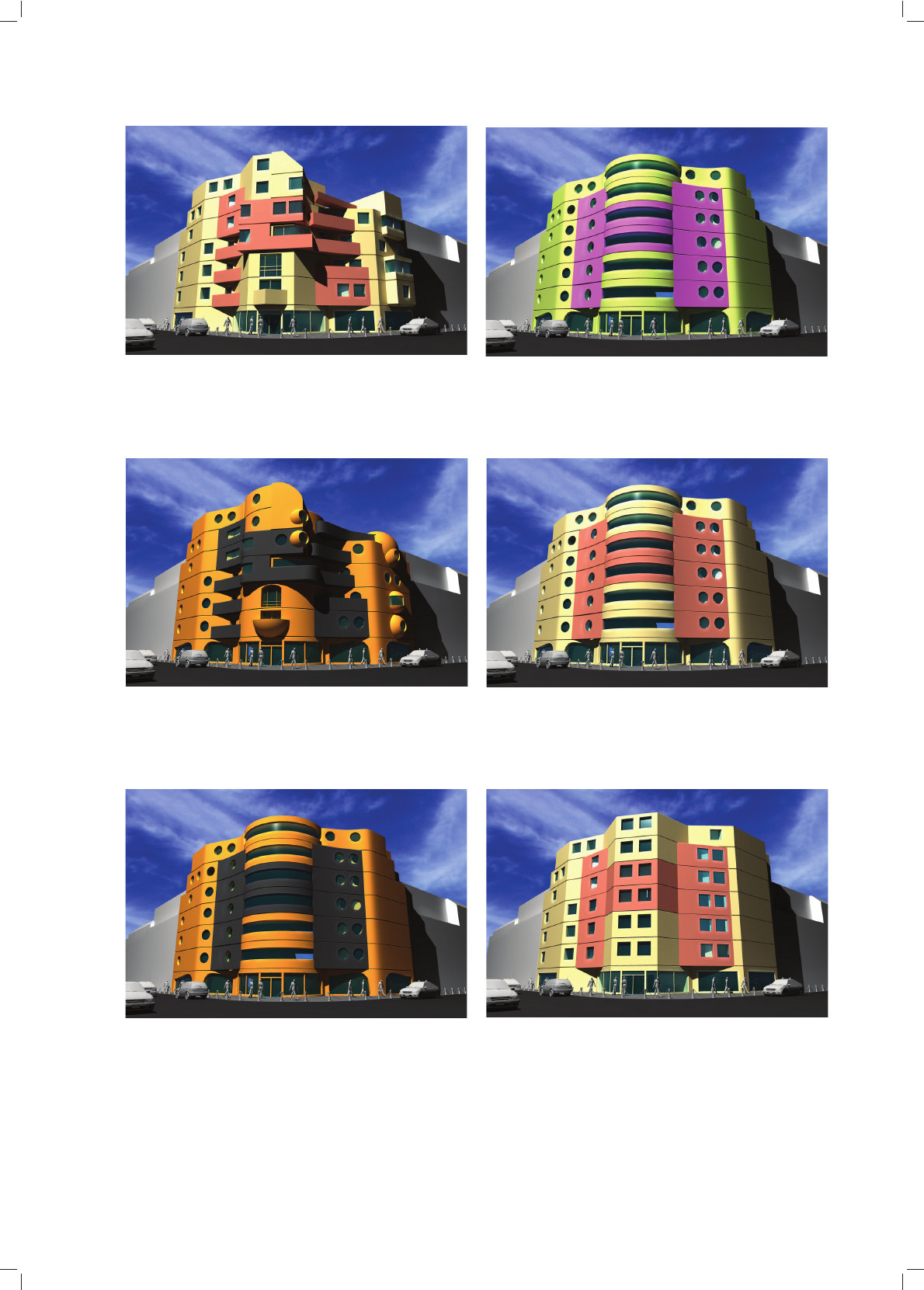
)LJ2EMHFW$FRORXUVDQG\EHLJHUHG±PRVWSUHIHUUHGDV
DGZHOOLQJSODFH
,O2ELHNW$NRORUSLDVNRZ\EHĪRZRF]HUZRQ\±QDMEDUG]LHM
SUHIHURZDQHPLHMVFH]DPLHV]NDQLD
)LJ2EMHFW%FRORXUOLJKWSLVWDFKLRDPHWK\VWYLROHW
±QRWSUHIHUUHGDVDGZHOOLQJSODFH
,O2ELHNW%NRORUSLVWDFMRZR]LHORQ\ILROHWRZ\±QLHSUHIHURZDQ\
MDNRPLHMVFH]DPLHV]NDQLD
)LJ2EMHFW&FRORXURUDQJHEODFN
±QRWSUHIHUUHGDVDGZHOOLQJSODFH
,O2ELHNW&NRORUSRPDUDĔF]RZ\F]DUQ\±QLHSUHIHURZDQ\MDNR
PLHMVFH]DPLHV]NDQLD
)LJ2EMHFW$FRORXUVDQG\EHLJHUHG
±SUHIHUUHGDVDVKRSSLQJPDOO
,O2ELHNW$NRORUSLDVNRZ\EHĪRZRF]HUZRQ\
±SUHIHURZDQ\MDNRJDOHULDKDQGORZD
)LJ2EMHFW&FRORXURUDQJHEODFN±SUHIHUUHGDVDVKRSSLQJPDOO
,O2ELHNW&NRORUSRPDUDĔF]RZ\F]DUQ\
±SUHIHURZDQ\MDNRJDOHULDKDQGORZD
)LJ2EMHFW$FRORXUVDQG\EHLJHUHG±UDWKHUQRWSUHIHUUHGDV
DVKRSSLQJPDOO
,O2ELHNW$NRORUSLDVNRZ\EHĪRZRF]HUZRQ\
±UDF]HMQLHSUHIHURZDQ\MDNRJDOHULDKDQGORZD

92 0LFKDá'ĊEHN
As it turned out, the appearance of an object is sig-
QL¿FDQWDVORQJDVZHDUHWRFKRRVHLWDVRXUSRWHQWLDO
dwelling place
16
. The most often chosen in this regard
was object A1 (Fig. 3), whereas objects B4 and C3 (Fig. 4
and 5) were the least popular. These are the only actually
VLJQL¿FDQWGLIIHUHQFHV
17
.
Similarly, it turned out that the appearance of an ob-
MHFWLVVLJQL¿FDQWDVORQJDVZHDUHWRFKRRVHLWDVRXU
potential place of doing the shopping, shopping mall
18
.
+HUH GH¿QLWHO\ PRVW SUHIHUUHG DQG VXUSULVLQJO\ XQDQL-
mously!) were objects A4 and C4 (Fig. 6 and 7). The least
preferred was object A2 (Fig. 8), although the response
median here was ‘I don’t know’. These are the only actu-
DOO\VLJQL¿FDQWGLIIHUHQFHV
16
6WDWLVWLFDOO\VLJQL¿FDQWHIIHFWF p < 0.05; Ș
0.052
17
*DPHV+RZHOO7HVW
18
F p Ș
On the other hand, the appearance of an object was not
VLJQL¿FDQW if we were to choose it as our workplace
19
or
a building ‘somewhere in my town’
20
.
It is worth adding that, as it turned out, virtually each pre-
sented object was preferred or not depending on the hypothet-
LFDOIXQFWLRQLWZDVJLYHQ. Not all of the objects could be ‘to
WKHVDPHH[WHQW¶DVKRSSLQJPDOODQGDÀDW)RULQVWDQFHWKH
greatest discrepancies were observed in preferences towards
object C3 (Fig. 5). Comparison of the four alternative prefer-
HQFHVVKRZHGDVWURQJVWDWLVWLFDOO\VLJQL¿FDQWGLIIHUHQWLDWLRQ
21
±WKLVREMHFWZDVJLYHQDYHU\ORZUDWHRISUHIHUHQFHDVDÀDW
but very high as a shop or workplace. Similar results were
obtained for preferences towards object C4 (Fig. 7). Object
A4 (Fig. 6), which was preferred as a shopping mall, was not
accepted as a place of dwelling.
19
F ns; Ș
20
F ns; Ș
21
ȤN GI p < 0.001
Discussion of results
:KDWLVWKHPHDQLQJRIWKHDIRUHPHQWLRQHGUHVXOWV",W
is unlikely that a mere differentiation of formal character-
istics of architectural objects such as colour, shape or di-
YHUVLW\LQFOXGLQJWKHLUVSHFL¿F LQWHUDFWLRQFRXOGVLJQL¿-
cantly differentiate attitudes towards these objects. Formal
IHDWXUHVGRQRWVLJQL¿FDQWO\GLIIHUHQWLDWHDQHPRWLRQDODW-
titude towards objects or a cognitive evaluation of objects;
therefore, in other words, statistically it does not matter
ZKHWKHUWKHFRORXURIDEXLOGLQJLVIRUH[DPSOHVDOPRQ
\HOORZRUDQJHEODFNRUSLVWDFKLRYLROHW±WKHVXEMHFWV
attitudes towards all of these objects did not statistically
differ! The emotional attitude or cognitive evaluation in the
case of all of these objects, which were obviously different,
was almost identical – on average 12 points on the emo-
tion scale (F1) and 13 points on the cognitive evaluation
scale (F2). This means that all the buildings, regardless their
colour (and other features) were cognitively ‘medium-posi-
WLYH¶DQGHPRWLRQDOO\WKH\GH¿QLWHO\GLGQRWDURXVHQHJDWLYH
emotions. These results are even more interesting if we take
into account the fact that each object was evaluated sepa-
rately, while each subject looked at one object only (thus,
there were no possibilities of comparative judgments on
the assumption that ‘basically, all of these buildings are the
same’ because each participant did not see any other objects
apart from the one that was shown to him). Therefore, to put
it simply, we can say that all the objects were evaluated as
similarly good. This of course does not exclude some con-
troversies which can result from the existence of persons
who distinctly ‘get out of line’ when compared with others
(the aforementioned untypical cases of evaluation).
$Q H[FHSWLRQ DPRQJ LQVLJQL¿FDQW IHDWXUHV RI DS-
pearance is shape, which differentiates, although very
slightly, a cognitive evaluation of an object. Sharp
shapes were cognitively evaluated by the majority of the
subjects slightly lower than smooth shapes (M IRU
sharp, M IRUVPRRWK+RZHYHUZHPXVWEHDULQ
mind that such results mean that both objects with sharp
shapes as well as with smooth ones are evaluated above
WKHPLGGOHRIWKHVFDOHSRLQWV:HFDQFRQFOXGHWKDW
both types of objects were evaluated differently, but all
of them received mostly positive evaluations.
Although the appearance of a building itself does not
‘decide’ about attitudes towards it, we must admit that in
VRPHVSHFL¿FFDVHVSUHIHUHQFHVWRZDUGVGLIIHUHQWLDWHGDV
UHJDUGVWKHIRUPREMHFWVDUHVLJQL¿FDQWO\GLIIHUHQW7KLVLV
the case when an object was supposed to be a potential place
of dwelling (however, this principle is not strong or unam-
biguous). It is similar with an object which is supposed to
be a potential shopping mall. The obtained results make us
suppose that whether an object is preferred or not is decided
by the ‘adequacy’ of its appearance to its possible function
and not by its appearance per se. In addition to that, we can
see that acceptability of a building which has a particular
appearance may differ to a large extent, depending on what
this building was supposed to be in reality (place of dwell-
ing, place of doing the shopping, etc.).
Differences in preferences seem to be connected with
the level of representativeness of a given object as an
example of a particular category (e.g. ‘dwelling place’,
‘shopping mall’) in the subjects’ minds. This interpreta-
tion could account for the preference of a building which
is the most similar to other buildings known to the subjects
from their everyday life as a possible dwelling place, and
objects which remind modern shopping malls as places of
doing the shopping. These are simply the objects which
are the most ‘adapted’ to what we already know.
This interpretation can be additionally supported by
WKHIDFWWKDWWKHUHLVQRVLJQL¿FDQWGLIIHUHQWLDWLRQLQWKH
case of alternative preferences as regards a possible
workplace or just any ‘building in my town’. Perhaps,
VXFK FRJQLWLYH FDWHJRULHV DUH UHODWLYHO\ GLI¿FXOW WR DF-
WLYDWH YHU\ ZHDNO\ GH¿QHG DQG VWUXFWXUDOL]HG RU WRR

Are assessment and emotions connected with a building conditioned by its external appearance? 93
broad. What should, in fact, ‘a building in my town’
look like? The majority of people will certainly answer:
‘it depends what kind of building’. Hence, each object
can be ‘equally good’ or ‘equally bad’, as an example of
a category which for various reasons is not easily acces-
sible cognitively. In other words, the subjects do not have
easily accessible and concretized mental categories of
a typical building – workplace, so it is hard for them to
DVVHVV ZKLFK RI WKH SUHVHQWHG REMHFWV µ¿WV¶ LQ WKLV FDW-
egory better and which worse. Therefore, all of them are
statistically evaluated by them in the same way.
When the subjects are asked to evaluate the buildings
which were not ascribed any meaning (even the simplest
function), then, like in the case of the questions about
emotions and cognitive evaluations, each building is as-
sessed rather positively, regardless of what it looks like.
Summary
The aforementioned research results indicate that aes-
thetic features such as colour, shape or diversity are
probably not independent and basic criteria which
we use when evaluating architectural objects. Each
colour scheme and shape of a building is basically equal-
ly ‘good’ until these features are combined with other
non-formal attributes of an object.
According to our own research, the attribute that
can decisively change the reception of a given build-
ing is its function 7KH DSSHDUDQFH FDQ EH VLJQL¿FDQW
two ways. Firstly, for example, particular, smoothly
shaped buildings in orange-black or pistachio-violet co-
lour scheme are less preferred as dwelling places than
a simply shaped salmon-sand building. Secondly, for
example, a smoothly shaped diverse building in orange-
black colour scheme can be accepted and preferred as
a potential shopping mall and at the same time rejected
DVDSRWHQWLDOEORFNRIÀDWV7KHUHIRUH¿UVWO\LWLVSRV-
sible that a particularly looking building is more pre-
ferred in a given function than other buildings; secondly,
a particularly looking building in some functions can be
visibly accepted by people and at the same time in other
functions it can be decisively unaccepted.
In the research conducted by the CBOS [7], Poles indi-
cated that the appearance is important, but there are fac-
tors even more important such as safety and the price of
a potential dwelling place. This seems quite probable. Ac-
cording to our own research, the appearance is important,
but only when we combine it with other features and even
then it does not constitute a decisive criterion of the object
HYDOXDWLRQ7KLVFDQEHDVLJQL¿FDQWSUDFWLFDOKLQWIRUGH-
signers that ought to be taken into account.
Of course, we must bear in mind that the results of the
aforementioned research cannot be representative for the
whole Polish population although they show some prob-
able tendencies in relations man-architecture.
Our research results indicate that probably it would be
GLI¿FXOWWRDVVXPHWKDWFRORXUVRUVKDSHVLQWKHPVHOYHV
are universal as far as meaning is concerned and are (psy-
chologically) understood inter-subjectively. We must ad-
mit that there are many limitlessly formulated colloquial
hypotheses that are aimed just at this direction, for ex-
ample, ‘yellow colour raises your spirits’, ‘blue calms
you down’, ‘green is smoothing’, ‘black means nega-
tive things’ (however, luxury goods are very often black,
which adds to their elegance though!). These hypotheses
enjoy constant popularity and are gladly promoted in
various mass-media. Thus, we must remember that an
attitude towards a colour or shape as features is probably
inextricably linked with an object itself as well as with
the semantic, physical and psychological context. It is
similar in the case of attitudes towards objects that are
diverse and non-diverse formally. To put it simply, we
can conclude that the appearance itself is not important
for us; what is really important is the appearance in
a particular context.
References
[1] Aronson E., Wilson T.D., Akert R.M., 3V\FKRORJLD VSRáHF]QD,
=\VNL6ND3R]QDĔ
[2] Bachmann K., :\ZURWRZH NUDVQDOH ]DPLHQLRQR Z WXU\VW\-
F]Q\ NLF], available from: http://wroclaw.gazeta.pl/wro-
claw/1,35751,9369054 [accessed: 04.04.2011].
>@%DĔND$ 6SRáHF]QD SV\FKRORJLD ĞURGRZLVNRZD, Wydawnictwo
Naukowe Scholar, Warszawa 2002.
[4] Bell P.A., Greene T.C., Fisher J.D., Baum A., Psychologia
ĞURGRZLVNRZD*:3*GDĔVN
[5] Bloch P., Seeking the ideal form: Product design and consumer
response, “Journal of Marketing” 1995, No. 3 (59), pp. 16–29.
[6] Bomersbach J., Solpol do kasacji, 2011, available from: http://www.
otowroclaw.com/news.php?id=57837 [accessed: 04.04.2011].
>@&HQWUXP%DGDQLD2SLQLL6SRáHF]QHM-DN3RODF\PLHV]NDMąDMDN
FKFLHOLE\PLHV]NDü, BS/120/2010, CBOS, Warszawa 2010.
>@&HQWUXP %DGDQLD 2SLQLL 6SRáHF]QHM 3RODF\ R DUFKLWHNWXU]H,
BS/134/2010, CBOS, Warszawa 2010.
[9] Crilly N., Moultrie J., Clarkson J., Seeing things: consumer re-
sponse to the visual domain in product design, “Design Studies”
2004, No. 6 (25), pp. 547–577.
[10] Gifford R., Environmental psychology and sustainable develop-
ment: expansion, maturation, and challenges, “Journal of Social
Issues” 2007, No. 1 (63), pp. 199–212.
[11] Gifford R., Environmental psychology: Manifold visions, unity of
purpose, “Journal of Environmental Psychology” 2009, No. 29, pp.
387–389.
Translated by
%RJXVáDZ6HWNRZLF]

94 0LFKDá'ĊEHN
>@ .QDSLN%:URFáDZ6ROSROPDE\üZ\EXU]RQ\DYDLODEOHIURPKWWS
ZZZJD]HWDZURFODZVNDSOVWURQDJORZQDZURFODZVROSRO
PDE\FZ\EXU]RQ\LGWKWPO"FRRNLH >DFFHVVHG@
>@ 2PLODQRZVND02G3LUDPLGGR*XVWD3RODFFR³$UFKLWHNWXUD±
0XUDWRU´1RSS±
>@ 0DUXV]HZVNL73V\FKRORJLDSR]QDQLD*:3*GDĔVN
>@ 1DVDU - 8UEDQ GHVLJQ DHVWKHWLFV 7KH HYDOXDWLYH TXDOLWLHV RI
EXLOGLQJ H[WHULRUV ³(QYLURQPHQW DQG %HKDYLRU´ 1R
SS±
>@ 1ĊFND(2U]HFKRZVNL-6]\PXUD%3V\FKRORJLDSR]QDZF]D
3:1:DUV]DZD
>@ 3UDWNDQLV$$URQVRQ(:LHNSURSDJDQG\3:1:DUV]DZD
>@ 6WRNROV'(QYLURQPHQWDOSV\FKRORJ\³$QQXDO5HYLHZRI3V\
FKRORJ\´1RSS±
>@ 7RU]0:URFáDZ6ROSRO]RVWDQLHZ\EXU]RQ\7RMXĪSHZQHDYDLO
DEOH IURP KWWSZZZJD]HWDZURFODZVNDSOVWURQDJORZQD
ZURFODZVROSRO]RVWDQLHZ\EXU]RQ\WRMX]SHZQHLGWKWPO>DFFHVVHG
@
>@ :RMFLV]NH%&]áRZLHNZĞUyGOXG]L=DU\VSV\FKRORJLLVSRáHF]QHM
:\GDZQLFWZR1DXNRZH6FKRODU:DUV]DZD
>@ =HLVHO -,QTXLU\E\GHVLJQWRROV IRU HQYLURQPHQWEHKDYLRU UH
VHDUFK&DPEULGJH8QLYHUVLW\3UHVV&DPEULGJH
&]\RRFHQLHLHPRFMDFK]ZLą]DQ\FK]EXG\QNLHPGHF\GXMHMHJRZ\JOąG]HZQĊWU]Q\"
3RVWDZ\ZREHF]UyĪQLFRZDQ\FKIRUPDOQLHRELHNWyZDUFKLWHNWRQLF]Q\FK
$UW\NXá GRW\F]\ SV\FKRORJLF]Q\FK DVSHNWyZ RGELRUX RELHNWyZ DU
FKLWHNWRQLF]Q\FK LVWRWQ\FK XZDUXQNRZDĔ UHODFML F]áRZLHN–DUFKLWHN
WXUD 3U]HGPLRWHP ]DLQWHUHVRZDQLD DXWRUD Vą RFHQ\ XVWRVXQNRZDQLH
HPRFMRQDOQH L GHNODUDFMH ]DFKRZDĔ ZREHF UyĪQLąF\FK VLĊ Z\JOąGHP
]HZQĊWU]Q\PRELHNWyZ2PyZLRQRWXF]ĊĞüSURMHNWXEDGDZF]HJRÄ8ZD
UXQNRZDQLDSRVWDZZREHFRELHNWyZDUFKLWHNWRQLF]Q\FK´UHDOL]RZDQH
JR SU]H] DXWRUD Z ODWDFK – 6]F]HJyOQ\ QDFLVN SRáRĪRQR QD
PRĪOLZLH V\QWHW\F]QH RPyZLHQLH SV\FKRORJLF]Q\FK SRGVWDZ VSRVWU]H
JDQLDRELHNWyZRUD]SRMĊFLDGHNODURZDQ\FKZREHFQLFKSRVWDZ=DSUH
]HQWRZDQRNOXF]RZHHOHPHQW\DXWRUVNLHJRVFKHPDWXVWUXNWXUDOL]XMąFHJR
KLSRWHW\F]QHGHWHUPLQDQW\SRVWDZZREHFRELHNWyZDUFKLWHNWRQLF]Q\FK
=DVDGQLF]ą F]ĊĞü DUW\NXáX VWDQRZL QDWRPLDVW SUH]HQWDFMD L RPyZLHQLH
Z\QLNyZ DXWRUVNLFK EDGDĔ SRVWDZ ZREHF RNUHĞORQ\FK RELHNWyZ ,FK
]ZLHĔF]HQLHPMHVWSUyEDRGSRZLHG]LQD S\WDQLH„&]\FHFK\Z\JOąGX
WDNLHMDNNV]WDáWNRORULUyĪQRURGQRĞüEU\á\PDMąGHF\GXMąFH]QDF]HQLH
ZRFHQLHRELHNWXDUFKLWHNWRQLF]QHJR"´
Key words:DWWLWXGHVWRZDUGVREMHFWVDVVHVVPHQWRIDUFKLWHFWXUDOREMHFWV
HYDOXDWLRQRIEXLOGLQJVHQYLURQPHQWDOSV\FKRORJ\SHUFHSWLRQRIDUFKLWHF
WXUHDHVWKHWLFDOSUHIHUHQFHV
6áRZDNOXF]RZHSRVWDZ\ZREHFRELHNWyZRFHQDRELHNWyZDUFKLWHN
WRQLF]Q\FK HZDOXDFMD EXG\QNyZ SV\FKRORJLD ĞURGRZLVNRZD VSR
VWU]HJDQLHDUFKLWHNWXU\SUHIHUHQFMHHVWHW\F]QH