
2017
1(49)
DOI: 10.5277/arc170103
Mat Colmer*
Luka efektywności: praktyka brytyjska a polski potencjał
korzystania z oceny funkcjonowania budynku
The performance gap: the UK experience and the Polish potential
for using building performance evaluation
Wstęp
W maju 2016 r. na Politechnice Wrocławskiej został
zorganizowany polsko-brytyjski szczyt w celu przedys-
kutowania kwestii oceny budynków w obu krajach. Cało-
dniowe spot ka nie do tyczyło brytyjskich doświadczeń w za -
kresie oceny funkcjonowania budynków (ang. Building
Performance Evaluation – BPE) oraz polskiego kontek-
stu zabudowy mieszkaniowej. Rozważano możliwości
wykorzystania doświadczeń brytyjskich w Polsce.
Budownictwo mieszkaniowe w Wielkiej Brytanii od -
notowuje tendencję spadkową i już od 1970 r. charakteryzu-
je się bardzo niskim wskaźnikiem wymiany tkanki miesz-
kaniowej na nową [1]. Skutkiem tego budynki miesz kalne
w Wielkiej Brytanii należą do jednych z najstar szych i naj-
mniej efektywnych pod względem energetycznym w Euro-
pie Zachodniej, co jest jednocześnie wielkim wyzwaniem.
Energia zużywana w budynkach mieszkalnych w Wielkiej
Brytanii wytwarza ponad jedną czwartą całkowitej bry-
tyjskiej emisji odpowiednika dwutlenku węgla, co przy-
czynia się do zmian klimatycz nych [2]. Konkretne zobo-
wiązania międzynarodowe związa ne z przeciwdziałaniem
zmianom klimatu i usilne dą żenia, aby stać się świato-
wym liderem gospodarki niskoemisyjnej, ozna czają, że
efektywność budynków w Wielkiej Bry tanii jest istotna
zarówno dla środowiska, jak i krajowej gospodarki.
Introduction
In May 2016, a Poland/UK bilateral conference was
organised at the Faculty of Architecture, Wrocław Uni-
versity of Science and Technology to discuss the evalua-
tion of buildings in both countries. The full day event
covered the UK experience with building performance
evaluation and the Polish context with the focus on
reviewing the possible transition of skills. Here the resi-
dential development in Poland will be further explored
and compared with the British.
House building in the UK has been in decline, with
very low dwelling replacement rates, since the 1970’s [1].
This leads to the United Kingdom having some of the old-
est and inefficient housing in Western Europe and a big
challenge on its hands. Energy used in domestic housing
in the UK produces over a quarter of UK’s total carbon
dioxide (CO
2
) equivalent emissions, which drive climate
change [2]. Binding climate change targets and a strong
desire to become a leading global low-carbon economy
means that the performance of UK buildings is important
for the both the nations environment and economy.
Herein lies a problem. At the moment the country is
caught in a battle between the poor performance legacy of
its existing buildings and the need to counterbalance this
with its future stock. We know that the old stock does not
perform well. However recent research shows that new
buildings, both residential and non-residential, in the UK
are not performing to the standards expected. This is not
because they are designed to be inefficient, UK Building
Regulations are getting tougher on reducing the carbon
* Ekspert BPE, Innovate UK (2011–2015), kierownik programu ba -
dawczego TSB BPE/BPE expert, Innovate UK (2011–2015), Lead Tech -
nologist for TSB BPE research programme.

34 Mat Colmer
I tu leży problem. W tej chwili kraj toczy walkę
o zrównoważenie dziedzictwa słabej efektywności istnie-
jących budynków poprzez wysoką jakość przyszłego
budownictwa. Zdajemy sobie sprawę, że stare budynki
nie są efektywne. Niemniej jednak w świetle ostatnich
badań widać, iż nowe budynki w Wielkiej Brytanii,
zarówno mieszkalne, jak i niemieszkalne, także nie speł-
niają oczekiwanych standardów. Nie wynika to z faktu, że
są one zaprojektowane jako nieefektywne (brytyjskie
przepisy budowlane są coraz ostrzejsze, jeśli chodzi o re -
dukcję emisji CO
2
), ale z faktu, że bu dyn ki nie są budo-
wane zgodnie z oczekiwaniami projektantów. Prowadzi
to do powstania różnicy pomiędzy zaprojektowaną (prze-
widywaną) ilością emisji z budynku a powykonawczą
(istniejącą w praktyce) efektywnością budynku, co może
oznaczać nawet trzy razy większą emisję, niż początkowo
zakładano. Różnica istniejąca pomiędzy efektywnością
zaprojektowaną a powykonawczą znana jest jako luka
efektywności. Ocena funkcjonowania obiektu BPE jest
podejściem badawczym posługującym się różnymi narzę-
dziami, stosowanym w celu ukazania i rozwiązania kwe-
stii luki efektywności przez zgromadzenie i analizę jakoś-
cio wych i ilościowych informacji dotyczących budynku.
Takie dochodzeniowe badanie po ukończeniu budowy
wy maga współpracy specjalistów różnych dziedzin. Obej-
muje ono sprawdzenie efektywności obudowy bu dyn ku,
efektywności energetycznej oraz satysfakcji miesz kań -
ców co do wewnętrznych warunków środowiskowych.
Ba danie takie wykracza poza zakres wymaganej przepi-
sami analizy zapotrzebowania na energię, która jest czę-
ścią projektu budynku.
W artykule zarysowano kontekst brytyjskich badań
BPE oraz przedstawiono rządowy program badań prze-
prowadzonych w Wielkiej Brytanii w latach 2010–2014,
w których autor zarządzał ponad setką projektów pro wa-
dzonych przez różne ośrodki. Następnie przed stawio no
obraz polskiego budownictwa mieszka niowego, wyni ka jący
z wypowiedzi konferencyjnych. Na za koń czenie przed sta-
wiono dyskusję nad warunkami roz winięcia za kresu i me -
tod badań już w Polsce stosowanych przez deweloperów.
Doświadczenia brytyjskie
W Wielkiej Brytanii można zaobserwować ciekawe
podejście do budynków, energii i zrównoważonego roz-
woju. Tkanka mieszkaniowa tego kraju jest jedną z naj-
starszych w Unii Europejskiej (UE). Ponad połowa bu -
dynków powstała przed rokiem 1960, kiedy to przepisy
budowlane dotyczące energii były jeszcze bardzo mało
restrykcyjne. Starsze brytyjskie domy wymagają co naj-
mniej dwukrotnie większej ilości energii w celu ich
og rzania niż budynki w wielu innych krajach. Ponadto
w Wielkiej Brytanii istnieje bardzo niski wskaźnik wy -
miany tkanki mieszkaniowej na nową, wynoszący zaled-
wie około 10% mieszkań wybudowanych od 1991 r. [3].
Niska efektywność energetyczna starych budynków
oraz niski wskaźnik wymiany tkanki na nową są źródłem
poważnego problemu w kwestii zrównoważonego rozwo-
ju, zarówno pod względem środowiskowym, jak i ekono-
micznym. Aby Wielka Brytania była w stanie sprostać
dioxide equivalent emissions from new buildings. It is
because the buildings are not constructed in the way the
designers expected. This leads to a difference in the as-
designed (expected) emissions performance of a building
and the as-built (experienced) performance of a building,
which can mean up to three times more emissions than
calculated at the beginning. This difference between as-
designed and as-built performance is known as the perfor-
mance gap. Building performance evaluation is a tool to
reveal and address the performance gap by the collection
and analysis of qualitative and quantitative information
related to the building. This is a collaborative, forensic
investigation that occurs post construction and includes
a review of a buildings fabric performance, energy perfor-
mance, internal environmental conditions occupant satis-
faction. It is additional to the energy use analysis that
happens as part of a buildings design.
This paper presents the context of BPE practice in the
UK based on author’s over 10 years experience leading
large-scale projects, including Technology Strategy Board
BPE programme. Building performance evaluation in the
UK is very uncommon outside of research programmes.
Next Polish experience is highlighted as presented at
BPE conference in Wrocław, 2016. In Poland a form of
post completion building evaluation, not necessarily for
performance, appears to be much more prevalent in the
residential sector. This gives a good foundation to build
and embed performance evaluation, driven by the indus-
try itself.
The UK experience
The United Kingdom has an interesting relationship
with buildings, energy and sustainability. With some
of the oldest housing in the EU, just over half of which
was built before 1960 when energy building regulations
were very limited. These older UK homes require at least
double the energy to stay warm compared with many
countries. Additionally, the UK has a very slow replace-
ment rate for housing with just over 10% built since
1991 [3].
This poorly performing stock old stock and low
replacement rate causes an issue for sustainability, both
environmental and economic. In order for the UK to meet
its own and international climate change commitments
the residential sector needs to perform as efficiently as
possible. Comprehensively refurbishing the existing stock
is immensely challenging and somewhat slow. Therefore,
the new housing stock needs to shoulder a significant
proportion of the burden and perform extremely effi-
ciently.
Performance is important as it has many impacts on the
long term sustainability of the UK. This sustainability
aspect has many facets, but for the UK it is mainly couched
in achieving low carbon economic growth, re ducing fuel
poverty, enhancing social development, addressing envi-
ronmental concerns, ensuring energy security
and helping
to build wealth.
Sustainability is important to the UK. UK primary fuel
production has been in decline since around 2000, whilst

Lukaefektywności:praktykabrytyjskaapolskipotencjał/Theperformancegap:theUKexperienceandthePolishpotential 35
własnym i ogólnoświatowym zobowiązaniom w zakresie
ograniczania zmian klimatycznych, sektor mieszkaniowy
musi działać tak skutecznie, jak tylko to jest możliwe.
Kompleksowe remonty istniejących mieszkań stanowią
niezwykle trudne wyzwanie i jest to proces raczej powol-
ny. Dlatego też nowe zasoby mieszkaniowe muszą wziąć
na siebie znaczącą część tego obciążenia i być w tym
kontekście wyjątkowo efektywne.
Efektywność jest ważna, ponieważ na wiele sposobów
długofalowo oddziałuje na zrównoważony rozwój w Wiel-
kiej Brytanii. Planowanie w kategoriach długotermino-
wych jest tym aspektem zrównoważonego rozwoju, który
ma wiele płaszczyzn, jednak w przypadku Wielkiej Bry-
tanii jest on realizowany przede wszystkim poprzez dąże-
nie do niskoemisyjnego wzrostu gospodarczego, zmniej-
szenie ubóstwa energetycznego, wzmocnienie rozwoju
społecznego, zwrócenie uwagi na kwestie ochrony środo-
wiska, zapewnienie bezpieczeństwa energetycznego oraz
pomoc w dążeniu do dobrobytu.
Zrównoważony rozwój jest ważny dla Wielkiej Bryta-
nii. Od około 2000 r. następuje tam zmniej szenie produk-
cji paliwa pierwotnego, podczas gdy ogólny popyt powoli
wzrasta, co jest w szczególności zauważalne w sektorze
mieszkaniowym. Od 2004 r. Wielka Brytania jest importe-
rem energii [4] i mało prawdopodobne, aby ta zależność
od innych krajów mogła być ograniczona, jako że zasoby
na Wyspach Brytyjskich są coraz mniejsze. Brak bezpie-
czeństwa energetycznego naraża rynek energetyczny
Wielkiej Brytanii na wahania cenowe i wiąże go z ciągle
zmieniającą się sytuacją polityczną. To z kolei oddziałuje
negatywnie na wzrost go spo darczy i może zaostrzać kwe-
stie ubóstwa energetycznego.
Rozwój zrównoważony a budynki w Wielkiej Brytanii
Aby przybliżyć kontekst postawy Wielkiej Brytanii
w sprawie zrównoważonego rozwoju, należy wspomnieć,
że jako obecny członek UE, uczestniczy ona w wielu sze-
roko zakrojonych działaniach realizowanych przez UE
słu żących ograniczaniu zmian klimatu. Dotyczą one przede
wszystkim trzech celów wytyczonych na rok 2020 i są
potocznie znane jako 20/20/20: zmniejszenie emisji gazów
cieplarnianych o 20% w stosunku do poziomu z 1990 r.;
wykorzystanie energii ze źródeł odnawialnych na pozio-
mie 20% całkowitego zużycia energii w UE oraz zwięk-
szenie wydajności energetycznej o 20% w stosunku do
poziomu z 2007 r. Po przez emisję gazów cieplarnianych
rozumie się głównie emisję gazów, które są często koja-
rzone ze spalaniem paliw kopalnych, takich jak gaz ziem-
ny, ropa naftowa i węgiel. Ponieważ istnieje duża różno-
rodność gazów cieplarnianych, które w różny sposób
wpływają na klimat, a CO
2
ma największy udział w antro-
pogenicznej emisji gazów cieplarnianych, istnieje tenden-
cja odnoszenia się do takiej emisji łącznie za pomocą
wyrażenia „odpowiednik (ekwiwalent) dwutlenku węgla”
(lub CO
2
e), działającego jako wspólna jednostka oznacza-
jąca ilość CO
2
, która miałaby równoważny wpływ na
globalne ocieplenie.
Liderzy UE również opracowali plan działania ukazu-
jący sposoby redukcji emisji CO
2
e o 80–95% do 2050 r.
overall demand has slowly risen, with particularly strong
rises in the residential sector. Since 2004 the UK has been
a net importer of energy [4] and it is unlikely that this
dependency is will reverse as UK island resources con-
tinue to decline. This lack of energy security exposes the
UK energy market to fluctuations in price and political
upheavals. This, in turn, impacts on economic growth and
can exacerbate the issues of fuel poverty.
Sustainability and buildings in the UK
To give some context to the UK’s position on sustaina-
bility. As a member, currently, of the European Union
(EU), the UK participates in EU wide action to tackle cli-
mate change. Principally these relate to three targets for
2020, and are colloquially known as 20/20/20: reduce
greenhouse gas emissions by 20% on 1990 levels; provide
20% of total EU energy from renewables and to increase
energy efficiency by 20% from 2007 levels. By greenhouse
gas emissions we mean gases that are often associated with
the burning of fossil fuels such as natural gas, oil and coal.
Because there are a variety of greenhouse gases that have
differing effects on the climate and as carbon dioxide
(CO
2
) makes up the largest share of greenhouse gases that
we emit we tend to refer to greenhouse gases collectively
with the term carbon dioxide equivalent or CO
2
e, which
acts as a common unit and signifies the amount of CO
2
which would have the equivalent global warming impact.
EU leaders have also produced a low carbon roadmap
guide to an 80–95% reduction in CO
2
e emissions by
2050. Over and above these EU targets, the United King-
dom has its own climate change avoidance strategies.
Over the past two decades the UK Government has
taken a number of steps to limit the UK’s emissions of
greenhouse gases. Activities started back in 1995 with the
Kyoto Protocol and go through to the Paris Agreement in
2016 [5]. Legally binding targets for the UK set by the
national Government are part of the process.
The principle mechanism is The Climate Change Act.
Passed in 2008 the Act commits the UK to developing an
economically credible emissions reduction of at least
80% in 2050 from 1990 levels. At the time the UK was
the only country in the world to commit to drastic and
binding emissions reductions and the Act illustrates the
type of country that the UK wants to be.
In 2006, the UK Government set ambitious targets for
incremental changes to building regulatory standards and
committed that from 2016 all new homes would be “zero
carbon”. In 2008 this was extended to non-residential
buildings, with a “zero carbon” target from 2019. These
bold commitments were received somewhat sceptically
by industry as there was some confusion about what “zero
carbon” actually meant. We won’t dwell on the definition
here, but suffice to say that the final explanation con-
firmed in 2011 was somewhat less ambitious than the
original aspiration.
To wrap-up the recent construction sustainability jour-
ney for the UK, July 2015 saw the UK Government go
full-circle as it announced the scrapping of “zero carbon”
targets that were due to come in to effect in 2016. It is not

36 Mat Colmer
Niezależnie od wymienionych celów unijnych Wielka
Brytania stworzyła swoje własne strategie zapobiegania
zmianom klimatycznym.
W ciągu ostatnich dwóch dekad rząd Zjednoczonego
Królestwa podjął wiele kroków w celu ograniczenia bry-
tyjskiej emisji gazów cieplarnianych. Działania te rozpo-
częły się w 1995 r. podpisaniem protokołu z Kyoto i były
realizowane do czasu porozumienia paryskiego w 2016 r.
[5]. W regulacjach krajowych zawarte są postanowienia
będące prawnie wiążącymi celami dla Wielkiej Brytanii
wyznaczonymi przez rząd brytyjski.
Podstawowe działania wskazuje Ustawa o zmianach
klimatycznych, która została uchwalona w 2008 r. Zobo-
wiązuje ona Wielką Brytanię do opracowania wiarygod-
nego ekonomicznie planu redukcji emisji o co najmniej
80% do 2050 r. w stosunku do poziomu z roku 1990.
W tamtym czasie Wielka Brytania była jedynym krajem
na świecie, który zobowiązał się do drastycznych i wiążą-
cych redukcji emisji, a ustawa ukazuje model państwa, do
jakiego dąży Wielka Brytania.
W 2006 r. rząd Zjednoczonego Królestwa wyznaczył
sobie ambitne cele, oświadczając, że od 2016 r. wszystkie
nowe budynki mieszkalne będą się charakteryzować
zerową emisją CO
2
. Osiągnięcie tego miało być możliwe
poprzez stopniowe zaostrzanie przepisów budowlanych
w zakresie efektywności energetycznej. W 2008 r. posta-
nowienie to zostało rozszerzone na bu dynki niemieszkal-
ne w celu osiągnięcia również przy ich eksploatacji zero-
wej emisji od 2019 r. Te odważne zobowiązania zostały
odebrane nieco sceptycznie przez przemysł z racji zamie-
szania spowodowanego określeniem „zerowa emisja
CO
2
” i tym, co miałoby ono oznaczać w rzeczywistości.
Nie będziemy w tym miejscu formułować definicji tego
pojęcia, wystarczy jednak po wiedzieć, że jego ostateczna
wersja potwierdzona w 2011 r. była nieco mniej ambitna
niż pierwotne aspiracje.
Podsumowując drogę, jaką przebyła polityka brytyjska
w kierunku zrównoważonego budownictwa w ostatnich
latach, można powiedzieć, że w lipcu 2015 r. zatoczyła
ona koło, gdyż rząd brytyjski ogłosił wówczas rezygnację
z wcześniejszych celów dotyczących „zerowej emisji”,
które miały zostać wprowadzone w życie w 2016 r. Nie
jest jednak oczywiste, w związku z Brexitem (wyjście
Wielkiej Brytanii z Unii Europejskiej), w jakiej pozycji
stawia to Wiel ką Brytanię co do realizacji wymogów
w ramach dyrektyw energetycznej efektywności budyn-
ków, w dążeniu do uzyskania budynków o niemal zero-
wym zużyciu energii. Jedyne, co jest oczywiste, to niejas-
ność uregulowań prawnych dotyczących budownictwa
w przyszłości.
W 2004 r. obliczono, że w Wielkiej Brytanii należałoby
budować około 250 000 domów rocznie [6], aby zaspokoić
wzrost popytu na mieszkania. W rzeczywistoś ci, w Wiel-
kiej Brytanii od 1970 r. nie udało się wybudować 250 000
domów rocznie. Ostatnie doniesienia wskazują, że w celu
realizacji zapotrzebowania należy wy bu dować 1 000 000
domów do 2020 r. [7].
Szykuje się więc poważne zamieszanie. Kraj ma og -
rom ne i pilne zapotrzebowanie na więcej mieszkań, ale
od momentu wycofania się z wyznaczonych celów
clear where this, alongside Brexit (the United Kingdom’s
exit from the European Union), leaves the UK in fulfilling
its requirements under the Energy Performance of Build-
ings Directive to move towards nearly zero energy build-
ings. What is obvious is that the regulatory future for
construction very uncertain.
In 2004 it was calculated that the UK would have to
build around 250,000 homes a year [6] to cope with the
increase in demand for housing, in fact, the UK hasn’t
built 250,000 homes in a year since the 1970s. Recent
reports indicate that the UK needs to build 1,000,000
homes by 2020 [7] to satisfy requirements.
We have a perfect storm arising in the UK. The country
has a stark need more housing but since the reneging on
targets for improved performance, there is little regulato-
ry direction to ensure that new homes are not built with
a permanent legacy of high energy bills. In fact, there is
growing awareness within the housing industry that, in
practice, even current energy efficiency and greenhouse
gas emission standards are not being achieved.
UK Building Regulations are based on compliance to
energy (heat and power) targets set through models at
design stage, with less of a focus on verification of actual
performance when the building is completed. It is impor-
tant to appreciate that models play a vitally important role
in calculating how the building will operate when com-
pleted, and are intrinsic to the design process. However, it
must be understood that the models are based on imper-
fect information and rely on standardised assumptions for
many aspects such as technologies used, location, occu-
pancy and behaviour. These assumptions cause a problem
with the application of improved insulation measures,
lighting, appliances, advances in efficiency of heating and
hot water systems, and the addition of low and zero car-
bon energy generation, many of which are at present
untested. There is understandably concern that the pre-
dicted performance of a home at design and the actual
energy performance when in use are actually different.
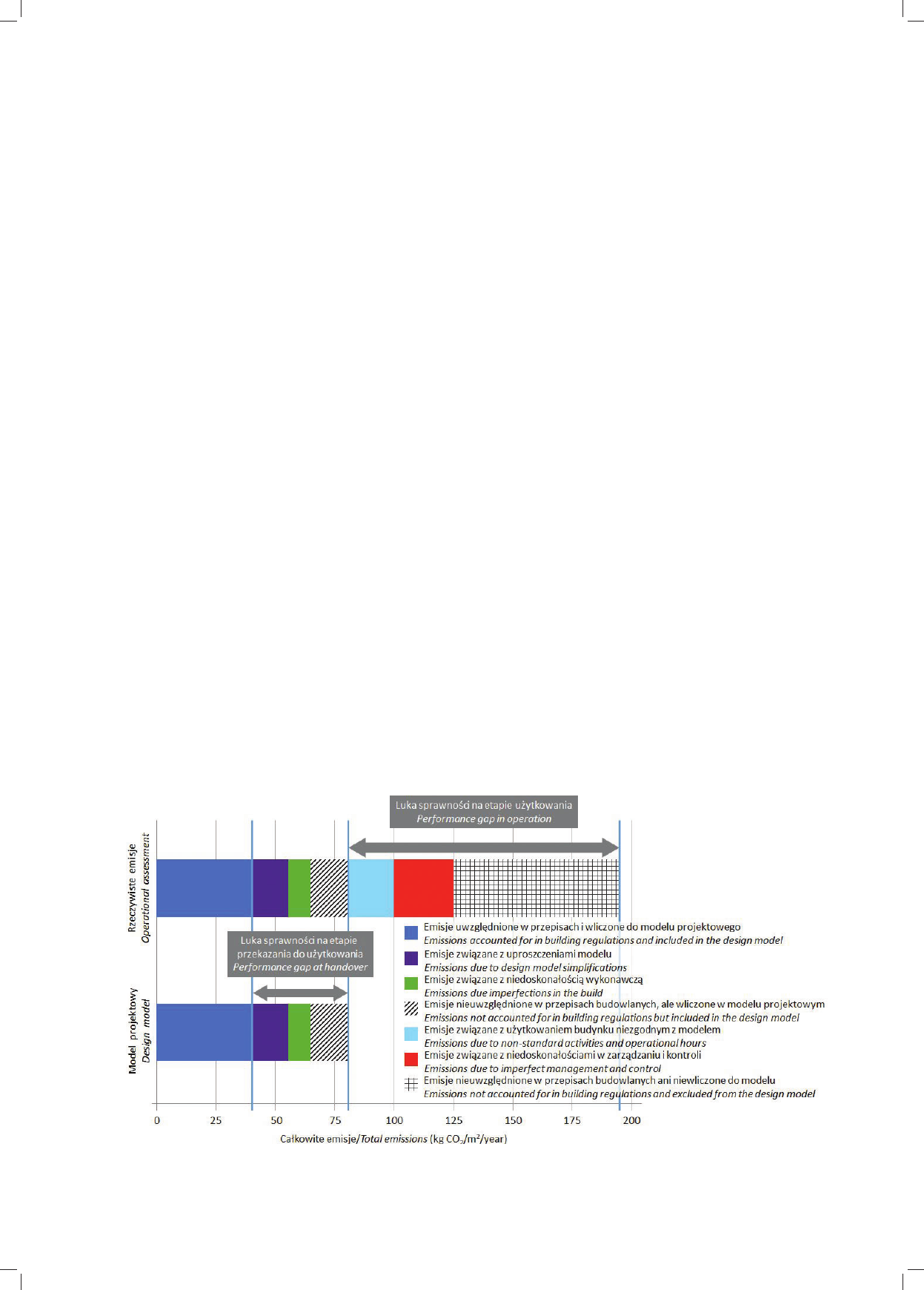
The performance gap occurs where the energy perfor-
mance, internal environmental quality and expected user
satisfaction of a building at design differs from the opera-
tional reality (Fig. 1).
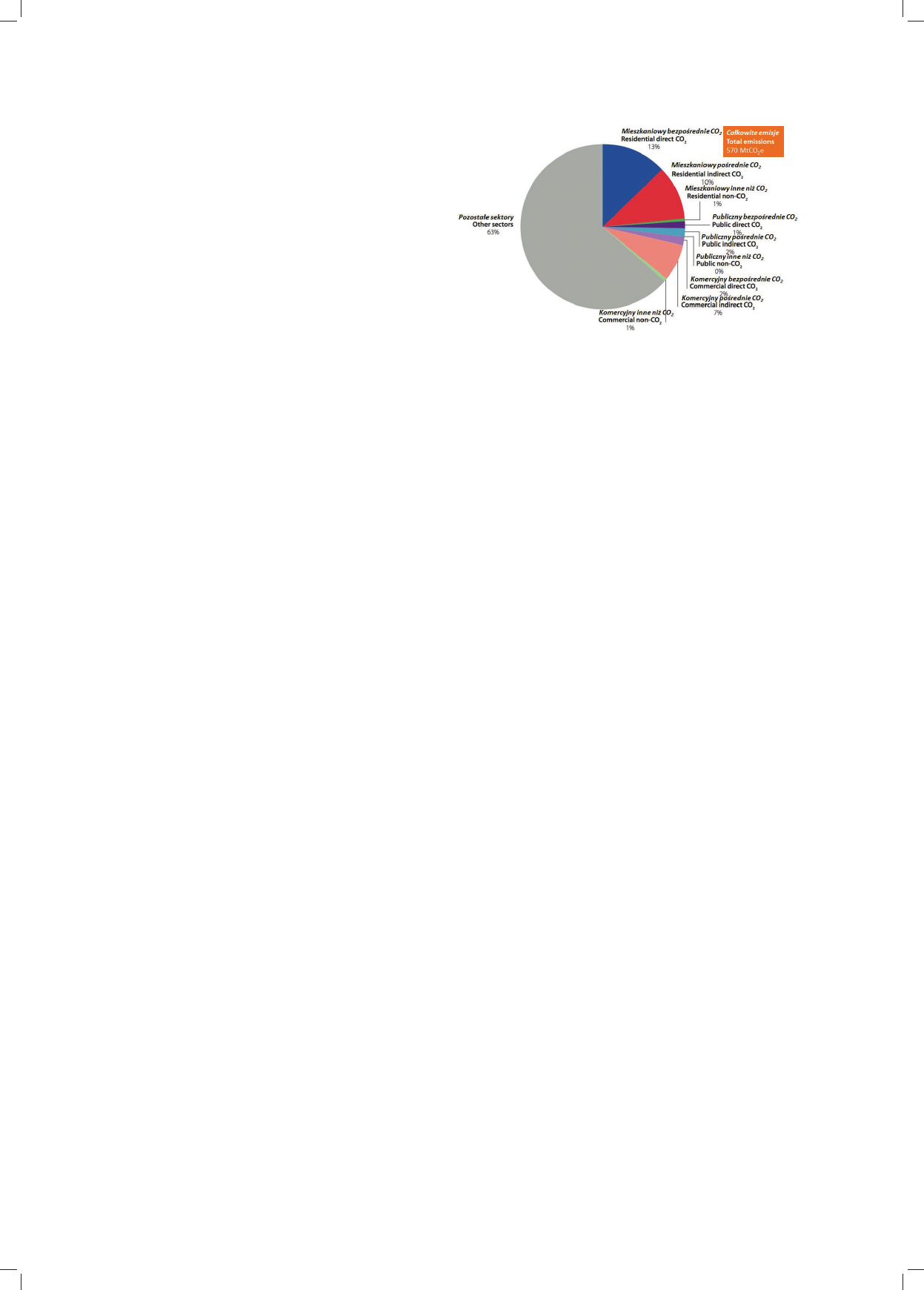
Since buildings account for 37% of UK greenhouse
gas emissions [8], a figure that could rise to 55% by 2050
[9], it is increasingly clear that we require a fundamental
change in the way we construct and operate buildings
(Fig. 2). Otherwise the UK will not be able to fulfil its
legal commitments to avoiding climate change and mov-
ing to a low carbon economy.
In the United Kingdom, it is widely acknowledged that
our new buildings suffer from this performance gap.
Having buildings that do not perform as expected matters.
Poor performance can increase the bills people pay, be
detrimental to occupants’ health and well-being and
im pact the wider environment and economy. In other
industries offering a product that does not performance as
promised would be considered at best poor business prac-
tice and at worst illegal. Under normal circumstances it
would also lead to recalls, replacements or refunds. Just
take the 2015 outrage on higher than specified emissions
Lukaefektywności:praktykabrytyjskaapolskipotencjał/Theperformancegap:theUKexperienceandthePolishpotential 37
dotyczących poprawy efektywności brakuje regulacji
prawnych, które zapewniłyby, że nowe domy nie będą
trwale obciążone wysokimi rachunkami za energię.
W rzeczywistości istnieje coraz większa świadomość
w przemyśle budowlanym, że w praktyce nawet obecne
standardy efektywności energetycznej i emisji gazów
cieplarnianych nie zostały osiągnięte.
Przepisy budowlane obowiązujące w Wielkiej Brytanii
wymagają spełnienia wymogów oszczędności energe-
tycznej (ogrzewanie i prąd) na etapie projektu poprzez
modelowanie sprawności energetycznej, jednakże mniej-
szy nacisk położony jest na weryfikację rzeczywistej wy -
dajności po zakończeniu budowy. Istotne, aby zrozumieć,
że modele odgrywają niezwykle ważną rolę w kalkula-
cjach dotyczących działania budynku po jego wykończe-
niu i są nieodłączną częścią procesu projektowania. Nie-
mniej jednak należy mieć na uwadze, że modele są oparte
na niepełnych informacjach i standardowych założeniach
dotyczących wielu aspektów, takich jak wykorzystywa ne
technologie, lokalizacja, godziny użytkowania czy za cho-
wania użytkowników. Sztywność tych założeń w obowią-
zujących obecnie modelach stwarza problemy przy stoso-
waniu ulepszonych materiałów izolacyjnych, oświetlenia,
urządzeń, przy korzystaniu z ulepszonych
systemów og -
rze wania i ciepłej wody użytkowej, jak również wprowa
-
dzaniu odnawialnych źródeł energii, z których wiele nie
zo stało jeszcze przetestowanych. Zro zu mia łe są obawy
zwią zane z sytuacją, w której prze widywana sprawność
budynku na etapie projektu i rzeczywista efektywność
energetyczna podczas użytkowania zasadniczo różnią się
od siebie. Co więcej, zjawisko wspomnianej wcześniej
luki efektyw ności obej mu je nie tylko kwestie rozbieżno-
ści w zu życiu ener gii, ale też jakości środowiska we w-
nętrznego czy prze wi dy wanej satysfakcji użytkowników
budynku (il. 1).
surrounding Volkswagen diesel cars as an example of
reputational damage.
However, in UK construction it is difficult to know
who to complain to, feedback from new home owners is
rarely sought by developers and it is hard to know who to
hold to account when things go wrong.
The performance gap demonstrates the on-going pro-
ductivity challenges in the UK construction sector; a sec-
tor that has repeatedly failed to modernise without external
intervention (such as the UK Government BIM mandate)
[10]. In reality the construction industry has been unable
to eliminate the performance gap to any extent since it
was rst identied over 20 years ago.
Evaluate to avoid poor performance
The performance of homes depends on a number of fac-
tors such as the performance the building fabric and the
services specified, the quality of the construction and ad he-
rence to the original designs and the behaviour of the users.
While early adoption of new technologies may make
operation issues inevitable, the concern is that most sys-
tems continue to be installed inappropriately or without
being monitored or regularly commissioned. This often
leads to underperformance of a building with no clear
understanding of what happened between the designers’
objectives and occupants moving in.
Therefore, in order to improve the performance of
a building, it is necessary to understand exactly what is
going on with the building during its construction and
when it is in use.
To investigate this gap between designers’ objectives
and what actually happens when occupants move in,
Innovate UK, the UK Government’s Innovation agency,
undertook an extensive research programme.
Il. 1. Wskazanie luki sprawności – pomiędzy projektem a etapem użytkowania (M. Colmer na podstawie R. Cohen [Verco])
Fig. 1. Summarising the performance gap – from design to operation (M. Colmer based on R. Cohen [Verco])
38 Mat Colmer
Ponieważ budynki odpowiadają za 37% emisji gazów
cieplarnianych [8] w Wielkiej Brytanii, a liczba ta może
wzrosnąć do 55% do roku 2050 [9], staje się coraz bar-
dziej oczywiste, że potrzebna jest fundamentalna zmiana
dotycząca sposobu budowania i eksploatacji budynków
(il. 2). W przeciwnym razie Wielka Brytania nie będzie
w stanie sprostać swoim zobowiązaniom prawnym co do
przeciwdziałania zmianom klimatycznym oraz przejścia
na gospodarkę niskoemisyjną.
W Wielkiej Brytanii powszechnie wiadomo, że nasze
nowe budynki niedomagają z powodu luki efektywności.
Posiadanie budynków, których efektywność nie jest zgodna
z oczekiwaniami, stanowi istotny problem. Niska efektyw-
ność może wpłynąć na wysokość rachunków opła canych
przez mieszkańców, może być szkodliwa dla ich zdrowia
i dobrego samopoczucia, a także może mieć wpływ na szer-
sze środowisko i gospodarkę. W przypadku innych branży
oferowany produkt, który nie spełnia założonej efektywno-
ści, będzie uważany w najlepszym razie za wynik złej
praktyki biznesowej, a w najgorszym za niezgodny z pra-
wem. W normalnych okolicznościach doprowadziłoby to
do odwołań, zamian lub zwrotu pieniędzy. Wystarczy przy-
toczyć aferę z 2015 r. dotyczącą wyższych niż określo ne
emisji w odniesieniu do samochodów marki Volks wa gen
z silnikiem diesla jako przykład podważenia reputacji.
Jednakże w budownictwie Wielkiej Brytanii nie wiado-
mo, do kogo się zgłosić w przypadku zażaleń. Deweloperzy
nie są zainteresowani informacjami zwrotnymi pochodzą-
cymi od nowych właścicieli domów i ciężko powie dzieć,
kogo należy obciążyć odpowiedzialnością za błędy.
Luka efek tyw ności ilustruje nieustanne wyzwanie
w zakresie produk tywności brytyjskiego sektora budow-
lanego, który wielokrotnie pokazał, że bez interwencji
zewnętrznych (takich jak mandat brytyjskiego rządu BIM
– modelowanie informacji o budynkach i budowlach
[10]) nie podejmuje się wysiłku modernizacyjnego.
W rze czywistości przemysł budowlany głównego nurtu
w żad nym stopniu nie był w stanie wyeliminować luki
efektywności od czasu, gdy problem ten został zdefinio-
wany po raz pierwszy ponad 20 lat temu.
Ocenianie w celu uniknięcia niskiej efektywności
Efektywność domów zależy od wielu czynników, ta kich
jak wydajność materiałów budowlanych i określonych
usług, jakość wykonawstwa i dokładnego realizowania
oryginalnego projektu oraz zachowania użytkowników.
Choć jest do przyjęcia, że pionierskie stosowanie
nowych technologii może prowadzić do problemów eks-
ploatacyjnych, niepokój budzi to, że większość nowator-
skich systemów jest instalowana niewłaściwie, bez rzetel-
nych odbiorów technicznych i monitorowania ich
działania. Skutkuje to często nie tylko gorszą efektywno-
ścią budynku, ale też ogranicza możliwość jasnego zrozu-
mienia przyczyn zaistniałych różnic pomiędzy celami
projektantów a faktycznym „zachowaniem” się budynku
podczas eksploatacji.
Dlatego też, w celu zwiększenia efektywności bu -
dynku, konieczne jest, aby dokładnie zrozumieć, co dzie-
je się w obiekcie w trakcie jego budowy i podczas jego
In 2010 the Building Performance Evaluation pro-
gramme (BPE) was developed to understand the cause
and effects of the performance gap and reveal lessons to
enable improvements in the performance of new built,
lower carbon buildings. A total of £8m was allocated to
fund the costs of evaluating newly constructed buildings, all
of which had some features relating to low carbon design.
It is important to note that the programme did not fund the
construction of these buildings. Buildings were either
already completed (and no more than 2 years old) or very
nearing completion at the time of the research study. The
funds were for the evaluation of the actual building de -
livered against the design intent in relation to environmen-
tal and energy performance and overall user satisfaction.
The BPE programmes objective was to enable the con-
struction industry as a whole, and especially those respon-
sible for the selected case study buildings, to understand
the performance of different building types, design strate-
gies, construction methods and occupancy patterns, and
the relative contribution of various factors to the eventual
performance of the building.
Projects were case study investigations of individual
buildings or developments with the aim of:
– identifying design and in-use factors that encourage
good performance,
– expose activities that contribute to poor performance,
– explore lessons learnt by the residential and non-
residential projects,
– embed a culture of building performance evaluation
in the construction industry.
The Innovate UK BPE portfolio included over 100
projects, a total of 53 residential projects which encom-
passed over 350 dwellings and 48 non-residential projects
incorporating 55 separate buildings covering the length
and breadth of Great Britain and Northern Ireland. The
programme investigated the performance of various
design strategies, building fabric, target performances,
construction methods and occupancy patterns, handover
and operational practices.
The programme mandated a prescribed protocol for
evaluation and reporting and using this protocol was con-
ditional on receiving funding to undertake the evaluations.
Il. 2. Emisje gazów cieplarnianych z budynków brytyjskich
w kon tekście emisji całkowitych (2012) (źródło: [8])
Fig. 2. Greenhouse gas emissions from buildings
in the context of total UK emissions (2012) (source: [8])

Lukaefektywności:praktykabrytyjskaapolskipotencjał/Theperformancegap:theUKexperienceandthePolishpotential 39
This was required to maintain consistency and com -
parability in benchmarking and analysis.
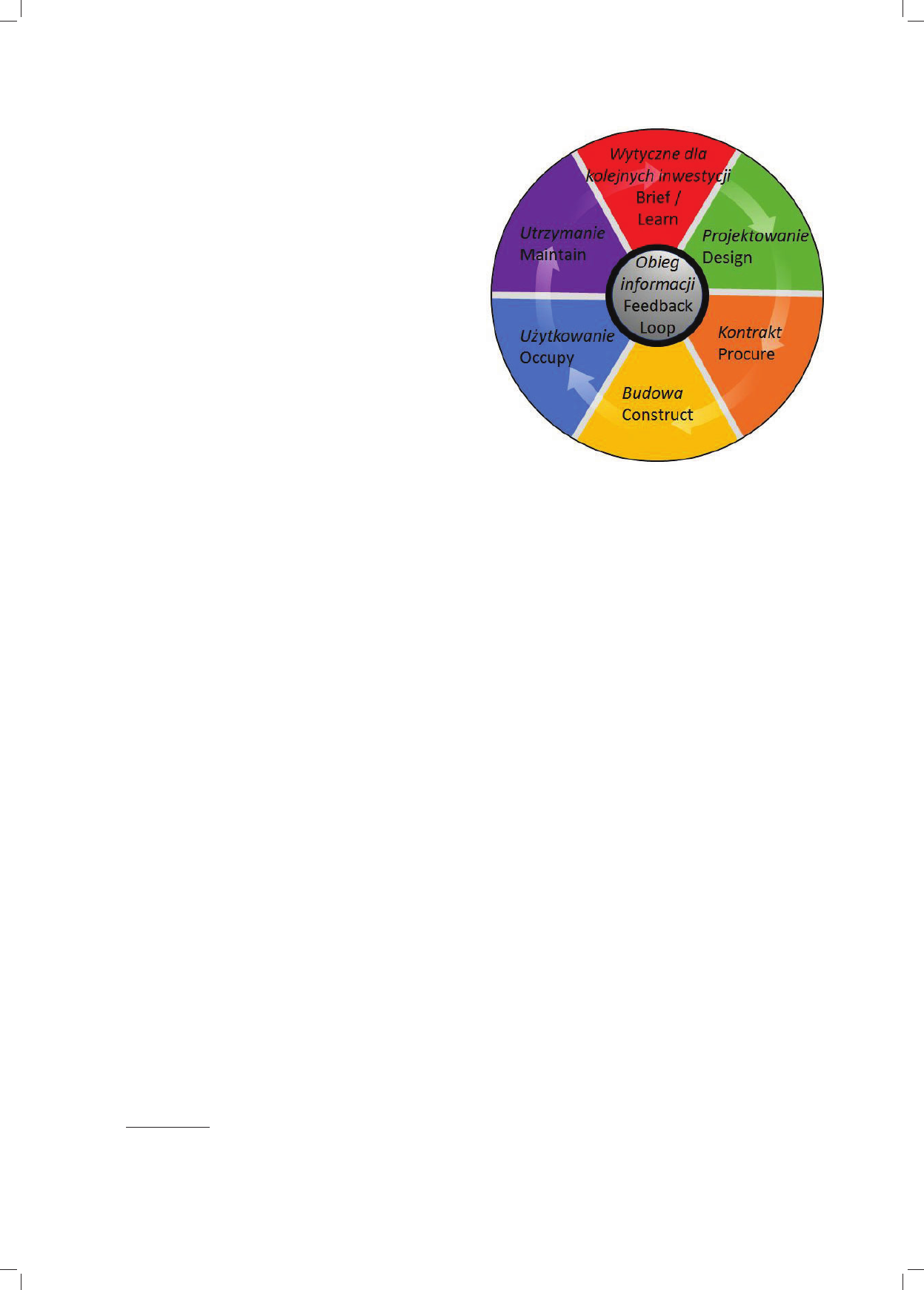
In order to maximise the possibilities of embedding
learning and encouraging the forward loop (Fig. 3), BPE
projects were led by those intrinsically involved in the
buildings and their construction. This involved the build-
ing owner, the architects, engineers and contractors. Im -
portantly, each project team consented to their build-
ings’ performance being made transparent and, as such,
subject to scrutiny by both Innovate UK and the wider
industry.
The Innovate UK protocols for residential buildings
focused on the performance of building fabric, monitor-
ing of energy using/generating equipment and systems,
observation of handover, monitoring of internal environ-
mental quality and assessment of occupant satisfaction.
There were two types of BPE residential project, which
were categorised as:
1. “Post construction and Early occupation” – a review
of the building envelope and installed equipment against
the original design intent, examination of the effective-
ness of the handover process and the occupants’ initial
reactions to the dwellings.
2. “In-use and post occupancy” – an examination of the
performance of the building over a 2-year period and
occupant attitudes once they are more familiar with the
dwelling.
By undertaking this evaluation process, over an ex -
tended period of time (between 6 months and 2 years),
si gn ificant problems were revealed. In fact average total
CO
2
e emissions from dwellings in the portfolio were 2.6
times higher than the average design estimate. None of
the “zero-carbon” design estimates were achieved in prac-
tice [11].
Issues with performance were identified in new build
housing irrespective of developer size or whether they are
privately built or with public funds or subsidies. It was
recognised that smaller developers may be more suscepti-
ble to problems as opposed to larger developers or local
authorities that may have more experience and resources.
Ultimately though, the performance gaps that materialise
tend to be the result of poor communication during the
briefing, design and construction stages and especially in
communication on how challenges are resolved.
Learning from the BPE programme
The reasons for discrepancy in design versus as-built
per formance are numerous and are not purely down to
assum ptions in the calculation models, nor due to expec-
tations that are too optimistic, although these can some-
times be con tributing factors. Discrepancies range from
unin tended losses through poorly constructed fabric, sys-
tem installation and commissioning issues, lack of proper
sequencing of building works, and complicated control
interfaces. The BPE programme has highlighted 10 prior-
ity learning points [11], which are common causes of poor
performance.
1. Keep things simple. This reduces errors in all phases
from design to construction. Using complex and inno -
eksploatacji. Aby poznać różnicę między celami projek-
tantów a tym, co faktycznie się dzieje, gdy mieszkańcy
się wprowadzają, brytyjska Rządowa Agencja Innowacji
rozpoczęła szeroko zakrojony program badawczy.
W 2010 r. opracowano program oceny budynku
(BPE) w celu zrozumienia przyczyn i skutków luki efek-
tyw ności i poszerzenia wiedzy umożliwiającej po prawę
efektywności no wych, niskoemisyjnych budyn ków. W su -
mie osiem milionów funtów szterlingów zostało prze z -
naczonych na finansowanie kosztów oceny nowo wy bu -
dowanych budynków, z których każdy miał pewne cechy
odnoszące się do niskoemisyjnego projektu. Należy pod-
kreślić, że program nie obejmował finansowania budowy
tych budynków. Budynki podczas przeprowadzania badań
były już ukończone (i nie starsze niż dwa lata) albo pra-
wie wykończone. Pieniądze były przeznaczone na ocenę
rzeczywistego stanu budynku w stosunku do zamierzonego
projektu w odniesieniu do efektywności w za kresie śro do-
wiska i energii oraz ogólnego zadowolenia użytkownika.
Celem programów BPE było umożliwienie branży
budowlanej jako całości, a zwłaszcza osobom odpowie-
dzialnym za wybrane do studium przypadku budynki,
zrozumienia wpływu przyjętych strategii projektowania,
metod budowlanych i sposobów użytkowania na działa-
nie różnych rodzajów budynków. Ważne było też określe-
nie roli poszczególnych czynników w finalnym funkcjo-
nowaniu analizowanych budynków.
Projekty obejmowały badania studium przypadku
pojedynczych obiektów lub zespołów zabudowy w nastę-
pujących celach:
– identyfikacji takich cech etapu projektowego i użyt-
kowego, które sprzyjają dobrej efektywności,
– ujawnienia działań, które przyczyniają się do niskiej
efektywności,
– rozważenia możliwości wykorzystania doświadczeń
zdobytych w obiektach mieszkaniowych i niemieszka-
niowych,
– włączenia metody oceny funkcjonowania budynku
do praktyki głównego nurtu przemysłu budowlanego.
Portfolio Innovate UK BPE to ponad 100 projektów,
w tym 53 projekty mieszkaniowe, które obejmują ponad
350 mieszkań, i 48 projektów niemieszkaniowych z 55 od -
dzielnymi budynkami na całym obszarze Wielkiej Brytanii
i Irlandii Północnej. Program badał skuteczność różnych
strategii projektowania, materiałów budowlanych, docelo-
wej efektywności, metod budowlanych i spo sobów użytko-
wania, procedur odbiorów oraz eksploatacji w praktyce.
Program nakładał na uczestników obowiązek wyko-
rzystania zadanych metod protokołowania i raportowania,
co było warunkiem otrzymania środków do przeprowa-
dzenia ocen. Takie wymogi miały na celu zachowanie
spójności i porównywalności rodzaju gromadzonych da -
nych w celu umożliwienia analiz.
W celu zmaksymalizowania możliwości wdrożenia
wniosków płynących z badań i również w odniesieniu do
przyszłych inwestycji projekty BPE były prowadzo -
ne przez osoby, które są nieodłącznie związane z budyn-
ka mi i procesem inwestycyjnym, to znaczy właścicieli
budynków, architektów, inżynierów i wykonawców. Co
ważne, każdy zespół projektowy wyrażał zgodę, aby

40 Mat Colmer
vative systems without prior experience is difficult to
get right.
2. Specify the simplest controls possible and consider
controls early in the design – householders do not have
the time or desire to learn complex systems.
3. Avoid automatic systems that work against saving
energy.
4. Following Passive House principles (emphasising
insulation and airtightness) appears to be the surest route
to lower energy use for heating. But contractors must be
experienced in meeting Passive House standards and
increased time is often needed onsite.
5. Try to achieve good airtightness from the start rather
than having to plug gaps with sealant when construction
is complete. And be more ambitious about airtightness.
BPE projects suggest that a quarter of homes are designed
to meet only the minimum requirement in Building
Regulations – and it is easy to surpass this.
6. Wet construction typically achieves better airtight-
ness than dry lining with plasterboard.
7. Diagnostic testing, airtightness, thermography dur-
ing the latter part of construction can highlight problems
areas that require rectification early.
8. Allow enough time to commission mechanical and
electrical systems properly before handover. Construction
delays often limit the time available for commissioning,
which can cause serious problems.
9. Handover is important and should be provided by
hands on training. Follow-up should be undertaken once
the occupants have had time to settle in and develop per-
sonal queries around the operation of the home.
10. Creating comprehensive and visually diagrammat-
ic guidance for users by referencing best practice guid-
ance and handover processes dramatically assists with
communication.
The Innovate UK Building Performance Evaluation
programme is one of the largest ever building perfor-
mance studies completed, made publicly available and
widely circulated in the UK. Reports from the research
programme can be found on the Building Data Exchange
(www.buildingdataexchange.org.uk).
The Polish perspective – based on industry
representative view given at the bilateral conference
Poland has a very different building stock to the UK.
Unlike the United Kingdom, in Poland the private devel-
opment residential market is relatively young and facing
all the challenges that a developing market has to face. In
the 1970’s through to the very early 1990’s most residen-
tial building was centrally planned, delivered through
housing co-operatives and generally homogenous in na -
ture, utilising mass solutions and standardisation.
From the mid 1990’s the importance of housing coop-
eratives declined. With the economic transition, new
planning and regulatory procedures, encouraging differ-
ent use of space, encouraging social health and allowing
for the use of new mixed and emerging technologies. The
fast development of cities went hand-in-hand with the
increasing pace of their inhabitants’ lives.
jakość funkcjonowania „ich” budynku po oddaniu do
użytkowania została upubliczniona i jako taka podlegała
ocenie przez Inno vate UK i szerzej – przez środowisko
związa ne z branżą bu dowlaną.
Protokoły Innovate UK dla budynków mieszkaniowych
koncentrują się na właściwościach obudowy ze wnętrznej
na etapie użytkowym, monitorowaniu działania urządzeń
i systemów pobierających/generujących energię, spraw-
dzeniu odbiorów technicznych, monitorowaniu jakości
środowiska wewnętrznego i oceny satysfak cji mieszkań-
ców. Badania obiektów mieszkalnych BPE zo stały prze-
prowadzone w dwóch podstawowych kate goriach:
1. „Po zakończeniu budowy i okres początkowego za -
mieszkania” – sprawdzenie właściwości obudowy budyn-
ku i zainstalowanych urządzeń w kontekście pierwotnych
założeń projektowych, badanie skuteczności procesu
przekazania i początkowych reakcji mieszkańców w sto-
sunku do mieszkań.
2. „W trakcie użytkowania i po zamieszkaniu” –
ba danie funkcjonowania budynku przez okres dwóch lat
i opinii mie szkańców po lepszym zaznajomieniu się
z miesz kaniami.
W trakcie realizacji procesu oceniania przez dłuższy
czas (od 6 miesięcy do 2 lat) zostały ujawnione istotne
problemy. Według zebranych materiałów, w rzeczywistoś-
ci średnie całkowite emisje CO
2
e z mieszkań były 2,6
raza większe niż średnia szacunkowa projektu. W żadnym
z badanych obiektów zakładane cele projektowe dotyczą-
ce „zerowej emisji” nie zostały osiągnięte w praktyce [11].
Problemy związane z efektywnością nowych budyn-
ków mieszkalnych ujawniały się wszędzie, niezależnie od
wielkości firmy deweloperskiej i sposobu finansowania,
tj. czy była to inwestycja prywatna, publiczna czy bazują-
ca na dotacjach. Uznano, że mniejsi deweloperzy mogą
być bardziej narażeni na problemy w stosunku do więk-
szych przedsiębiorców lub władz lokalnych, które zwykle
mają więcej doświadczenia i zasobów. Ostatecznie jednak
zdiagnozowane luki w efektywności budynków mają swe
przyczyny w złej komunikacji na etapach planowania,
projektowania i budowy, szczególnie w odniesieniu do
po jawiających się wówczas wyzwań.
Wyciąganie wniosków z programu BPE
Przyczyny stwierdzonych rozbieżności pomiędzy
projektowym a powykonawczym funkcjonowaniem bu -
dynku są liczne. Nie można ich wyjaśnić jedynie w kon-
tekście założeń modeli kalkulacyjnych czy zbyt op ty -
mistycznych przewidywań, choć czynniki te przyczy niają
się do istnienia problemu. Rozbieżności obejmują różne
kwestie, począwszy od niezamierzonych strat energetycz-
nych wynikających z niewłaściwie wykonanej obudowy
bu dynku, błędnej instalacji systemów i urządzeń niezau-
ważonej przy odbiorach technicznych, ale też niewłaści-
wej kolejności robót budowlanych i skomplikowanych
interfejsów sterujących systemami. Program BPE wypra-
cował 10 podstawowych zaleceń odnoszących się do
najczęstszych przyczyn niskiej efektywności [11]:
1. Niekomplikowanie spraw. Takie podejście pozwala
na zmniejszenie liczby błędów we wszystkich fazach od
Lukaefektywności:praktykabrytyjskaapolskipotencjał/Theperformancegap:theUKexperienceandthePolishpotential 41
projektu do budowy. Używanie złożonych i innowacyj-
nych systemów bez wcześniejszego doświadczenia utrud-
nia ich właściwe zastosowanie.
2. Określenie możliwie najprostszych form sterowania
systemami przez użytkowników i rozważenie sposobów
sterowania już na początku projektu – właściciele nieru-
chomości nie mają ani czasu, ani chęci do uczenia się
obsługiwania złożonych systemów.
3. Unikanie automatycznych systemów, które działają
wbrew zasadom oszczędzania energii.
4. Podążanie za wytycznymi domu pasywnego (tj.
położenie nacisku na izolację i szczelność obudowy)
wydaje się najpewniejszym sposobem na obniżenie zuży-
cia energii wykorzystywanej do ogrzewania. Jednakże
wy konaw cy muszą mieć doświadczenie w stosowaniu
stan dar dów domu pasywnego, a czas budowy może ulec
wydłużeniu.
5. Od początku dążenie do uzyskania dobrej szczelno-
ści zamiast konieczności uzupełniania luk, gdy budowa
jest już zakończona. Bardziej ambitne podejście do
szczelności obudowy na etapie projektów. Doświadczenia
BPE sugerują, że jedna czwarta domów jest zaprojekto-
wana tak, aby spełniać jedynie minimalne wymagania
przepisów budowlanych
1
– ich wypełnienie nie wymaga
uważnego podejścia wykonawców.
6.
Budowanie na mokro zazwyczaj tworzy lepszą szczel-
ność niż sucha zabudowa z płyt gipsowo-kartonowych.
7. Testy diagnostyczne, szczelność, termografia w os -
tatnich fazach budowy mogą wyeksponować obszary
problemowe, które wymagają szybkich poprawek.
8. Zapewnienie wystarczającej ilości czasu w celu
właś ciwej instalacji systemów mechanicznych i elek-
trycznych przed przekazaniem. Opóźnienia budowlane
często ograniczają ilość czasu koniecznego do właściwej
regulacji systemów i urządzeń, co może powodować po -
ważne problemy.
9. Przekazanie budynku przyszłym użytkownikom
jest ważnym etapem i powinno być przeprowadzane
przez osoby przeszkolone. Dalsze działania informujące
po winny być podejmowane po tym, jak mieszkańcy się
wprowadzą i zadomowią oraz mają czas na osobiste zapo-
znanie się z funkcjonowaniem domu.
10.
Stworzenie kompleksowych i wizualnie przej-
rzystych wytycznych dla użytkowników, które zawierałyby
wyjaśnienie zalecanych sposobów korzystania z urządzeń
i systemów zainstalowanych w budynku, co zde cydowa-
nie ułatwiałoby komunikację intencji projektowych.
Brytyjski program BPE zrealizowany przez agendę
rządową Innovate UK jest jak dotąd jednym z najwięk-
szych w tego typu projektów badawczych dotyczących
funkcjonowania budynków. Raporty na temat progra-
mu badań są udostępnione publicznie i szeroko rozpow-
szechnione w Wielkiej Brytanii. Można je znaleźć w bazie
Wymia ny Danych Bu dowlanych (www.buildingdata-
exchange.org.uk).
1
W Wielkiej Brytanii obowiązują łagodniejsze wymogi w zakresie
maksymalnej dopuszczalnej wartości przepuszczalności po wietrza
przez powierzchnię obudowy budynków mieszkalnych niż te obowiązu-
jące w Polsce, tj. 10 m
3
/(m
2
.hr)@50Pa.
Today in Poland, private developers have a 90% share
of the multi-family housing market [12]. This is leading
to a dynamic development of Poland’s cities with 25% of
the modern housing stock in Poland being developer lead.
Of the 14 million premises in Poland, about 2.8 million
were built in the last 25 years, which equates to an
approximate build rate of 112,000 dwellings per year
[12]. This is somewhat below to the build rates in the UK,
but still at a volume that is broadly comparable.
As a member of the EU, Poland is impacted by
European Union Climate Change targets, as well as
recently becoming an independent signatory of the Paris
Agreement [5]. The UK has also signed and ratified the
agreement, albeit after more prevarication than Poland.
Improving energy efficiency is one of the headline targets
included in the Europe 2020 strategy.
Poland has very similar objectives and priorities to the
UK in terms of improving energy efficiency. These are
driven through European legislation on buildings (Energy
Performance of Buildings Directive – EPBD) [13] and
energy efficiency (Energy Efficiency Directive – EED)
[14], which requires Member States to progressively
trans form their national building stocks into an energy
per forming and climate-neutral built environment [15].
The EPBD specifies that all new construction, residential
and non-residential, will need to be nearly zero-energy
buildings (nZEB) [16] by the end of 2020.
Poland has developed various strategies in order to
achieve this 2020 milestone. Some are technology and
infrastructure solutions, focused on implementing smart
metering and smart energy networks (designed to reduce
disruptions distribution energy losses and integration of
low-carbon energy sources). But some are based on im -
proving the thermal efficiency and performance of
Il. 3. Ocena funkcjonowania budynków odchodzi od procesu liniowego
w kierunku procesu cyklicznego i analitycznego (M. Colmer)
Fig. 3. Building performance evaluation moves from a one-way linear
process to a cyclical and analytical process (M. Colmer)

42 Mat Colmer
buildings and education programs concerning improve-
ment of energy efficiency.
The adopted nZEB threshold in Poland is relatively
aspirational while still being economically feasible,
although it is significantly less ambitious than in other
Western European countries, who are seeking to reach
climate neutral and fossil fuel free new buildings by 2020.
It is likely that in the longer term Poland will need to
gradually improve the nZEB definition post-2020 to
achieve energy and climate neutral levels by 2030 [5].
The significant reduction of the energy consumption and
related CO
2
e emissions of the building sector will have
a major impact on the security of energy supply, national
economy and the quality of life of Polish citizens.
Despite having targets and national policies for energy
security and environment, Poland appears not to be
engaged with the practical issues of climate change. This
is not entirely unexpected as 90% of electricity in Poland
is generated by coal technologies of low efficiency and
generating high CO
2
e emissions. The economic challenge
of transitioning from this energy source is significant.
Actions undertaken towards improving the efficiency
of electricity use in households as well as business and
public buildings should be one of the main priorities.
However, Poland has a similar issue to that the UK is try-
ing to tackle for decades, in that there is no detailed
understanding on how buildings perform. This in turn
leads to a disconnect between buildings, both old and
new, their environmental impact and the ability to quan-
tify what this is.
From this it can be assumed that building performance
evaluation is far more uncommon in Poland than it is in
the UK, or is it?
Evaluating buildings for occupant satisfaction
Evaluating the performance of buildings in the UK, in
terms of their energy, environmental and occupant satis-
faction, is very uncommon outside of research pro-
grammes such as the one from Innovate UK. Poland does
have a process of evaluating buildings that, although not
formalised or based on environmental sustainability or
energy efficiency. However, it appears that an effective
feedback loop to inform change when new residential
developments are planned is present within the Polish
private real estate industry.
There are aspects that the UK focuses on, energy and
environmental performance that the Polish construction
industry could learn from. Conversely, the aspect that the
UK misses is that buildings are meant, on the whole, for
people.
The dramatic rise in private developers and dynamic
growth of demand for apartments has led the private sec-
tor in Poland to focus far more on how they plan, build
and maintain their buildings and their surroundings so
that they fulfil the needs of their occupants. There is an
ongoing and growing dialogue between developer and
their customer to ensure that the objectives of the deve-
lop ment have been realised and whether the develop-
ments were actually any good.
Polska perspektywa – stanowisko zaprezentowane
na dwustronnej konferencji polsko-brytyjskiej
w maju 2016
Polska ma bardzo odmienne zasoby budowlane od
Wielkiej Brytanii. W przeciwieństwie do Zjednoczonego
Królestwa, w Polsce prywatne budownictwo mieszkanio-
we poza sektorem jednorodzinnym jest stosunkowo
młode i narażone na wszystkie wyzwania, jakim rozwija-
jący się rynek musi podołać. Od lat 70. do wczesnych lat
90. XX w. większość budynków mieszkalnych była pla-
nowana centralnie, oddawana do użytku za pośrednic-
twem spółdzielni i zasadniczo miała jednolity charakter,
wykorzystując masowe rozwiązania i standaryzację.
Od połowy lat 90. XX w. spółdzielnie mieszkaniowe
utraciły swoje znaczenie. W wyniku transformacji ustrojo-
wej, wprowadzenia nowych zasad planowania przestrzen-
nego i przepisów regulujących zachęcano do różnorodnego
wykorzystania przestrzeni, promowania zdrowia społecz-
nego i wyrażano zgodę na wykorzystanie nowo powstają-
cych mieszanych technologii. Szybki rozwój miast następo-
wał równolegle z rosnącym tempem życia ich mieszkańców.
Obecnie w Polsce prywatni deweloperzy mają 90%
udziałów na wielorodzinnym rynku mieszkaniowym
[12]. Prowadzi to do dy namicznego rozwoju polskich
miast z 25% udziałem nowoczesnych zasobów miesz ka-
niowych,będących dziełem deweloperów. Spośród 14 mi -
lionów lo kali w Polsce oko ło 2,8 miliona zostało zbu -
dowanych w ciągu os tat nich 25 lat, co w przybliże niu
od powiada licz bie 112 000 mieszkań rocznie [12]. Jest to
nieco poniżej wskaź nika budownictwa w Wielkiej Bry ta nii,
jednakże wciąż jest to liczba zasadniczo porów nywalna.
Jako członek UE Polska dąży do realizacji celów Eu
-
ropejskiego Programu ds. Zmian Klimatu. W ostatnim cza-
sie
stała się też niezależnym sygnatariuszem porozumienia
paryskiego [5]. Wielka Brytania również podpisała i ratyfi-
kowała porozumienie, aczkolwiek z większymi problema-
mi niż Polska. Poprawa efektywności energetycznej jest jed-
nym z głównych celów zawartych w strategii Europa 2020.
Polska ma bardzo podobne cele i priorytety jak Wielka
Brytania w zakresie poprawy efektywności energetycz-
nej. Wynikają one z prawodawstwa europejskiego doty-
czącego budynków (wytyczne wydajności energetycznej
bu dynków – świadectwo charakterystyki energetycznej
bu dynku EPBD) [13] oraz sprawności energetycznej (dy -
rektywy dotyczące efektywności energetycznej – EED)
[14], zobowiązującego państwa członkowskie do stopnio-
wego przekształcenia ich krajowych zasobów budowla-
nych na efektywne energetycznie i neutralne klimatycznie
środowisko zbudowane [15]. EPBD określa, że wszystkie
nowe budynki mieszkalne i niemiesz kal ne będą musiały
charakteryzować się niemal zerowym zu życiem energii
(budynki zeroenergetyczne) [16] do końca 2020 r.
Polska opracowała różne strategie osiągnięcia tego
celu do 2020 r. Niektóre z nich to rozwiązania techno-
lo
giczne i infrastrukturalne, służące wdrażaniu inteli gent-
nych systemów pomiarowych i inteligentnych sieci ener ge -
tycznych (zaprojektowane, by zmniejszyć straty zwią zane
z zakłóceniami w dystrybucji energii i integra cji źródeł
niskoemisyjnych). Jednak niektóre z nich mają na celu

Lukaefektywności:praktykabrytyjskaapolskipotencjał/Theperformancegap:theUKexperienceandthePolishpotential 43
The Polish Association of Developers, Polski Związek
Firm Deweloperskich (PZFD), includes more than 40%
of developers in the Polish real estate market [17].
Focused mostly in residential, PZFD is a nationwide
organisation and what, in the UK, would be referred to as
a trade association, playing an important role in shaping
the Polish real estate market through campaigns, policy
lobbying and being the authoritative voice of developers.
Its primary goal is to reduce barriers that prevent the mar-
ket development and improve residential construction.
Dorota Jarodzka-Śródka, vice president of PZFD and
founder and owner of one of major developers states that
her company actively seeks feedback from their custom-
ers before and after the purchase of a property. They
achieve this through undertaking questionnaires and
interviews with customers throughout the purchasing
journey. From her viewpoint, given at the Wrocław con-
ference on building performance (Fig. 4), this is under-
taken because the developers often have an ongoing
management relationship with their real estate and are
beginning to understand the importance of building loy-
alty though long-term relations with their customers.
However, an alternative view may be that developers are
more likely trying to avoid immediate problems and build
credibility and reputation for the future.
At the moment questions tend to revolve around build-
ing aesthetics on the assumption that residents only care
about design (colours, quality of finish and materials),
attractiveness of surroundings and safety. However, with-
in these questions are factors of performance including
cost of running the home, insulation and ability to control
heating services [12].
Questions go beyond the needs of the individual. The
developers have a desire to be aware of the differing
needs of the people who inhabit their complexes as all
residents have experiences from different cultural envi-
ronments and social contexts. So the requirements of the
wider community are sought, particularly the combined
view of those in apartment complexes. These are artificial
communities, they do not know each other, yet have to
create a mini society to achieve cohesion. The UK experi-
ence of 1960’s housing estates demonstrates that outdoor
environments, green spaces, peaceful neighbourhoods
and proximity to amenities, are very important for social
satisfaction. Again from the perspective of the PZFD,
Polish developers actively want to know how to create
space in a way that ensures resident integration and feel-
ings of safety.
Finally, consultations with building managers and
administration are also sought, principally about the abil-
ity to manage the building and optimise its performance
to ensure resident satisfaction. Key concerns here are
about control – residents are unable to keep-up with the
newest technologies and unable to manage heating and
humidity in their apartments. Building manager responses
generally suggest that customers are beginning to pay
more attention to dwelling running costs – managing and
reducing consumption of electricity and heating.
This is all undertaken so that the developer can ensure
customer satisfaction post purchase and maximise the
poprawę efektywności i wydajności cieplnej bu dynków
i programów edukacyjnych w zakresie zwiększenia efek-
tywności energetycznej.
Przyjęty próg budynku zeroenergetycznego w Polsce
jest stosunkowo ambitny, wykonalny pod względem eko-
nomicznym, jed nakże znacznie mniej restrykcyjny niż
w innych krajach Europy Zachodniej, które dążą do stwo-
rze nia nowych budynków klimatycznie neutralnych i bez
konieczności stosowania paliw kopalnych. Istnieje prawdo-
po dobieństwo, że po 2020 r. Polska będzie musiała stopnio-
wo udoskonalić definicję budynku zeroenergetycznego, aby
osiągnąć poziomy neutralne energetycznie i klimatycznie
do 2030 r. [5]. Znacząca redukcja zużycia energii i związa-
nej z tym emisji CO
2
e w sektorze budowlanym będą miały
istotny wpływ na bezpieczeństwo do staw energii, stabilność
gospodarki narodowej i jakość życia polskich obywateli.
Pomimo istniejących celów i krajowej polityki bezpie-
czeństwa energetycznego i ochrony środowiska, Polska
nie wydaje się zaangażowana w praktyczne zagadnie nia
związane ze zmianą klimatu. Stanowisko takie nie jest cał-
kowicie zaskakujące, ponieważ 90% energii elek trycznej
w Polsce jest wytwarzane przy użyciu techno logii węglo-
wych o niskiej wydajności i przy generowa niu wysokiej
emisji CO
2
e. Ekonomiczne wyzwanie, jakie sta nowi odej-
ście od tego źródła energii, ma duże znaczenie.
Działania podejmowane na rzecz poprawy efektywno-
ści wykorzystania energii elektrycznej w gospodarstwach
domowych, jak również w przedsiębiorstwach i budyn-
kach użytecz ności publicznej powinny stanowić jeden
z głównych priorytetów. Jednakże Polska ma problem,
z jakim od paru dekad mierzy się Wielka Brytania, a mia-
nowicie brak szczegółowego zrozumienia działania
budynków oddanych do użytkowania. To z kolei prowa-
dzi do braku rzeczywistego powiązania użytkowania
budynków, zarówno starych, jak i nowych, z ich oddzia-
ływaniem na środowisko w ujęciu ilościowym.
Stąd też moglibyśmy założyć, że ocena funkcjonowa-
nia bu dynku jest o wiele mniej popularna w Polsce niż
w Wiel kiej Brytanii. Ale czy tak faktycznie jest?
Ocenianie budynków
pod względem satysfakcji mieszkańców
W Wielkiej Brytanii ocenianie efektywności budyn-
ków pod względem energii, ochrony środowiska i satys-
fakcji mieszkańców jest właściwie przeprowadzane jedy-
nie w ramach programów naukowych takich jak Inno vative
UK. Polska ma metodę oceny budynków, która nie jest
jednak sformalizowana i nastawiona na reali zację celów
zrównoważonego rozwoju środowiska czy efektywności
energetycznej. Okazuje się jednak, że informacje zwrotne
dotyczące wprowadzania zmian podczas planowania
osiedli mieszkaniowych są brane pod uwagę w polskim
prywatnym sektorze nieruchomości.
W Wielkiej Brytanii istnieją kwestie, na które zwraca
się szczególną uwagę, np. zużycie energii i ochrona środo-
wiska. Zagadnienia te mogłyby być częściej uwzględniane
w polskim przemyśle budowlanym. Natomiast aspekt,
którego Wielka Brytania nie bierze pod uwagę, to fakt, że
budynki, ogólnie rzecz ujmując, są przeznaczone dla ludzi.

44 Mat Colmer
effectiveness of future investment decisions. This is in
stark contrast to the activity of the UK, where developers
actively avoid interaction with their “customers” post-
sale, unless the dwelling is social housing (housing pro-
vided for people on low incomes or with particular needs
by government agencies or non-profit organisations).
Summary:
can UK BPE be transferred to Poland?
Firstly, the driver for change needs to be present. The
UK experience demonstrates that is it not always enough
to have Building Regulations that increase the energy
efficiency of buildings as a motivation to improve perfor-
mance in use. Particularly as the UK has a regulatory
regime that bases compliance with Building Regulations
on design, with very weak examination of what is actu-
ally built. There needs to be a desire to ensure that build-
ings are satisfactory. It is essential that all teams involved
in real estate (residential and non-residential) document,
learn from and feed-forward results for future design and
construction decisions. Otherwise no progress will be
made. Baborska-Narożny elaborates on the varied per-
spectives of BPE stakeholders that need to be accounted
for before the evaluations can take off [18].
For Poland to progress further with building perfor-
mance evaluation, the investigations need to go back
further, beyond the occupant phase to the design and
construction phase. The major sources for the perfor-
mance gap tend to be discrepancies between the as de -
signed and as built specifications, this includes thermal
and air permeability details, construction quality, over
complication of systems that lead to lack of control and
inadequate handover processes.
Polish housing is likely to change significantly over
the years to 2030. Both changing standards and regula-
Szybki rozwój sektora prywatnych deweloperów i dy -
namiczny wzrost popytu na mieszkania doprowadził do
sytuacji, w której sektor prywatny w Polsce skupia się
bardziej na metodzie planowania, budowania i utrzymy-
wania swoich budynków oraz ich otoczenia w taki spo-
sób, aby zaspokoić potrzeby mieszkańców. Obecnie trwa
i rozwija się dialog pomiędzy deweloperem a jego klien-
tami mający na celu upewnienie się, że założenia budowy
zostały zrealizowane we właściwy sposób i że były trafio-
ne względem oczekiwań mieszkańców.
Polski Związek Firm Deweloperskich (PZFD) obejmuje
ponad 40% deweloperów na polskim rynku nierucho -
mości [17]. Koncentrując się głównie w budynkach miesz-
kalnych wielorodzinnych, PZFD stanowi ogólnopol-
ską or ga ni za cję – którą w Wielkiej Brytanii określałoby się
jako sto wa rzyszenie handlowe – i odgrywa ważną rolę
w kształto waniu polskiego rynku nieruchomości poprzez
kampanie i politykę lobbingu, a także jest reprezentatyw-
nym głosem deweloperów. Jego podstawowym celem jest
zmniejszenie barier, które uniemożliwiają rozwój rynku
i wprowadzenie ulepszeń w budownictwie mieszkaniowym.
PZFD stara się aktywnie uzyskiwać informacje od
swoich klientów przed zakupem nieruchomości i po nim.
Osiąga to poprzez przeprowadzanie wywiadów i roz pro-
wadzanie kwestionariuszy wśród klientów pod czas całe-
go procesu zakupu. Według Doroty Jodzkiej-Śródki, pre-
zes PZFD, która wystąpiła na majowej konferencji we
Wrocławiu (il. 4), deweloperzy podejmują takie dzia łania,
ponieważ często przedłuża się ich zaangażowa nie w za -
rządzanie nieruchomością po jej wybudowaniu i zaczy na-
ją rozumieć znaczenie postawy lojalności osiąganej po -
przez rozbudowanie relacji ze swoimi klientami. Jed nakże
inny alternatywny pogląd zakłada, że najpraw do podob-
niej pró bują oni uniknąć nagłych problemów i starają się
bu do wać swoją wiarygodność i reputację na przyszłość.
W tej chwili pytania polskich deweloperów wydają się
oscylować wokół estetyki budynku przy założeniu, że
mieszkańcy dbają tylko o projekt (kolory, jakość wykoń-
czenia i materiałów), atrakcyjność otoczenia i bezpie-
czeństwo. Niemniej jednak, w tych kwestiach zawierają się
czynniki efektywności, w tym koszty prowadzenia domu,
izolacja i możliwość kontroli usług grzewczych [12].
Ich pytania wykraczają przy tym poza potrzeby jed-
nostki. Deweloperzy chcą być w pełni świadomi różno-
rodnych potrzeb ludzi wywodzących się z odmiennych
środowisk kulturowych i uwarunkowań społecznych, któ -
rzy zamieszkują ich osiedla. Deweloperzy szukają spo so -
bów określenia wymagań szerszej społeczności, zwłasz -
cza tworzonych przez mieszkańców większych osiedli
budowanych kompleksowo przez pojedynczego inwesto-
ra. Są to sztuczne społeczności, które nie znają się wza-
jemnie, jednakże muszą tworzyć miniwspólnotę w celu
osiągnięcia spójności. Brytyjskie doświadczenia z lat 60.
XX w. dotyczące osiedli mieszkaniowych pokazują, że
środowiska zewnętrzne, tereny zielone, ciche sąsiedztwo
i bliskość udogodnień są bardzo ważne dla zadowole-
nia społecznego. Ponadto, z punktu widzenia PZFD, pol-
s cy deweloperzy zde cydowanie chcieliby się do wie dzieć,
w jaki sposób stworzyć przestrzeń, która za pew niłaby
in teg rację mieszkańców i poczucie bezpieczeństwa.
Il. 4. Polsko-brytyjska konferencja poświęcona BPE
na Wydziale Architektury Politechniki Wrocławskiej, maj 2016
(fot. M. Baborska-Narożny)
Fig. 4. Poland/UK conference on Building Performance at
the Wrocław University of Science and Technology, May, 2016
(photo by M. Baborska-Narożny)

Lukaefektywności:praktykabrytyjskaapolskipotencjał/Theperformancegap:theUKexperienceandthePolishpotential 45
tions and the changing needs of customers will be driven
by a demand for an increase in both building comfort and
performance. Some of this will be delivered through the
mainstreaming of new technologies, both in manufactur-
ing and energy systems. However, all has to be cognisant
of more stringent requirement for new buildings through-
out the European Union and an increasingly demanding
customer.
In Poland we can surmise that developers, using PZFD
as the representation, are interested in building perfor-
mance. Their approach is from the perspective of
improved social capital and well-being, and not from the
perspective of energy efficiency. However, PZFD presen-
tation material promotes their principles: “We research
what we want to design. We optimise. We build. We get
feedback from the inhabitants. We improve” [12]. This is,
in essence, what needs to be achieved through to ensure
that buildings perform as intended.
Overall Polish developers already have good engage-
ment with their real estate, much better than the private
developers of the UK, and this provides an excellent foun-
dation to expand evaluation of buildings to encompass
Building Performance Evaluation as we understand it.
W końcu, prowadzone są również konsultacje z zarząd-
cami budynków i administracją, przede wszystkim na
temat możliwości zarządzania budynkiem i zoptymalizo-
wania jego efektywności w celu zapewnienia satysfakcji
mieszkańców. Kluczowe są tu obawy dotyczące kontroli
– mieszkańcy nie są w stanie stale być na bieżąco z naj-
nowszymi technologiami, jak również zajmować się
ogrzewaniem czy stopniem wilgotności w swoich loka-
lach. Odpowiedzi zarządców budynków na ogół sugerują,
że klienci zaczynają zwracać większą uwagę na koszty
eksploatacji mieszkania – cenią kontrolę i możliwość
zmniejszenia zużycia energii elektrycznej i ogrzewania.
Przeznaczone na własny użytek prace badawcze dewe-
loperów realizowane są po to, aby mogli oni zagwaranto-
wać klientowi satysfakcję po zakupie i zmaksymalizować
efektywność przyszłych decyzji inwestycyjnych. Stanowi
to całkowite przeciwieństwo działalności prowadzonej
w Wielkiej Brytanii, gdzie deweloperzy zdecydowanie
unikają interakcji ze swoimi „klientami” po dokonaniu
sprzedaży, chyba że mieszkanie wchodzi w skład miesz-
kalnictwa socjalnego (mieszkania dla osób o niskich do -
chodach lub o szczególnych potrzebach udostępniane
przez agencje rządowe lub organizacje non profit).
Podsumowanie:
czy brytyjski model oceny funkcjonowania
budynku (BPE) może być przeniesiony do Polski?
Po pierwsze, musi istnieć motywacja do wprowadza-
nia zmian. Doświadczenie brytyjskie pokazuje, że samo
zwiększenie wymogów w zakresie oszczędności energe-
tycznej budynków na poziomie przepisów budowlanych
nie stanowi wystarczającej motywacji do polepszenia efek-
tywności w praktyce. Problem rozbieżności wymogów
i rzeczywistości jest szczególnie dotkliwy tam, gdzie jak
w Wielkiej Brytanii i Polsce, istniejący system regu lacyjny
opiera się na przestrzeganiu przepisów budo wlanych na
etapie projektu, jednakże z bardzo słabym po ziomem kon-
troli tego, co jest rzeczywiście budowane. Musi zaistnieć
chęć zapewnienia, że obiekty są satysfakcjonujące. Klu-
czowe jest, aby wszystkie zespoły zaan gażowane w pro-
ces inwestycyjny (w odniesieniu do bu dyn ków miesz kal-
nych i niemieszkalnych) uczyły się z wcześ niejszych
doświadczeń i modyfikowały pod ich wpływem przy szłe
projekty i decyzje budowlane. W przeciwnym razie żaden
postęp nie będzie miał miejsca. Babors ka-Narożny rozwi-
ja temat różnic w spojrzeniu na BPE przez zaangażowane
strony, których uwzględnienie w procesie oceny warun-
kuje prowadzenie wartościowych badań [18].
Aby w Polsce mógł nastąpić dalszy postęp w ocenie
funkcjonowania budynków, badania muszą być poszerzo-
ne, by objąć wcześniejsze etapy inwestycyjne, przed po -
jawieniem się mieszkańców. Głównymi przyczynami luki
efektywności bywają rozbieżności pomiędzy specyfika-
cjami projektu i budowy, co wskazano w części dotyczą-
cej wniosków z brytyjskiego programu BPE.
Do 2030 r. polskie budownictwo mieszkaniowe prawdo-
podobnie ulegnie znacznym przeobrażeniom. Zarówno
zmieniające się standardy i przepisy, jak również ewo luują ce
potrzeby klientów przyczynią się do wzrostu ocze kiwań

46 Mat Colmer
co do komfortu mieszkaniowego oraz efek tywnoś ci budyn-
ku. Tylko częściową odpowiedzią na to za po trze bowanie
będzie szersze wprowadzanie nowych technologii. Jeśli
chodzi o Polskę, na podstawie wypowiedzi przedstawiciel-
ki PZFD możemy przypuszczać, że dewe lo perzy są zainte-
resowani efektywnością obiektu. Szcze gólnie interesujące
wydaje się dla nich dążenie do wzmac niania kapitału spo-
łecznego i dobrostanu społeczności lokalnych, a nie dąże-
nie do oszczędności energetycznej. Niemniej jednak,
materiał prezentacyjny PZFD [12] promuje swoje zasady
w następujących słowach: „Badamy to, co chcemy zapro-
jektować. Optymalizujemy. Budujemy. Otrzymujemy
informację zwrotną od mieszkańców. Doskonalimy się”.
A to właśnie jest istotą zamierzeń mających na celu zapew-
nienie działania obiektu zgodnie z jego przeznaczeniem.
Ogólnie rzecz biorąc, polscy deweloperzy już przeja-
wiają duże zaangażowanie badawcze, o wiele większe niż
prywatni deweloperzy w Wielkiej Brytanii. To stanowi
doskonałą podstawę do szerszego zastosowania oceny
obiektów, w taki sposób, aby obejmowała ona ocenę
funkcjonowania budynków w naszym rozumieniu.
Tłumaczenie
BogusławSetkowicz
Bibliografia /References
[1] Trends in the United Kingdom Housing Market, 2014. Office for
National Statistics, 2014, http://webarchive.nationalarchives.gov.
uk/20160105160709/http://www.ons.gov.uk/ons/dcp171766
_373513.pdf [accessed: February, 2017].
[2]
UnitedKingdomhousingenergyfactfile, HM Government, 2013, https://
www.gov.uk/government/uploads/system/uploads/attachment_data/
file/345141/uk_housing_fact_file_2013.pdf [accessed: November, 2016].
[3] Europe’s buildings under the microscope, Buildings Performance
Institute Europe (BPIE), 2011, https://europeanclimate.org/docu-
ments/LR_%20CbC_study.pdf [accessed: November, 2016].
[4] TheKeyEnergyPolicyIssuesforEnergySecurityintheUK, Uni-
versity of Exeter, 2011, http://geography.exeter.ac.uk/catherine-
mitchell/The_Key_Energy_Policy_Issues_for_Energy_Security_
in_the_UK_-_Summary_Report.pdf [accessed: November, 2016].
[5] European Commission Climate Action – Paris Agreement https://
ec.europa.eu/clima/policies/international/negotiations/paris/index_
en.htm [accessed: November, 2016].
[6] The Barker Review of Housing Supply, HM Government, 2004,
http://webarchive.nationalarchives.gov.uk/20080107210803/http://
www.hm-treasury.gov.uk/consultations_and_legislation/barker/con-
sult_barker_index.cfm [accessed: October, 2016].
[7] HistoricHousingandPlanningBillwilltransformgenerationrent
intogenerationbuy, Department for Communities and Local Gov-
ernment, https://www.gov.uk/government/news/historic-housing-
and-planning-bill-will-transform-generation-rent-into-generation-
buy [accessed: October, 2016].
[8] Fourth Carbon Budget Review: Technical report, Committee on
Climate Change, 2013, https://www.theccc.org.uk/wp-content uploads
/2013/12/1785b-CCC_TechRep_Singles_Book_1.pdf [accessed:
November, 2016].
[9]
SelectCommitteeonEnvironmentalAuditFirstReport–HousingCon-
struction, 2005, http://www.publications.parliament.uk/pa/cm200405/
cmselect/cmenvaud/135/13507.htm#a23 [accessed: November, 2016].
[10] BuildingInformation Modelling, HM Government, 2012, https://
www.gov.uk/government/uploads/system/uploads/attachment_
data/file/34710/12-1327-building-information-modelling.pdf
[accessed: November, 2016].
[11] Low-carbon homes: best strategies and pitfalls, Innovate UK,
2016, https://www.gov.uk/government/publications/low-carbon-
homes-best-strategies-and-pitfalls [accessed: November, 2016].
[12] Presentation by Archicom/PZFD. Delivered 06-May-16 – Wrocław
University of Science and Technology.
[13] Directive 2010/31/EU of the European Parliament and of the
Councilof19May2010ontheenergyperformanceofbuildings,
2010, http://eur-lex.europa.eu/legal-content/EN/ALL/;ELX_SESS
IONID=FZMjThLLzfxmmMCQGp2Y1s2d3TjwtD8QS3pqdkhX
ZbwqGwlgY9KN!2064651424?uri=CELEX:32010L0031
[accessed: April, 2017].
[14] Directive 2012/27/EU of the European Parliament and of the
Councilof25October2012onenergyefficiency, 2012, http://eur-
lex.europa.eu/legal-content/EN/TXT/?qid=1399375464230&uri=
CELEX:32012L0027 [accessed: April, 2017].
[15] ImplementingNearlyZero-EnergyBuildings(NZEB)inPoland–
TowardsaDefinitionandRoadmap, 2012, http://bpie.eu/wp-con-
tent/uploads/2015/10/nZEB-Full-report-Poland.pdf [accessed:
November, 2016].
[16] European Commission – nearly zero-energy buildings, https://
ec.europa.eu/energy/en/topics/energy-efficiency/buildings/nearly-
zero-energy-buildings [accessed: October, 2016].
[17] Polski Związek Firm Deweloperskich (PZFD), http://en.pzfd.pl
[accessed: October, 2016].
[18] Baborska-Narozny M., Buildingperformanceevaluation–under-
standingthebenefitsandrisksforthestakeholdersinvolved.Les-
sonsforPolandbasedontheUKexperience, „Architectus” 2017,
Nr 1(49) [w druku].
Streszczenie
Niniejszy artykuł dotyczy tematyki, jakiej poświęcona była polsko-brytyjska konferencja, która odbyła się w maju 2016 r. na Wydziale Architek -
tury Politechniki Wrocławskiej. Rozważano wówczas możliwość zastosowania metodyki oceny funkcjonowania budynku (BPE) rozwiniętej
w Wielkiej Brytanii do polskiego kontekstu. Artykuł został opracowany na podstawie wcześniejszych doświadczeń autora z prowadzenia rządo wego
programu badań BPE w Wielkiej Brytanii oraz obserwacji i prezentacji innych prelegentów, wygłoszonych podczas wyżej wymienionego spotkania.
Autor wykorzystał te obserwacje i odniósł się do podstawowych i stosowanych badań prowadzonych w Wielkiej Brytanii w celu dokonania pewnych
porównań pomiędzy Polską a Zjednoczonym Królestwem. Porównanie takie zostało dokonane w nadziei, że podstawowe badania nad oceną funk-
cjonowania budynku będą mogły być przeprowadzone w przyszłości w Polsce.
Słowa kluczowe: luka efektywności, ocena funkcjonowania budynku, wymiana wiedzy
Abstract
This paper discusses the industry driven content of the May 2016 Poland/UK bilateral conference and the potential of building performance evalu-
ation in Poland. It is based on the author’s experience of leading a major UK government funded building performance evaluation programme and
observations and presentations given at the Wrocław University of Science and Technology conference. The author has used these observations and
referred to primary and secondary research carried out in the UK in order to draw some comparisons between Poland and the UK. It is hoped that
primary research in to building performance evaluation can be carried out in Poland in the future.
Key words: performance gap, building performance evaluation, knowledge exchange