
2026
1(85)
Maria Jankowska*, Paweł Pedrycz**
Design and construction of the first Polish urban aquaponic farm
– case study
DOI: 10.37190/arc260107
© by the Author/Authors. Licensee WUST.
Published in open access. CC BY-NC license.
Abstract
The article presents a case study on the design of an urban aquaponic farm in Poland. Such a farm was established in Wrocław as part of the
research and implementation project Urban Stormwater Aquaponic Garden Environment (USAGE), nanced by the state budget under the Applied
Research Programme and by Norwegian Funds (Norway Grants). The planning and design of the farm was a multi-stage process that can be catego-
rized into three main groups: (1) technological requirements of aquaponics, (2) public engagement, and (3) creativity and design expertise (urban and
architectural). The described process resulted in the design and creation of the farm as a public space in the city, consisting of a composition of three
modied shipping containers and additional elements, which – beyond its primary technological function – also serves as a meeting place and an
educational venue.
Key words: aquaponics, sustainable food production, urban agriculture, water circulation, New European Bauhaus
Introduction
In recent years, the growing interest in urban food pro-
duction systems has been embedded within broader en
vi ron -
mental, climatic, and economic transformations. On going
ur banisation, climate change, the degradation of na tural
resources, the instability of global supply chains, and the
increasing vulnerability of logistical systems to geopolitical
crises have led to a situation in which local models of food
production are gaining importance not only in ecological
terms, but also as a matter of strategic relevance. In the aca-
demic literature, these phenomena are examined within the
frameworks of concepts such as urban agriculture, vertical
farming, glocalism, and the idea of so-called edible cities
(or edible settlements) (Mougeot 2005; Despommier 2010;
Viljoen, Bohn 2014; Barthel, Parker and Ernstson 2015).
Glocalisation, understood as the coexistence of global
and local processes, emphasises the growing role of local
pro duction systems in enhancing the resilience of urban
structures (Eigenbrod, Gruda 2015). Within this perspective,
the food system ceases to be viewed solely as an economic
sector and instead begins to be interpreted as a component
of the city’s critical infrastructure. Concepts of urban resil
-
ience and crisis resilience indicate that the capacity for lo-
cal, stable, and scalable food production is becoming a key
element in cities’ adaptation to environmental, economic,
and social uncertainties (Latawiec et al. 2014).
An important context for the development of urban farms
is also provided by the concept of the circular econo my,
which redenes the ways in which resources, waste, and
material ows are understood (Geissdoerfer et al. 2017).
Aquaponic systems constitute a model example of the in-
tegration of biological and technological processes within
closed cycles of matter and water, minimising resource
losses while reducing the demand for synthetic fertilisers
(Goddek et al. 2019). At the same time, they align with the
concept of sitopia, which emphasises the systemic role of
food in shaping the spatial and social structures of the city
(Steel 2008).
* ORCID:
0000-0002-4658-9055. Faculty of Architecture, War-
saw University of Technology, Poland, e-mail: maria.jankowska.dokt@
pw.edu.pl
** ORCID:
0000-0001-9892-1964. Faculty of Architecture, War-
saw University of Technology, Poland.
78 Maria Jankowska, Paweł Pedrycz
The development of urban food systems is also analysed
within the frameworks of concepts such as food safety, food
security, and food sovereignty, which emphasise the impor-
tance of local control over food production, availability, and
quality (Lansdown 2011). In response to these challenges,
contemporary cities are increasingly formulating their own
food strategies (including Milan, Ghent, and Wrocław), in-
tegrating issues of production, logistics, environmental sus-
tainability, and public education (Morgan, Sonnino 2010).
The signicance of local food systems extends beyond
technological considerations, encompassing cultural and so -
cial processes as well (Specht et al. 2014). Concepts such as
slow food, which promote regionality, transparency, and the
shortening of supply chains, as well as notions of neomedi-
evalism – interpreted as a return to local, decentralised pro-
duction structures – indicate a growing interest in models
of self-suciency and independence. In this context, urban
food production becomes part of a broader socio-spatial
transformation (Viljoen, Bohn 2014).
The issue of food self-suciency extends beyond culti-
vation itself, encompassing the availability of water, energy,
and raw materials required for fertiliser production. Under
conditions of increasing pressure on natural resources and
the instability of commodity markets, particular importance
is attributed to technologies that enable the integration of
cycles of matter, water, and nutrients within local produc-
tion systems.
Against this background, aquaponics emerges as a solu-
tion that combines high resource eciency, the ability to
control the production environment, and the potential for
implementation in urban conditions. Aquaponics is a food
production system that integrates the cultivation of aquatic
organisms with plant production in a controlled environ-
ment (Somerville et al. 2014). Fish provide nutrients that
are transformed by microorganisms and utilised by plants as
fertiliser, while plants and biolters improve water quality,
enabling its recirculation. This integration allows for e-
cient resource use, a signicant reduction in water consump-
tion, and a limitation in the use of synthetic fertilisers.
The urban aquaponic farm described in this article consti-
tutes a case study demonstrating the potential of such
solu-
tions in the context of contemporary environmental and
urban challenges. The project may be interpreted as an
ex perimental attempt to implement the principles of the
cir cular economy, urban resilience, and local food produc-
tion within real urban conditions. Its signicance extends
beyond
the technological dimension, encompassing spatial,
social, infrastructural, and environmental aspects, and there-
by providing an empirical contribution to the discourse on
the role of urban food systems.
Container-based aquaponic farms
– selected examples
One of the earliest projects of this type was Micro-Farms
by Damien Chivialle, developed as part of the Mediama tic
initiative in Amsterdam (Triboli, Chivialle 2025; Farhan-
gi et al. 2020). The project is based on a standard ship-
ping container equipped with an aquaponic system, while
a greenhouse structure is installed on its roof. The entire
installation functions as an autonomous food production
module, operating within the urban environment as both
a productive and educational unit.
A similar concept is developed in the British project
GrowUp Box, which involves the adaptation of a ship
-
ping container into an urban farm combining sh cultiva-
tion with plant production in a hydroponic system (Garcia
Menocal 2013; Crepeau 2014). The project is characterised
by a compact layout, full water recirculation, and the use of
renewable energy sources. Its aim was to create a scalable
prototype that could be replicated within urban environ-
ments.
In turn, the Berlin-based example described in the article
“Ecient City Farming” presents the adaptation of ship-
ping containers as elements of infrastructure supporting ur-
ban agriculture and environmental education (Slow Travel
Berlin 2013). In this approach, the container becomes a tool
for experimentation, technological demonstration, and the
development of ecological awareness within conditions of
limited urban space.
All of the aforementioned projects conrm the potential
of container-based architecture as a tool for integrating pro-
ductive, educational, and social functions. The urban aqua-
ponic farm in Wrocław described in this article develops
these premises further by adapting container-based solu-
tions to the local urban, climatic, and social context, and
by employing them as part of a broader urban food strategy
and a tool for enhancing urban resilience.
The Urban Stormwater Aquaponics Garden Environment
(USAGE) project constitutes an interdisciplinary and in-
ternational initiative implemented between 2021 and 2024,
aimed at developing two aquaponic installations – located in
Wrocław and Oslo. In both locations, multifunctional spaces
were created, designed to support ecological food produc-
tion, education, and integration with stormwater collection
and treatment systems. A key premise of the project was the
planning of an urban farm based on the expectations of local
communities as well as specic urban conditions. In addi-
tion to production facilities, environmental education centres
were established, along with new spaces for social interac-
tion and activity within the city’s green areas. As part of the
project, a scalable model for urban farming was also devel-
oped, enabling its future implementation by municipalities
as well as small and medium-sized enterprises. The project
was funded by the state budget under the Applied Research
Programme and by Norwegian Funds (Norway Grants).
Methods
The article is based on a qualitative research approach,
with the case study serving as its primary methodological
framework. This method is widely applied in urban, ar-
chitectural, and environmental research, particularly in the
analysis of complex, context-dependent spatial phenomena
and innovative design solutions. The case study approach
enables an in-depth examination of a phenomenon within
its real functional, technological, and social context, inte-
grating diverse sources of data.
The application of the case study method is justied by
the nature of the project under consideration, which is ex-
DesignandconstructionoftherstPolishurbanaquaponicfarm–casestudy 79
perimental and prototypical, and strongly embedded in local
conditions. The analysed object does not represent a typical
solution, which limits the applicability of quantitative and
comparative methods. Instead, this approach enables the re-
construction of the design process, the identication of key
decisions, and the analysis of relationships between tech-
nology, space, and users. The study was exploratory and
qualitative in nature.
The basis of the analysis is an urban aquaponic farm lo -
cated in Wrocław, developed as part of a research and im -
ple mentation project. The subject of the study includes both
the physical structure itself and the processes of its planning,
design, and realisation. The analysis encompasses spatial,
technological, organisational, and social conditions. The
case study includes an examination of the site at two scales:
urban and local. At the broader scale, the analysis considers
the farm’s position within the functional and spatial struc-
ture of the city, its relationships with urban in fra structure,
and its accessibility. At the local scale, atten tion is given to
the immediate surroundings, solar exposure conditions, vi-
sual connections, and the character of the space in which
the facility is situated. To illustrate the spatial context, carto-
graphic methods were employed, in particular location maps
presenting the position of the site within the urban structure.
These maps serve both analytical and interpretative func-
tions, enabling the assessment of relationships between the
investigated development and the broader urban layout.
The design and implementation process was monitored at
all stages by the authors involved in the project. The observa-
tion focused on spatial, functional, and technological aspects,
as well as on interactions between participants in the invest-
ment process. Due to the direct involvement of the research
team in the design and implementation of the farm, the study
also exhibited characteristics of participant observation.
At the conceptual stage, individual interviews were con-
ducted with representatives of the project’s stakeholders.
The aim was to identify their expectations, needs, and per-
ceptions of the planned investment within the urban con-
text. This method enabled the identication of qualitative
factors such as spatial perception, social acceptance, and
the expected functions of the facility.
An important component of the research process was sys-
tematic photographic documentation covering successive
stages of the farm’s construction and operation. The visual
material served as a source of research data, enabling the
analysis of the relationship between the object and its sur-
roundings, its architectural form, and patterns of spatial use.
The applied approach is interdisciplinary in nature, inte-
grating design, spatial, and social perspectives. Qualitative
methods are particularly justied in this case, as the subject
of analysis is the design process itself, as well as the com-
plex relationships between technology, the urban environ-
ment, and users.
Planning of a modular aquaponic farm in Wrocław
Location
The project was planned within an urban environment, as
determined by its functional and conceptual premises. Due
to the need to integrate food production with urban infra-
structure and ensure access for end users, a location within
a large city represented the most justied solution. Wrocław
was selected – a city characterised by unique hydrograph-
ic and cultural conditions. The presence of the Oder River,
along with its numerous branches and canals, shapes not
only the urban landscape but also the city’s historical devel-
opment and its relationship with water management. The
long-standing tradition of aquaculture in Lower Silesia, ex-
emplied by the Milicz Ponds, also proved to be an import-
ant criterion in the decision-making process.
This heritage constitutes a signicant cultural and tech-
nological context for the development of modern food pro-
duction systems such as aquaponics. Locating the farm in
Wrocław made it possible to combine contemporary solu-
tions with the city’s local identity, its water resources, and
its historical traditions.
The rst stage of the planning process involved the selec-
tion of a specic site, aligned with the project’s objectives.
Key criteria included accessibility, distance from the city
centre, legal feasibility, and the potential for recreational
and educational synergy. Additional considerations encom-
passed the surrounding context, transport connectivity, the
needs of the local community, the possibility of agreements
with landowners, access to water and urban utilities, as well
as soil conditions. Potential locations for the farm can be
categorised according to accessibility and degree of privacy
into three groups: (1) private spaces; (2) semi-public spac-
es (such as inner courtyards, residential estates, university
campuses, and research complexes); and (3) public spaces
(including squares, streets, and parks). This classication
provides a framework for assessing both spatial integration
and social accessibility of the proposed intervention. A sep-
arate but closely related issue concerns the relationship be-
tween the proposed structure and the surrounding existing
(or planned) built environment, as well as regulatory con-
straints, including local zoning plans, permissions for tem-
porary structures, minimum requirements for biologically
active surfaces, and heritage and environmental protection.
Within this context, at least three spatial congurations can
be distinguished: (a) a freestanding structure, physically in-
dependent from other buildings; (b) an “attached” structure,
directly adjoining existing buildings; and (c) an “integrated”
structure, fully incorporated into other buildings or located
within them. These congurations correspond to increasing
levels of technological and organisational complexity.
The above classication can be structured in the form
of a matrix, in which each eld represents a distinct set of
challenges and leads to a dierent spatial and functional
character. From the perspective of the project objectives, the
most relevant congurations were: 2a (semi-public spaces
– freestanding structure), 2b (semi-public spaces – attached
structure), 3a (public spaces – freestanding structure), and
3b (public spaces – attached structure). For the purposes of
the pilot farm, variant 2a was selected as the most feasible
option in terms of formal simplicity and technological re-
quirements. Within the scope of further research, it would
be justied to test additional congurations, particularly
those involving interventions in representative public spac-
es – such as a signicant urban square.
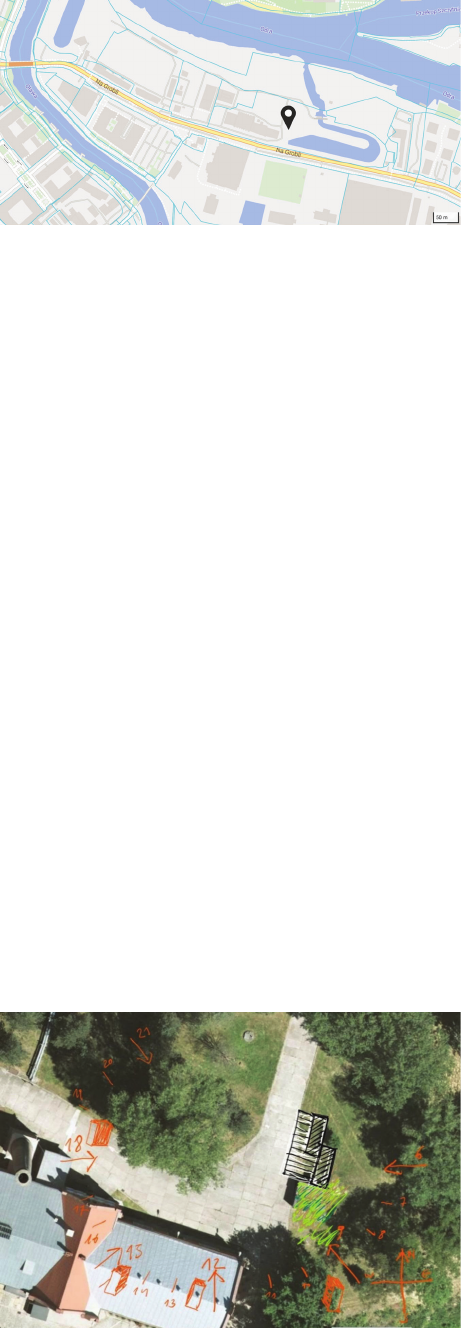
80 Maria Jankowska, Paweł Pedrycz
particular attention given to minimising shading from exist-
ing structures, maximising sunlight for plant cultivation, and
introducing partial shading in the meeting area during mid-
day hours. The potential for creating an intimate gathering
space was also considered. As a result of these analyses, the
farm was located in the area of a paved intersection in the
central-eastern part of the site. A curved widening of a tech-
nical road, surfaced with large-format concrete slabs, forms
a natural preguration of a public square, further dened by
greenery on the western side. In order to fully exploit the de-
sign potential of this location, the farm was positioned along
its eastern edge, partially extending onto a grassy area. At
the same time, a sense of spatial enclosure was suggested
through a recessed corner of the architectural form. Subse-
quent design decisions followed from the development of
the enclosure for the research installation itself.
Diagnosisoflocalcommunity
Due to the innovative nature of the programme, the de-
sign process did not follow a conventional trajectory, but in-
stead evolved through the integration of expert knowledge
and the expectations of the local community. Decisions
made by experts were informed by ideas proposed by res-
idents of Wrocław, while community-generated concepts
were subject to expert evaluation. During the planning of
the individual functions of the AquaFarm, key stakeholder
groups were identied. From these, 20 representatives were
selected, with whom individual, semi-structured interviews
were conducted in order to better understand the expecta-
tions of the local community.
Preliminarytechnologicalandfunctionalanalysis
Following the detailed site analysis, the design of the in-
stallation infrastructure was initiated. Decision-making fo-
cused on the number and types of tanks, ltration systems,
pumps, ventilation, lighting, monitoring systems, and oth-
er components required to maintain the health of both sh
and plants. The selection of these solutions was determined
by the operational characteristics of aquaponic systems, in
which sh cultivation and plant production remain closely
interdependent.
During the cultivation of sh or crustaceans in aquapo -
nic farms operating within a closed-loop recirculating system
(RAS – Recirculating Aquaculture System), compounds such
as ammonia – originating from animal waste – are gene-
rated. Within certain concentration ranges, these substances
are toxic to aquatic organisms; however, they simultane-
ously constitute valuable nutrients for plant growth (United
States Environmental Protection Agency 2013; Camargo,
Alon so 2006). Taking this relationship into account, the
aqua ponic system of the Wrocław farm was enclosed with-
in food-grade adapted shipping containers and equipped
with three aquaculture tanks for animal cultivation. Water
con taining waste products is pumped from these tanks into
a unit equipped with both mechanical and biological ltra-
tion systems. Within the biological lter, appropriately se-
lected bacteria convert ammonia into nitrates, which are less
toxic to animals and more readily absorbed
by plants. At the
Within the semi-public, freestanding conguration (vari
-
ant 2a), a site belonging to the Wrocław municipal water-
works was selected. This choice was driven by thematic
alignment – particularly issues related to water treatment
and conservation – as well as the resulting openness to insti-
tutional collaboration. The historic and industrial character
of the site had a positive impact on both the social reception
of the project and the functioning of the farm itself. The fa-
cility was established approximately 4 km east of the Mar-
ket Square, between the Oder and the Oława rivers, within
the revitalised “Na Grobli” complex. This location is sur-
rounded by buildings with academic, educational (includ-
ing Hydropolis), industrial, and infrastructural functions,
complemented by a residential component.
Urbananalysis
Due to the considerable size of the site and the multi-
ple possible locations for the farm within it, a general urban
analysis of the plot was conducted. This included, among
other aspects, the identication of visual axes, viewpoints,
and access routes (the facility was positioned so as to re-
main visible from multiple vantage points and perspectives).
Solar exposure conditions were also analysed (Fig. 2), with
Fig. 1. Location of the aquaponic farm in Wrocław
(source: National Geoportal, elaborated by M. Jankowska)
Il. 1. Lokalizacja farmy akwaponicznej we Wrocławiu
(źródło mapy: Geoportal Krajowy, oprac. M. Jankowska)
Fig. 2. Location of the aquaponic farm in Wrocław
(source: Google Earth, elaborated by P. Pedrycz)
Il. 2. Lokalizacja farmy akwaponicznej we Wrocławiu
(fot. Google Earth, oprac. P. Pedrycz)
DesignandconstructionoftherstPolishurbanaquaponicfarm–casestudy 81
next stage, following biological ltration, the nutrient-rich
water is directed to the plant cultivation area, located on
a dedicated rack system, where two hydroponic methods
are employed. In the NFT method (nutrient lm technique),
plant roots are continuously washed by a thin lm of ow-
ing water, whereas in the DWC method (deep water cul-
ture), roots are submerged in a deeper body of intensively
aerated and continuously refreshed water (Chowdhury, Sa-
marakoon and Altland 2024). Subsequently, water puried
of substances harmful to aquatic organisms returns from
the hydroponic system to the cultivation tanks, thereby
completing the closed-loop cycle. In functional terms, the
complex was designed to accommodate not only the aqua-
ponic installation and the rainwater collection system, but
also auxiliary and complementary spaces, including storage
facilities and a dedicated meeting area.
Costplanningandmanagement
Following the preliminary technological and functional
analyses, an organisational and nancial framework was
developed for the initial phase of the farm’s operation. De-
tailed analyses of technological performance and economic
eciency are being conducted within the USAGE project
and will be comprehensively examined and reported upon
after the completion of the full research period. At the initial
stage, it was necessary to establish a set of assumptions and
outline temporal and nancial parameters that would enable
the implementation of the farm within the allocated bud-
get. Consequently, it was decided to realise the core of the
farm in the form of the aquaponic installation itself, without
the rainwater collection and treatment module or accom-
panying functions such as the meeting space and storage
facilities.
As a result of market analysis, the decision was made to
construct a modular facility using shipping containers. This
solution is commonly employed in temporary projects or
in contexts where the potential need for relocation must be
considered (Giriunas, Sezen and Dupaix 2012). The mod-
ular structure of containers allows for exible adaptation
and future expansion of the facility. Containers can be com-
bined in various congurations, forming larger structures
or functional modules, and can be adapted to accommodate
electrical, sanitary, and HVAC systems (heating, ventila-
tion, and air conditioning). In the context of the selected
site, the aforementioned advantages of modular construc-
tion played a signicant role, particularly by enabling the
phased implementation of the project. An additional ben-
et was the possibility of applying an analogous structural
solution to the twin installation developed in Oslo. The use
of container technology made it possible to achieve compa-
rable systems in both locations, which is important for the
comparative analysis of future results. Despite the historic
character of the surroundings, the technical associations of
container architecture did not pose a conict, as the imme-
diate context is dened by an industrial and infrastructural
character. A key aspect of the design process was therefore
the integration of the infrastructure into the urban context,
with particular attention to aesthetics and accessibility for
the local community.
Architecturalconcept
A clearly dened architectural concept was necessary in
order to obtain formal approvals and to establish a frame-
work for the further development of the design. In pursuit
of maximum modularity and compactness of the complex,
as well as for educational purposes, a clear separation of
functional zones into distinct containers was adopted. The
red container houses the “animal” module, the blue con-
tainer the plant module, and the green container auxiliary
facilities and a meeting room. The roof surface is ultimate-
ly intended to exceed the footprint of the containers. This
results not only from the increased demand for water col-
lection, but also from broader design intentions. The roof
was conceived as an installation for water capture and
redistribution, a protective layer for the container units,
and at the same time as an element shaping a welcoming
space and reinforcing the identity of the place. This led to
the introduction of a pergola structure, designed to provide
pleasant shading from the southern side while also acting
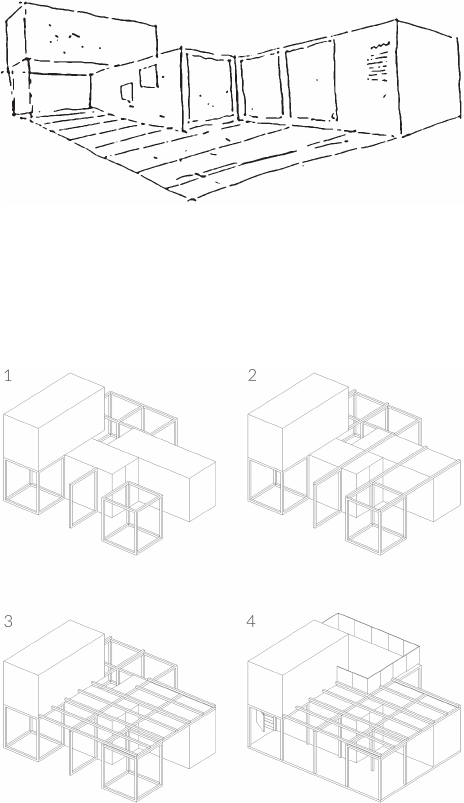
Fig. 3. Conceptual sketch of the architectural form
of the aquaponic farm in Wrocław (drawning by P. Pedrycz)
Il. 3. Szkic formy architektonicznej farmy akwaponicznej
we Wrocławiu (rys. P. Pedrycz)
Fig. 4. Structural diagram of the terrace and green roof support system
(elaborated by M. Jankowska)
Il. 4. Schemat konstrukcji wspierającej taras i zielony dach
(oprac. M. Jankowska)
82 Maria Jankowska, Paweł Pedrycz
as an attractor for visitors. The modularity of the container
system and its orthogonal arrangement formed the basis for
a square
modular structural grid applied to both the pergola
and the green roof. The span of the grid corresponds to the
width of a container. As the length of a container is not
a multiple of its width, modular coherence was achieved
by partially overlapping two containers in plan at ground
level. The resulting architectural form, composed of adapt-
ed shipping containers, is bordered on one side by clusters
of greenery and on the other by a historic building. The
individually se lected colour scheme of the containers is
consistent with the façades of neighbouring structures and
the surrounding natural context. A distinct local accent is
provided by the blue container, positioned at the highest
level as a deliberate “counterpoint” to the dominant water
tower in the vicinity.
Planningpermission
The aquaponic farm described in this study is located in
an area not covered by a local spatial development (zon-
ing) plan. This constituted an important condition for the
design process, although planning status was not a primary
criterion in the initial site selection. From the perspective
of representativeness, the absence of a local plan may be
regarded as an ambivalent condition. On the one hand, the
lack of formal planning for a fragment of the city can be
seen as a shortcoming, and ideally, future research should
aim to test scenarios in which the farm is located within
an area governed by a local spatial development plan. On
the other hand, the absence of such a plan is a relatively
common situation in urban contexts, particularly in central
areas, where it is often assumed that the spatial structure is
already consolidated.
The submission of an application for development con
-
ditions (planning permission) required the design team to
dene a range of parameters within the relevant formal
documentation. The proposed development did not repre-
sent a typical application of this procedure, which is gen-
erally intended for the inll of homogeneous urban fabric
with buildings of similar type and scale. In the case of the
Wrocław farm, the situation involved the insertion of a rel-
atively small structure within a complex of monumental in-
dustrial buildings of signicant scale and historic character.
During the procedure, and in accordance with its require-
ments, the proposal was consulted with relevant authorities
– most notably the oce of the regional heritage conserva-
tor. The project was approved, and the administrative deci-
sion granting development conditions was issued.
Technicaldesign
The specic technical design of the Wrocław installation
was based on positive experiences gained from an earlier
Norwegian prototype. Both systems were manufactured
by a specialised Norwegian–Turkish company, which pro-
duced the installations according to the provided speci-
cations – primarily concerning the dimensions of the ex-
ternal enclosure and the required performance parameters.
The technological design was conceived as preliminary and
open to modication in response to ongoing operational ex-
perience.
The idea of self-suciency inherently implies a reduc-
tion in dependence on urban infrastructure networks. At the
same time, however, the assumption of the farm’s “urban-
ity” allows for – if not encourages – the utilisation of re-
sources available within the urban environment. In the case
described, the technological process is primarily associated
with a demand for electrical energy, and to a lesser extent,
water.
Construction of the aquaponic farm
Prior to the construction of the container-based structure,
appropriate site preparation was required. This included
clearing and levelling the terrain, as well as carrying out
necessary earthworks. Structural stability and load-bearing
capacity had to be ensured – for example, through the use
of concrete foundation slabs (Giriunas, Sezen and Dupaix
2012). The main construction phase involved assembling
the delivered containers in the designated spatial congu-
ration. Depending on the design, containers can be stacked
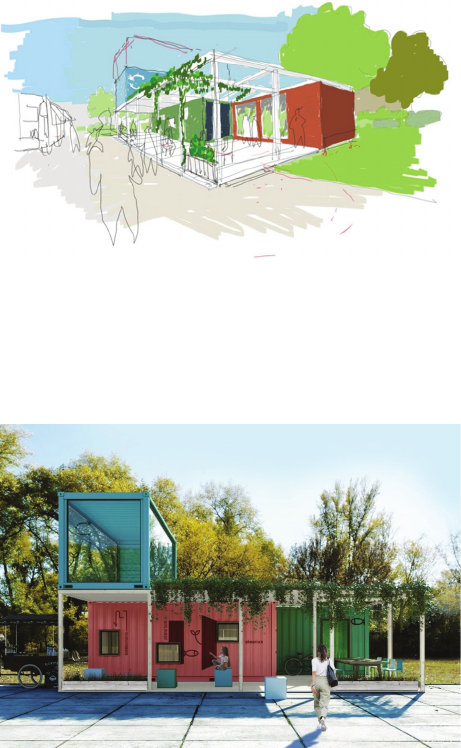
Fig. 5. Conceptual sketch of the aquaponic farm in Wrocław
(elaborated by P. Pedrycz)
Il. 5. Szkic farmy akwaponicznej we Wrocławiu
(oprac. P. Pedrycz)
Fig. 6. Architectural visualization of the aquaponic farm in Wrocław
(elaborated by M. Jankowska)
Il. 6. Wizualizacja farmy akwaponicznej we Wrocławiu
(oprac. M. Jankowska)
DesignandconstructionoftherstPolishurbanaquaponicfarm–casestudy 83
vertically, arranged side by side, or combined in other con-
gurations. The farm was designed to allow for scalability
and future expansion of the facility. Ensuring proper con-
nections between containers was essential to create a sta-
ble and safe structure. Following installation, all necessary
modications and nishing works were carried out. These
included cutting openings for windows, installing electrical,
plumbing, and ventilation systems, applying thermal insu-
lation, nishing walls, oors, and ceilings, and completing
the external painting. Within the prepared containers, the
installation of essential internal components was then un-
dertaken, including sh tanks, ltration systems, and plant
cultivation systems.
Green roof
A modular structure with a slight slope in one direction
(towards the gutter) was installed on the roof of the contain-
ers. On this lightweight structural framework, a system of
waterproong and green roof layers was designed. These
include mineral wool (serving as a retention and drainage
layer), a substrate layer (for plant rooting), and a vegetation
mat (in the form of a pre-grown mat with a sedum mix-
ture). An alternative solution – based on the use of modular
ltering planters – was also considered; however, it was
ultimately rejected due to the higher estimated cost of im-
plementation (Pérez et al. 2025).
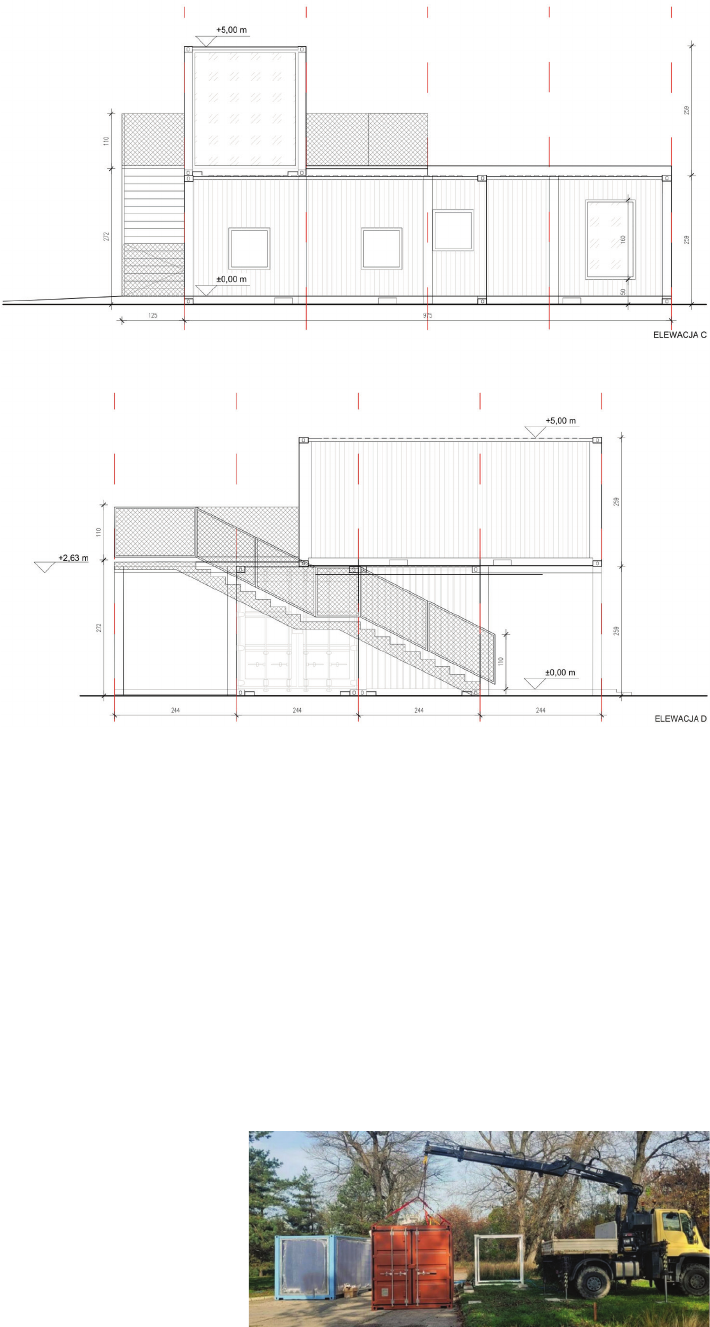
Fig. 7. Architectural elevation
drawings of the aquaponic farm
in Wrocław
(elaborated by M. Jankowska)
Il. 7. Rysunki elewacji farmy
akwaponicznej we Wrocławiu
(oprac. M. Jankowska)
Selectionandcultivation
ofaquaticspeciesandplants
Following a preliminary legal analysis, redclaw craysh
were selected for cultivation on the farm. Cherax quadricar-
inatus is an Australian freshwater craysh species naturally
occurring in northern Australia and New Guinea. The species
tolerates water temperatures in the range of
approximately
16–32°C, with optimal growth at 26–29°C; temperatures
below 10°C or above 34–36°C may be lethal (Queensland
Government 2025; García-Guerrero et al. 2014). Once an
appropriate body mass is reached in cultivation
(e.g. around
Fig. 8. First day of construction of the aquaponic farm in Wrocław
(photo by P. Pedrycz)
Il. 8. Zdjęcie z pierwszego dnia budowy farmy akwaponicznej
we Wrocławiu (fot. P. Pedrycz)
84 Maria Jankowska, Paweł Pedrycz
300 g), the craysh may be harvested for consumption.
One of the main limitations in closed-system aquaculture
is strong territorial behaviour and competition between in-
dividuals, which may inhibit growth, particularly among
younger and smaller specimens (Karplus, Barki 2004). To
increase stocking density, it is necessary to provide adequate
shelters, thereby reducing aggressive and cannibalistic be-
haviour. In the plant section, cultivation initially focused
on leafy vegetables that germinate well at lower tempera-
tures (including pak choi and Swiss chard). At a later stage,
herbs and aromatic plants (such as coriander, lemongrass,
and chervil) were introduced, along with vegetables such
as watercress and watermelon radish. Currently, the devel-
opment of strawberry cultivation technology is underway.
Once appropriate methods are established, near year-round
production of this crop will be possible, allowing for more
eective utilization of the potential oered by aquaponic
systems.
Legalanalysispriortotheestablishment
oftheurbanfarm
The establishment of an urban farm requires compliance
with numerous regulatory and administrative obligations.
Assuming that the local land-use plan does not exclude
agri-related activities, regulations extend beyond spatial
planning issues to include, among others, food safety, the
quality of water used within the system, and the labelling
and packaging of nal products. In the case of the Wrocław
farm, approvals and required registrations with the State
Sanitary Inspection (the District Sanitary-Epidemiologi-
cal Station in Wrocław) and the Veterinary Inspection (the
District Veterinary Inspectorate in Wrocław) were typically
submitted on the basis of the intended cultivated species
no less than 30 days prior to the commencement of pro-
duction. Furthermore, the project team is obliged to verify
at least once a year that the water meets the standards for
water intended for human consumption when sourced from
a private intake and used in production or direct sales. In
addition, all personnel handling shery products must pos-
sess a valid medical certicate conrming their tness to
perform work that may involve the transmission of infec-
tious diseases, issued in accordance with regulations on the
prevention and control of infectious diseases in humans.
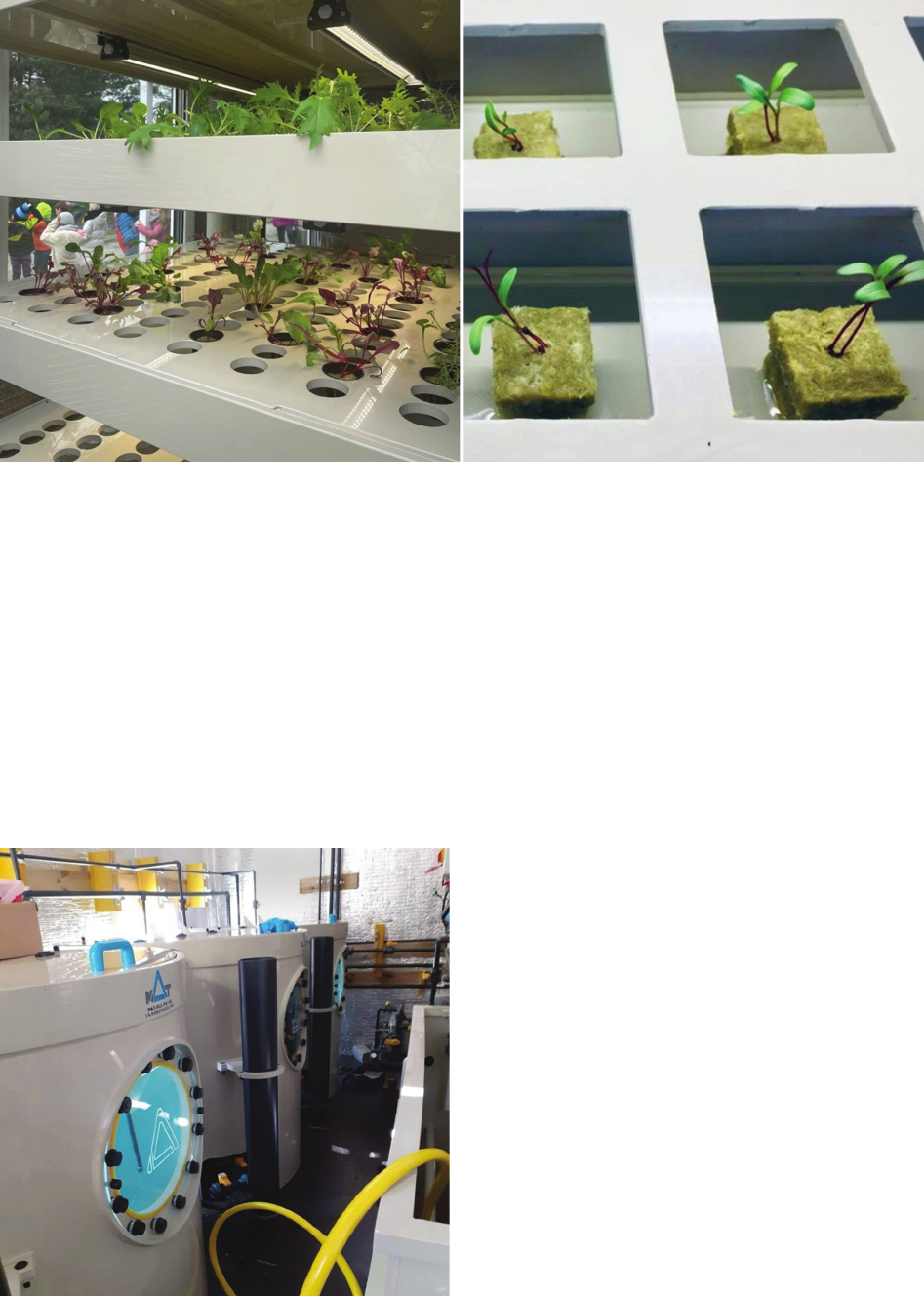
Fig. 9. Mizuna and Swiss chard cultivation within the aquaponic farm in Wrocław (photo by M. Jankowska)
Il. 9. Uprawa mizuny i buraka liściowego we wnętrzu farmy akwaponicznej we Wrocławiu (fot. M. Jankowska)
Fig. 10. Crayfish cultivation within the aquaponic farm in Wrocław
– aquaponic farming system (photo by M. Jankowska)
Il. 10. Uprawa raków we wnętrzu farmy akwaponicznej we Wrocławiu
– instalacja akwaponiczna (fot. Maria Jankowska)
DesignandconstructionoftherstPolishurbanaquaponicfarm–casestudy 85
References
Barthel, Stephan, John Parker, and Henrik Ernstson. “Food and Green
Space in Cities: A Resilience Lens on Gardens and Urban Environ-
mental Movements.” Urban Studies 52, no. 7 (2015): 1321–38.
https://doi.org/10.1177/0042098012472744.
Camargo, Julio A., and Álvaro Alonso. “Ecological and Toxicological Ef-
fects of Inorganic Nitrogen Pollution in Aquatic Ecosystems: A Glob-
al Assessment.” EnvironmentalInternational 32, no. 6 (2006): 831–
49. https://doi.org/10.1016/j.envint.2006.05.002.
Chowdhury, Milon, Uttara Samarakoon, and James Altland. “Evaluation
of Hydroponic Systems for Organic Lettuce in Controlled Environ-
ment.” Frontiersin Plant Science 15 (2024): 1401089. https://doi.
org/10.3389/fpls.2024.1401089.
Crepeau, Katie. “GrowUp Urban Farms: Aquaponics Takes on Lon-
don.” Published December 15, 2014. Accessed October 12, 2025,
at https://medium.com/design-affects/grow-up-urban-farming-
5011d63f6ce9.
Despommier, Dickson. TheVerticalFarm:FeedingtheWorldinthe21
st
Century. Thomas Dunne Books, 2010.
Eigenbrod, Christine, and Nazim Gruda. “Urban Vegetable Production
for Food Security in Cities: A Review.” Agronomy forSustainable
Development 35 (2015): 483–98. https://doi.org/10.1007/s13593-
014-0273-y.
Farhangi, Mosen, Arnold Valk, Gerrit Casjens, and Margerita Turvani.
“High-Tech Urban Agriculture in Amsterdam: An Actor-Network
Ana lysis.” Sustainability 12 (2020): 3955. https://doi.org/10.3390/
su12103955.
García-Guerrero, Marcelo, Pedro Hernández Sandoval, Javier Orduña-
Rojas, and Edilmar Cortes-Jacinto. “Eect of Temperature on Weight
Increase, Survival, and Thermal Preference of Juvenile Redclaw
CrayshCheraxquadricarinatus.”Hidrobiológica 23 (2014): 73–81.
Garcia Menocal, Cat. “GrowUp Box – An Aquaponic Shipping Container
Farm.” Designboom, June 26, 2013. Accessed October 5, 2025, at
https://www.designboom.com/architecture/growup-box-an-aqua-
ponic-shipping-container-farm/.
Geissdoerfer, Martin, Paulo Savaget, Nancy M. Bocken, and Erik Jan Hult-
ink. “The Circular Economy – A New Sustainability Paradigm?” Journal
of Cleaner Production 143 (2017): 757–68. https://doi.org/
10.1016/j.
jclepro.2016.12.048.
Giriunas, Kevin, Halil Sezen, and Rebecca Dupaix. “Evaluation, Model -
ling, and Analysis of Shipping Container Building Structures.” Engi -
neering Structures 43 (2012): 48–57. https://doi.org/10.1016/j.eng-
struct.2012.05.001.
Goddek, Simon, Alyssa Joyce, Boris Kotzen, and Gavin M. Burnell, eds.
Aquaponics Food Production Systems: Combined Aquaculture and
HydroponicProductionTechnologiesfortheFuture. Springer In terna-
tional Publishing, 2019. https://doi.org/10.1007/978-3-030-15943-6.
Karplus, Ilan, and Assaf Barki. “Social Control of Growth in the Redclaw
Craysh, Cherax quadricarinatus: Testing the Sensory Modalities
Involved.” Aquaculture 242, no. 1–4 (2004): 321–33. https://doi.
org/10.1016/j.aquaculture.2004.08.041.
Lansdown, Gerison. EveryChild’sRighttoBeHeard:AResourceGuide
ontheUNCommitteeontheRightsoftheChildGeneralComment
No.12. Save the Children UK on behalf of Save the Children and
UNICEF, 2011. Accessed October 5, 2025, at https://resourcecentre.
savethechildren.net/document/every-childs-right-be-heard-resource-
guide-un-committee-rights-child-general-comment-no-12.
Latawiec, Agnieszka Ewa, Bernardo B.N. Strassburg, Anna Maria Rod ri-
guez, Elah Matt, Ravic Nijbroek, and Maureen Silos. “Suriname: Rec-
onciling Agricultural Development and Conservation of Unique Natu-
ral Wealth.” LandUsePolicy 38 (2014): 1–9. https://doi.org/10.1016/j.
landusepol.2014.01.007.
Morgan, Kevin, and Roberta Sonnino. “The Urban Foodscape: World Cities
and the New Food Equation.” CambridgeJournalofRegions,Economy
andSociety 3, no. 2 (2010): 209–24. https://doi.org/10.1093/cjres/rsq007.
Mougeot, Luc J. A., ed. Agropolis:TheSocial,PoliticalandEnvironmen-
talDimensionsofUrbanAgriculture.Routledge, 2005.
Pérez, Gabriel, Julia Coma, Cristina Chocarro, et al. “Rock Mineral
Wool – Based Green Roofs to Improve the Quality of Urban Water
Runo.” EnvironmentalScienceandPollutionResearch 32 (2025):
8986–9003. https://doi.org/10.1007/s11356-025-36232-7.
Queensland Government. “Redclaw Craysh Aquaculture.” Last updat-
ed
August
4,
2025.
Accessed
Oc tober
5,
2025,
at
https://www.
business.qld.gov.au/industries/farms-shing-forestry/sheries/aqua-
culture/species/redclaw-craysh.
Slow Travel Berlin. “Ecient City Farming.” Published July 18, 2013.
Updated October 29, 2020. Accessed October 5, 2025, at https://
www.slowtravelberlin.com/ecient-city-farming/.
Somerville, Christopher, Moti Cohen, Edoardo Pantanella, Austin Stan-
kus, and Alessandro Lovatelli. Small-Scale Aquaponic Food Pro-
duction: Integrated Fish and Plant Farming. FAO Fisheries and
Conclusions
The design of an urban aquaponic farm is a complex
process, equally creative and analytical in nature. Paradox-
ically, this interdisciplinarity also constitutes a signicant
challenge. This results from the sectoral functioning of
public authorities, as well as expert and academic commu-
nities. Although the topic of urban food production is gen-
erally met with positive reception and broad acceptance, it
does not always receive active support. Many disciplines
and sectors tend to perceive it as belonging to “others” and
they do not fully identify with it. While it appears attractive
to each of them, it is not considered a priority within any
single eld.
From this perspective, an important advantage of the im-
plemented farm lies in its material and operational reality.
The very fact of its successful realisation makes it possible
to convince and engage stakeholders, while also allowing
the concept to be tested in practice and potential barriers to
be identied. The stages of the research project described
in this article can be grouped into three main categories:
(1) the determination of the technological requirements of
aquaponics; (2) the outcomes of stakeholder engagement;
and (3) the results of design creativity and expertise (ur
-
ban and architectural). The sequence of these steps enables
the formulation of a concrete set of issues that must be ad-
dressed in the planning of urban aquaponic systems. Each
of these aspects warrants further, in-depth investigation in
future research.
The USAGE team implemented a series of actions that
led to the creation of the rst urban AquaFarm in Wrocław
accessible to residents. This project aligns with the Euro-
pean Commission’s Farm to Fork strategy – one of the key
initiatives within the European Green Deal – as well as with
the concept of the agrihood, one of the most recent trends
in spatial planning. This approach involves designing com-
munities around farms that provide fresh and healthy food
to local residents while simultaneously fostering social inte-
gration through shared green spaces. The project thus forms
part of a broader trend related to the design of self-su-
cient and sustainable urban environments, often referred to
as sustainable urban neighbourhoods.
86 Maria Jankowska, Paweł Pedrycz
Streszczenie
Projektowanie i budowa pierwszej polskiej farmy akwaponicznej
– studium przypadku
Artykuł stanowi studium przypadku dotyczące procesu projektowania miejskiej farmy akwaponicznej, realizowanej jako element infrastruktury miej-
skiej o funkcjach produkcyjnych, edukacyjnych i społecznych. Farma taka powstała we Wrocławiu w ramach projektu badawczo-wdrożeniowego Urban
Stormwater Aquaponic Garden Environment (USAGE), nansowanego ze środków publicznych ramach programu Badania stosowane oraz z Funduszy
Norweskich. Celem autorów opracowania było zarówno przybliżenie technologii akwaponiki w kontekście urbanistycznym, jak i identykacja kluczo-
wych wyzwań projektowych, organizacyjnych oraz decyzyjnych związanych z wdrażaniem tego typu systemów w warunkach miejskich. W tekście
zaprezentowano kolejne etapy działań podejmowanych przez interdyscyplinarny zespół projektowy, ukazując potencjał rozwiązań akwaponicznych,
a także ograniczenia procesu. Autorzy artykułu uporządkowali kluczowe zagadnienia oraz zidentykowali podstawowe punkty decyzyjne, które deter-
minują ostateczny kształt przedsięwzięcia.
Słowa kluczowe: akwaponika, zrównoważona produkcja żywności, rolnictwo miejskie, cyrkulacja wody, Nowy Europejski Bauhaus
Aquaculture Technical Paper No. 589. Food and Agriculture Organi-
zation of the United Nations, 2014.
Specht, Kathrin, Rosemarie Siebert, Ulf B. Freisinger, and Ina Opitz. “Ur-
ban Agriculture of the Future: An Overview of Sustainability Aspects
of Food Production in and on Buildings.” Agriculture and Human
Values 31 (2014): 33–51. https://doi.org/10.1007/s10460-013-9448-4.
Steel, Carolyn. HungryCity:HowFood ShapesOurLives. Chatto and
Windus, 2008.
Triboli, Anna, and Damien Chivialle. “Micro-Farms: An Aquaponics
System inside a Container.” Accessed October 5, 2025, at https://
www.mediamatic.net/en/page/23894/micro-farms-an-aquapon-
ics-system-inside-a-container.
United States Environmental Protection Agency. Aquatic Life Ambient
Water Quality CriteriaforAmmonia–Freshwater. EPA 822-R-18-
002. April 2013. Accessed October 5, 2025, at https://www.epa.
gov/sites/default/les/2015-08/documents/aquatic-life-ambient-wa-
ter-quality-criteria-for-ammonia-freshwater-2013.pdf.
Viljoen, André, and Katrin Bohn. SecondNatureUrbanAgriculture:De-
signing Productive Cities. Routledge, 2014. https://doi.org/
10.4324/9781315771144.
