
2024
4(80)
Dominika Agnieszka Kumorek*
Evaluation of awareness of existence and potential use
of strategic noise maps among residents
of the Wawer district in Warsaw
DOI: 10.37190/arc240410
Published in open access. CC BY NC ND license
Abstract
Noise pollution currently stands as one of the foremost environmental threats. It has a negative impact on both the physical and mental well-being
of users inhabiting aected spaces. It results in diculties in everyday functioning, and with prolonged exposure, even permanent damage to health.
The problem intensies with the number of newly created noise sources and is particularly oppressive in areas where it did not occur until intensive
development. Strategic noise maps (SNM) serve as a valuable tool to help in the ght against the constantly spreading noise. They are used to assess
the level of noise in the environment and develop eective protection programs against it. Unfortunately, despite widespread availability, an obvious
barrier to the full use of strategic noise maps is low public awareness of their existence, content, and potential utility. The article presents an original
study aimed at assessing the awareness of residents of the Wawer district of Warsaw about the existence and possibilities of using strategic noise
maps. The study used an online survey in which respondents shared their experiences and opinions about strategic noise maps. The survey results
clearly showed that residents’ awareness of the existence and concept of strategic noise maps is low. At the same time, awareness of the benets of
using strategic noise maps is quite high. The respondents also listed a number of barriers that they perceive as obstacles to their full use. The ndings
of the study led to conclusions, proposing solutions that could increase this awareness.
Key words: acoustics, strategic noise maps, noise, soundscape
Introduction
The research problem addressed in this paper pertains to
the level of public awareness regarding the existence and
potential applications of strategic noise maps (hereinafter:
SNM). An analysis of the existing literature revealed a lack
of information on this topic. The level of awareness is par-
ticularly crucial in areas that, for many years, have been
considered quiet and requiring no intervention, but which
now require special protection. In the case of Warsaw, this
issue can be explored through the example of the Wawer
district, which, despite the dynamic spatial changes of re-
cent years, is still considered quiet and peaceful. The aim
of the study presented in this article is to assess the degree
of familiarity of its residents with the term “strategic noise
maps” and their range of applications. The research meth
-
od adopted was an online survey, divided into two parts:
the rst part focused on the respondents’ knowledge and
their potential experiences with the use of SNM, while the
second invited them to share their opinions on the poten-
tial benets of using and promoting SNM, as well as the
barriers that limit their full utilization. The survey was dis-
tributed via the internet through one of the most popular
forums related to the district’s daily matters: “Wawer moja
dzielnica” [Wawer my district]. Responses were collected
in March and April 2024. The conclusions were presented
in the form of proposed solutions that could contribute to
the dissemination of knowledge about strategic noise maps.
The research section was preceded by a literature review,
including a verication of the current state of research at the
time of publication.
*
ORCID: 0009-0000-3477-5558. Faculty of Architecture, Warsaw
University of Technology Doctoral School, Poland, e-mail: dominika.
kumorek.dokt@pw.edu.pl

100 Dominika Agnieszka Kumorek
tion, and formats for their dissemination are specied in
the Regulation of the Minister of Climate and Environment
(Rozporządzenie… 2021).
The process of creating a strategic noise map begins with
the introduction of a terrain model, including land-use data.
The next step involves incorporating information about
acoustic sources, such as the type of sources, trac ow
structures and volumes, materials, and construction details.
Once the data is entered, the model is calibrated using ac-
tual measurements conducted in the eld. A completed stra-
tegic noise map allows us to read long-term noise assess-
ment indicators and see the spatial extent of their inuence
(Nurzyński 2021). This serves as a main data source for
making informed planning decisions (Pawłat-Zawrzykraj
2021). Two key indicators typically included in SNM are
L
den
(pol. L
DWN
) representing the noise level during day-
time, evening, and nighttime, and L
night
(pol. L
N
), repre-
senting nighttime noise levels. The L
den
indicator is used to
assess the general annoyance caused by noise, while L
night
is
used to evaluate the risk of sleep disturbances (Kossakow-
ski 2012). Both indicators are values in decibels. The graph-
ical representation of a strategic noise map includes contour
lines or colour patches, which indicate the areas aected by
specic noise levels, shown in 5-decibel intervals. In addi-
tion to noise evaluation indicators, strategic noise maps also
provide information on the […] number of people exposed
to noise, the number of dwellings, schools, and hospitals
located in those areas, as well as areas where permissible
or threshold values are exceeded (Nurzyński 2021, 82).
Benefits and barriers in the current state of research
In the current state of research, the benets associated
with understanding the data presented in strategic noise
maps are analysed from a multidimensional perspective.
What is of particular importance, especially for potential
residents and investors in newly developed areas, is the eco-
nomic aspect. Studies conducted in urban areas of Poland
demonstrate that the presence of noise in a prospective res-
idential location signicantly inuences its attractiveness
(Szopińska 2018). Road trac noise is especially prob-
lematic, as it substantially diminishes the quality of daily
life and, consequently, aects property prices (Szopińska,
Putek-Szeląg and Krajewska 2017). This issue impacts all
individuals residing in regions where noise levels are ele-
vated. As the intensity of noise-related nuisances increases,
the market value of aected properties declines, resulting
in nancial losses for property owners (Lipowczan 2013).
Access to the information contained within SNM allows
prospective residents to make informed decisions regard-
ing their choice of residence based on individual priorities
(e.g., cost versus noise exposure). For investors, this infor-
mation highlights the nancial consequences of situating
developments in areas exposed to noise pollution, while
for existing residents, it provides insights into the stability
of their property values.
An intriguing issue is the right to claims arising from the
impact of disruptive sounds that disturb peace in residential
areas (Nowosad, Poniatowski 2023), commonly referred to
as neighbour noise. Under the provisions of the environmen-
State of research
The denition of noise is often expressed using various
terms. Noise is described as […] any unwanted, unpleas-
ant, or bothersome sound occurring in a particular place,
time, and circumstances (gov.pl 2024), as well as […] un-
desirable, unpleasant, bothersome, or harmful mechanical
vibrations of an elastic medium, transmitted through the
air to the auditory organ, the senses, and parts of the hu-
man body (Państwowa Inspekcja Pracy 2024). A common
element in most denitions is the use of adjectives referring
to subjective impressions, which depend on the individual
perception of each person. The impact of noise on the hu-
man body has led to its recognition as an escalating social
problem (Sadowski 1971). Today, the threat is particularly
high, considering that noise, being invisible to the naked
eye and often fading from public awareness in the pres-
ence of other stimuli, requires attentiveness to its perva-
sive nature, which is easily overlooked amid the overload
of daily responsibilities. The problem is especially acute
in highly urbanized areas, where the soundscape
1
is dom-
inated by continuous noise. The eects of long-term noise
exposure on the human body are undeniably negative and
are associated not only with physical damage but also with
psychological harm (Sadowski 1971). It is therefore not
surprising that in recent years, noise has earned the title of
the […] plague of the 21
st
century (Goines, Hagler 2007),
as it brings about a number of health consequences, from
fatigue, irritability, and insomnia to permanent hearing
loss and damage to internal organs (Leśnikowska-Matu-
siak, Wnuk 2014). One of the tools aimed at alleviating the
burdensome characteristics of the soundscape, particularly
those associated with noise, is strategic noise mapping.
Strategic noise maps
Strategic noise maps are acoustic maps created in accor-
dance with specic conditions outlined in European Union
and national legislation. Their primary purpose is to assess
and manage environmental noise levels (Dyrektywa…
2002). The practical application of the data contained in
these maps lies mainly in the development of preventive
programs and action plans designed to protect public health
from noise exposure. In Poland, the criteria for areas re-
quiring the preparation of strategic noise maps are dened
by the Environmental Protection Act (Ustawa… 2001). Ac-
cording to the Act: Strategic noise maps are prepared for:
cities with populations exceeding 100,000; major roads;
major railway lines; and major airports (Usta
wa… 2001,
Art. 118. 2), with the obligation to update them every ve
years. The detailed scope of data, methods of presenta-
1
The concept of the soundscape was popularized by Canadian com-
poser Raymond Murray Schafer, known for his research on the sonic en-
vironment. In his work The soundscape: our sonic environment and the
tuning of the world, he described the soundscape as a collection of all the
sounds within which humans operate, emphasizing their complexity and
their dependence on time and place (Schafer 1994). A clear denition of
the term is provided in the international standard ISO 12913-1: Soundscape
– acoustic environment as perceived or experienced and/or understood by
a person or people, in context (International standard… 2014, 1).
Evaluation of resident awareness of strategic noise maps in the Wawer district in Warsaw 101
tal protection law (Ustawa… 2001), individuals have the
right to request monitoring of noise levels. This procedure
comprises two stages: measurement and evaluation of noise
levels, followed by a determination of whether regulatory
thresholds have been exceeded. The process concludes with
an administrative decision, which, depending on the nd-
ings, may serve as a basis for legal claims (Bandarzewski
2023). Such claims may include: Restoration of conditions
compliant with legal standards and the implementation of
preventive measures; or, if such actions are impractical or
excessively hampered, cessation of activities causing the
dis-
turbance or violation (Ustawa… 2001, Art. 323. 1). Strate-
gic noise maps provide crucial data on the spatial extent of
noise level ranges and thus serve as a foundational resource
for initiating legal claims and noise-related complaints.
Despite the numerous benets associated with under-
standing the information contained in SNM, there is a dis-
cernible issue regarding the existence of certain barriers
that may limit residents’ full utilization of these resources.
A study conducted by a team from the University of Life
Sciences in Lublin, which aimed to engage citizens in the
process of […] diagnosing noise pollution (Sowisz et al.
2022, 145), revealed that […] the involvement of partici-
pants in citizen science projects is minimal (Sowisz et al.
2022, 153). Similarly, foreign researchers have also ob-
served a lack of signicant public interest (Shrivastava et
al. 2004). The analysed literature highlights the issue of
the methods of information sharing. Representations in
the form of online 2D maps, textual descriptions, and noise
protection programs appear to cause diculties in terms
of substantive comprehension (Murphy, King 2010). Fur-
thermore, because acoustics is an inherently complex eld
that necessitates interdisciplinary collaboration, this leads
to a limited understanding of its principles among various
social groups, representatives of dierent age ranges, and
educational levels (Tratnik 2007).
At present, the responsibility for disseminating knowl-
edge regarding strategic noise maps predominantly lies in
the hands of ocials, who require expert technical support
(Kubiszek et al. 2012). This support is often insucient,
which adversely aects the general public’s understanding
of the information provided. On the international stage, the
issue of delegating responsibility for this matter to exter-
nal consultants remains a subject of debate. Many authors
emphasize the possibility of training employees, which
would enable the management of acoustic mapping issues
to remain within the hands of ocials. At the same time,
the authors identify the problem of insucient nancial
resources allocated for training programs (Santos 2005).
Materials and methods
To gain insight into the social awareness of the exis-
tence and potential use of SNM, a survey-based study was
conducted. The study was carried out among residents of
the Wawer district in Warsaw, selected as the research sub-
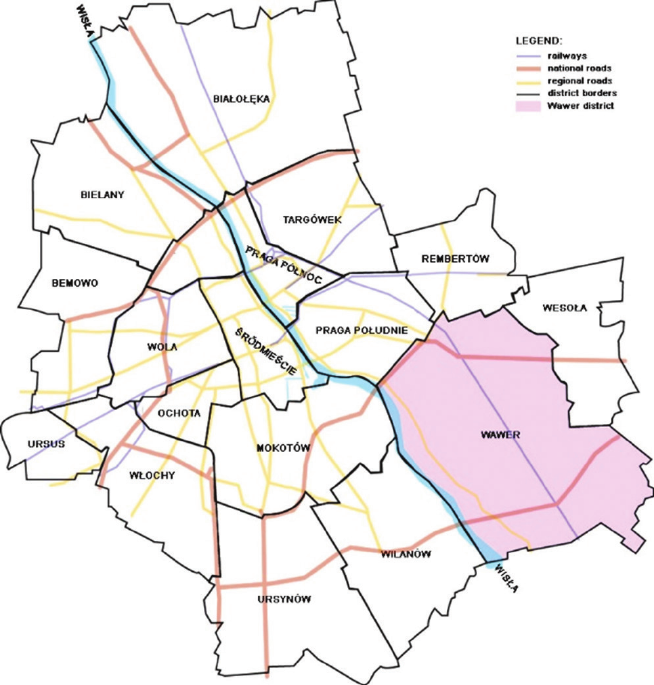
ject. Wawer is the largest district in Warsaw. Located on
the right bank of the Vistula River (Fig. 1) the district is
Fig. 1. Location of the Wawer
district within the functional and
spatial structure of Warsaw
(elaborated by D.A. Kumorek
based on: Urząd Miejski,
“Warszawa dzisiaj” 2024)
Il. 1. Lokalizacja dzielnicy
Wawer na tle struktury
funkcjonalno-przestrzennej
Warszawy
(oprac. D.A. Kumorek
na podstawie: Urząd Miejski,
„Warszawa dzisiaj” 2024)
102 Dominika Agnieszka Kumorek
renowned for its natural wealth, particularly its forested
areas, earning it the well-deserved title of “the green lungs
of Warsaw”.
Wawer is a predominantly residential district, primar-
ily consisting of single-family housing, and is mainly in-
habited by long-term residents. Due to its intimate, fam-
ily-oriented character and favourable natural conditions,
the area has undergone signicant spatial transformations
in recent years to accommodate a growing population and
an increased number of users. The expansion of multi-fam-
ily housing, the development of local road infrastructure
connecting Wawer with other districts of Warsaw, and the
intensication of service activities have contributed to the
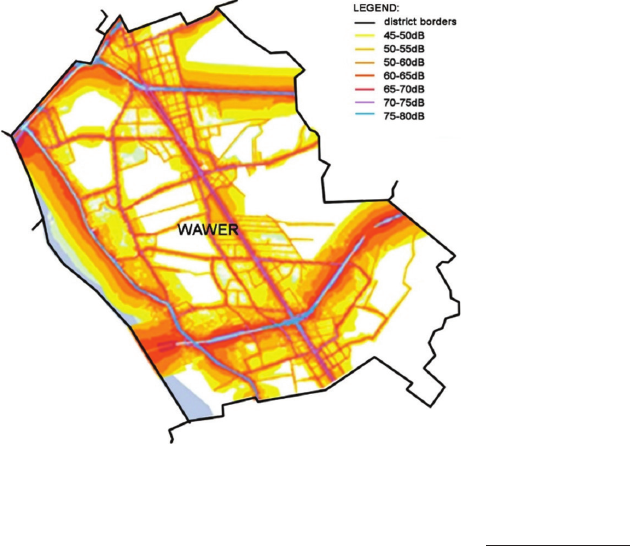
deterioration of the soundscape in the region (Fig. 2).
The prevalence of the issue is underscored by the
heightened complaint eorts of residents striving to ght
against the escalation of noise emissions (Pielaszek 2023).
Additional measures undertaken by residents include in-
dividual noise protection strategies, such as the installa-
tion of soundproof balcony enclosures, varying degrees of
professional and non-professional home acoustic barriers,
and the provision of dense vegetation. However, these
eorts often fail to enhance the visual perception of the
area, lack consistency, and do not yield the anticipated out-
comes, thus contributing to increased public dissatisfac-
tion. Despite the problem and ongoing local interventions,
the Wawer district in Warsaw continues to be perceived
as a tranquil and quiet area, while simultaneously remain-
ing a prime target for intensied development activities.
Given the continuing spatial and functional transforma-
tions, the selected study area is particularly vulnerable to
the amplication of annoyance resulting from new acous-
tic sources, as well as the escalation of already existing
noise levels. These nuisances can be mitigated through
the enhancement of public awareness, fostering an under-
standing of the importance of responsible planning actions
that inuence collective perceptions beyond individual
experiences.
Based on the analysis of the relevant literature, includ-
ing the current state of research, several key issues were
identied for discussion with the residents of the Wawer
district. A set of six closed, single-choice questions was
prepared, in which respondents were asked about their cur-
rent knowledge of SNM, their experiences related to its use,
and their opinions. The questionnaire also included a ques-
tion about the subjective assessment (on a scale of 1–10) of
the annoyance caused by noise in their place of residence,
as well as two open questions regarding the potential ben-
ets of using SNM and the barriers that might limit their
full utilization. It was assumed that individuals who an-
swered “no” to the rst question regarding their familiarity
with the term “strategic noise maps” would be provided
with the denition and main concepts of SNM before con-
tinuing with the survey. To improve the response rate to
individual questions, the survey was designed to require
responses only to the closed questions and the linear scale
question, with responses to the open questions remaining
optional. Demographic data of the respondents, such as
the survey’s metric information, was excluded from the
study. This decision was made in consideration of protect-
ing the privacy and sense of freedom of the respondents,
aimed at eliminating any doubts regarding the anonymity
of the survey. Moreover, the main objective of the study
was to gain an understanding of the specic opinions and
experiences of the participants, which are independent of
demographic characteristics. The use of this research meth-
od allowed for a focus on the substance of the responses
rather than on personal data, which simultaneously helped
reduce the time required to complete the survey and con-
tributed to an increase in the volume of collected data. The
survey was disseminated online through one of the most
widely attended forums related to everyday matters in the
district, namely “Wawer moja dzielnica”. Responses were
collected in March and April 2024. All participants gave
informed consent to participate in the study.
Results
A total of 55
2
individuals participated in the study. The
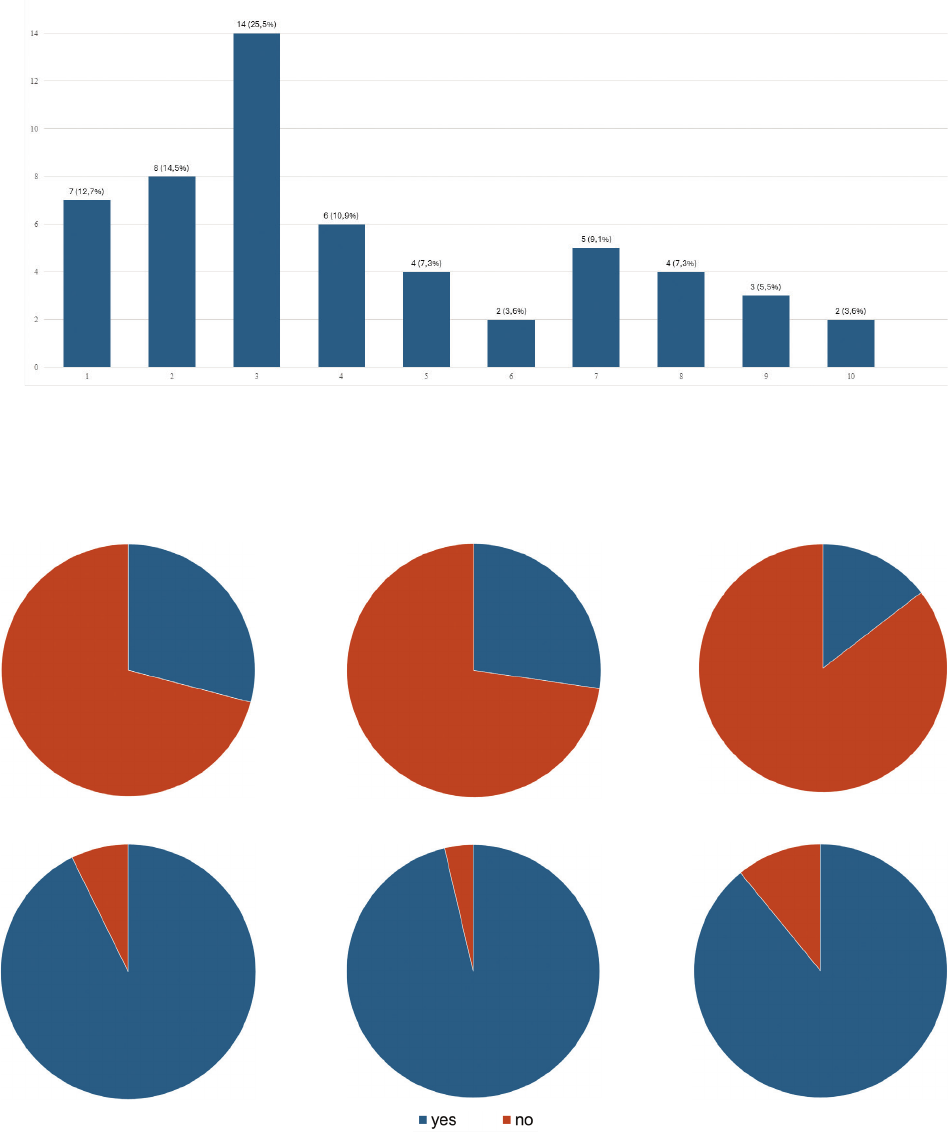
responses to the mandatory questions are presented in a bar
chart (Fig. 3) and pie charts (Figs. 4a–f). Each chart is la-
belled with the number of respondents who selected a giv-
en answer, with percentage values provided in parentheses.
The study also received 40 responses to open questions.
For the purpose of presenting the results, the responses were
analysed, synthesized, and grouped thematically (Tables 1, 2),
with repetitions and factual errors eliminated. Responses
mentioned more than twice were highlighted in bold.
2
The practical minimum sample size for statistical research is 30
data points, which should include a sucient number of data points to
draw statistically justied conclusions about the population (Pannell 2023).
Fig. 2. Fragment of the acoustic map of Warsaw
showing road traffic noise L
den
(elaborated by D.A. Kumorek
based on: Urząd Miejski, “Mapa hałasu” 2024)
Il. 2. Fragment mapy akustycznej Warszawy hałasu drogowego L
DWN
(oprac. D.A. Kumorek
na podstawie: Urząd Miejski, „Mapa hałasu” 2024)
WISŁA
Evaluation of resident awareness of strategic noise maps in the Wawer district in Warsaw 103
On a scale of 1 to 10, please evaluate the level of noise annoyance in your place of residence (1 – low annoyance, 10 – high annoyance).
1–10 scale (1 – low annoyance, 10 – high annoyance)
number of responses
Fig. 3. Distribution of ratings for noise annoyance levels in respondents’ places of residence (elaborated by D.A. Kumorek)
Il. 3. Rozkład ocen poziomu uciążliwości hałasu w miejscu zamieszkania ankietowanych (oprac. D.A. Kumorek)
39 (70,9%)
16 (29,1%)
Fig. 4. Distribution of respondents:
a) familiar with the term “strategic noise maps”,
b) aware of the existence of strategic noise maps for the Wawer district,
c) who have ever used the information contained in strategic noise maps,
d) who think that residents should have greater access to information about noise in their surroundings,
e) who believe that strategic noise maps can be useful in spatial planning and district development,
f) who agree that improving awareness of strategic noise maps can contribute to the development of the district (elaborated by D.A. Kumorek)
Il. 4. Rozkład liczby ankietowanych:
a) zaznajomionych z terminem „strategiczne mapy hałasu”,
b) świadomych istnienia strategicznych map hałasu dla dzielnicy Wawer,
c) którzy kiedykolwiek korzystali z informacji zawartych na strategicznych mapach hałasu,
d) którzy sądzą, że mieszkańcy powinni mieć większy dostęp do informacji na temat hałasu w swoim otoczeniu,
e) którzy uważają, że strategiczne mapy hałasu mogą być przydatne w planowaniu przestrzennym i rozwoju dzielnicy,
f) którzy zgadzają się, że poprawa świadomości na temat strategicznych map hałasu może przyczynić się do rozwoju dzielnicy (oprac. D.A. Kumorek)
40 (72,7%)
15 (27,3%)
47 (85,5%)
8 (14,5%)
53 (96,4%) 49 (89,1%)51 (92,7%)
2 (3,6%)
6 (10,9%)
4 (7,3%)
a
b
c
d e f

104 Dominika Agnieszka Kumorek
Social benefits Planning benefits
Availability of reliable information on the quality
of the acoustic environment at the city scale
The possibility of adapting public noise protection solutions
to existing conditions
The possibility to make conscious locational decisions, taking into
account the acoustic quality of the environment, including
the selection of residential areas, schools, and service locations
The potential for the visual integration
of noise protection solutions
with the landscape
Ensuring acoustic comfort
The possibility to designate zones of acoustic annoyance
Increasing public awareness of the negative effects of noise exposure
The possibility to designate and protect quiet areas
Health protection
The possibility of separating noisy zones from residential areas
Guarantee of no exceedance
of the permissible sound level values
The possibility to consciously plan road infrastructure
with regard to the acoustic quality of the environment
The existence of a reliable basis
for submitting complaints and appeals
The possibility to implement traffic restrictions
in areas with excessive noise levels
Enhancement of the sense of responsibility
for individual planning activities
The possibility to make conscious decisions in planning technical
infrastructure with consideration for acoustic environmental quality
The possibility to tailor individualized noise protection measures to
specific needs and conditions
Enhancing the awareness of investment entities regarding the impact
of their projects on the quality of the acoustic environment
The possibility of estimating property value based on information
about its exposure to noise
Improvement in the acoustic climate
*
quality within areas
of new developments
Table 1. Summary of respondents’ answers regarding the benefits of using strategic noise maps
(elaborated by D.A. Kumorek)
Tabela 1. Zestawienie odpowiedzi ankietowanych na temat korzyści wynikających z zastosowania strategicznych map hałasu
(oprac. D.A. Kumorek)
Table 2. Summary of survey responses regarding barriers/difficulties in the utilization of strategic noise maps, limiting their full potential
(elaborated by D.A. Kumorek)
Tabela 2. Zestawienie odpowiedzi ankietowanych na temat barier/trudności w wykorzystaniu strategicznych map hałasu
ograniczających ich pełne wykorzystanie (oprac. D.A. Kumorek)
Social barriers Substantive barriers
Lack of awareness among residents about the existence of SNM
Doubts regarding the accuracy of information contained in SNM
The belief in the lack of dissemination of SNM
The long update period of SNM (5 years), which does not account for
the dynamics of spatial and social changes
The belief that SNM are subject to a fee
The lack of consideration for real-time noise level variability,
e.g., on a daily scale
Inability to use SNM
Instances of noticing underestimation of noise levels on SNM
compared to actual measurements
Lack of competence in interpreting the information contained in SNM
The belief in administrative manipulation of noise level values
for the purpose of reducing the number of complaints and appeals
The lack of educational actions aimed at informing the public about
SNM
Doubts regarding the objectivity of the entities responsible
for preparing SNM
The lack of involving local communities in the dialogue about the
quality of the acoustic environment
The lack of information on the impact of planned investments
on the quality of the acoustic environment
Society ignorance
Estimated sound level values, which result in the unrealistic nature
of the results (5dB ranges)
Lack of collective responsibility for the acoustic quality
of the environment
–
Budgetary barriers Regulatory barriers
The belief in insufficient financial investment allocated for the dis-
semination of SNM
The recognition of ambiguities in legal regulations, including
the raising of permissible noise levels
The belief that noise protection programs are not taken into account in
municipal budgets
The failure to incorporate the information contained in the SNM
into the processes of drafting local development plans
and issuing building permits
The belief that economic (profit-driven) considerations are prioritized
over the protection of acoustic environmental quality
The lack of regulations imposing on the investor the obligation
to prepare an acoustic forecast when planning new developments
*
Acoustic climate: […] a set of sound phenomena occurring in a given area (Marczak 2012, 7).
Evaluation of resident awareness of strategic noise maps in the Wawer district in Warsaw 105
Discussion
Based on the results of the conducted survey, as evi-
denced by the responses to the closed questions, it can be in-
ferred that awareness of the existence of strategic noise maps
among residents of the Wawer district is low. Only 29.1% of
the respondents are familiar with the term “strategic noise
map”, 27.3% are aware of the existence of SNM for the
Wawer district area, and 14.5% have ever used the informa-
tion contained in this map. At the same time, the awareness
of the benets derived from the use of SNM, assuming that
respondents who were unfamiliar with the term during the
survey have since been introduced to it, was relatively high.
The statement that residents should have greater access to
information about noise in their surroundings was agreed
upon by 92.7% of the respondents, while 96.4% believe
that strategic noise maps can be useful in spatial planning
and district development, and 89.1% think that raising the
awareness of strategic noise maps can contribute to the dis-
trict’s development. It is important to note that, in response
to the question regarding the subjective annoyance of noise
in their place of residence, the majority of the respondents
rated it as “3” on a scale of 1–10 (1 being low annoyance
and 10 being high annoyance), indicating a relatively low
level of annoyance. The responses “6” and “2” were given
only twice. Furthermore, it should be highlighted that the re-
sults of this question predominant
ly feature low ratings be-
tween 1 and 5. However, the perceived annoyance among
respondents is quite varied. In the scale of 1–10, every level
of annoyance was marked at least twice, which may reect
the diering quality of the acoustic climate in various areas
of the district. The responses to the open-ended questions
suggest that the residents’ awareness of the benets of us-
ing strategic noise maps is based on knowledge or assump-
tions consistent with the original purpose of creating such
maps. Among the benets identied by the respondents, the
most frequently mentioned were the positive impact of ac-
cessible noise information on planning decisions at various
scales, which in turn contributes to health safety and the
comfort of potential investments. Additionally, it is partic-
ularly thought-provoking that, when asked about barriers
to the use of strategic noise maps, respondents listed a va-
riety of factors limiting their full implementation. This led
to the creation of four distinct categories of barriers, i.e.,
social, substantive, budgetary, and regulatory. It was noted
that the results of this study could not be compared with
those of other authors in a control group due to the lack
of existing studies on the same subject. Available research
typically focuses on the awareness of the harmful eects
of specic types of noise (Oluwasanya et al. 2024), rather
than on tools aimed at mitigating noise, thus highlighting
the scientic value of this study.
It should be noted that the conducted study is subject
to certain limitations. Despite collecting a data set larger
than the practical minimum sample size for statistical re-
search, the sample size is relatively small when compared
to the population of the Wawer district, which limits the
ability to generalize the results to the entire population.
This may stem from the low public interest in participat-
ing in the study or from the indirect distribution method of
the research tool (the survey). In future research, this limita-
tion could be minimized by establishing cooperation with
managing entities, including the district oce or neighbour-
hood councils. It is also important to highlight the inability
to demonstrate the representativeness of the respondents
due to the decision not to include demographic information
in the survey. Furthermore, the timeliness of the study re-
sults may be inuenced by the dynamic spatial and social
changes occurring in the Wawer district, as well as the sub-
jectivity of the respondents’ perceptions, which are linked
to their current experiences and emotional state. Data col-
lected during the period of the study may become outdated
over time. Despite these limitations, the study on the aware-
ness of the existence and potential use of strategic noise
maps among the residents of the Wawer district of Warsaw
provided valuable insights into the current knowledge and
attitudes of the local community regarding environmental
acoustics. The study engaged residents in a dialogue about
the subjectively perceived annoyance and needs, whose un-
derstanding is key to eective remedial actions.
Conclusions
In response to the identied challenges, actions have
been proposed that could serve as potential solutions to
enhance residents’ awareness of the acoustic environment
and use this awareness to protect and improve the quali-
ty of this environment. The conclusions are divided into
thematically coherent groups based on the classication
suggested in the presentation of the results.
Social actions
The primary goal of social actions is to raise residents’
awareness through education and the promotion of issues
related to the acoustic environment and strategic noise
maps. Special attention should be given to equipping
the public with a set of basic information, including key
denitions necessary for understanding the content of the
maps, such as noise assessment indicators, methods of
preparing studies, and the spectrum of their applications
in spatial planning and land development. Education can
take both indirect and direct forms. The indirect approach
may include providing clear, accessible content through
specialist-prepared websites, instructional materials, or
other forms of online presentations, while the direct form
involves personal contact through meetings, workshops,
and consultations. Direct education is particularly valu-
able as it allows for addressing individual questions and
concerns from residents, which helps in the understanding
process and engage the audience physically. It also pro-
vides a source of honest feedback. It is essential to ensure
that the educational content, both indirect and direct, is
comprehensible to everyone. Alternative representations
of data from acoustic maps, such as innovative visualiza-
tions in the form of 3D maps or virtual reality (VR)-gen-
erated maps, could make the content more accessible to
a wider audience and spark greater public interest (Mur-
phy, King 2010). Internationally, there are ongoing eorts
to develop dynamic representations of noise maps that
106 Dominika Agnieszka Kumorek
incorporate real-time changes, such as uctuations in pop-
ulation movement and atmospheric conditions (Marki et
al. 2022).
Promotional activities are particularly important in the
context of public awareness regarding the term “strategic
noise maps”. These may include public campaigns aimed
at spreading information about the existence, accessibili-
ty, and relevance of using SNM in the ght against noise
pollution. A key aspect of such campaigns is collaboration
with media outlets, especially local ones, which can direct-
ly address the area in which they operate by publishing
materials related to noise and SNM. This will likely in-
crease the interest of local residents. An essential element
is also establishing cooperation with neighbourhood coun-
cil boards to support educational activities through direct
engagement, encouraging the community to engage in di-
alogue for the systematic collection of data from residents
and sharing it with the entities responsible for creating
strategic noise maps.
Substantive actions
Substantive actions should primarily ensure consisten-
cy between the noise levels presented in the strategic noise
maps and actual measurements. This task lies within the
competence of the entities responsible for developing the
SNM, as well as potential subcontractors conducting actual
measurements for the purpose of calibrating the map. Re-
gardless of the executing unit, the process should be super-
vised by an objective body, and the values should be sys-
tematically monitored and updated. An interesting issue is
the real-time monitoring of noise levels, the integration of
which with an electronic mapping system could be one of
the key development perspectives. Respondents also raised
concerns about the failure to include planned and new in-
vestments and their impact on changes in SNM parame-
ters, which is related to the relatively long update period
compared to the construction time. Forecasts of changes in
map indicators should be continuously updated, for exam-
ple, using an additional “forecast” layer, enabling residents
to make conscious location decisions regarding acoustics,
while also building trust in the entities managing the SNM.
Budgetary actions
The results of the conducted research indicate that a key
issue limiting the full utilization of strategic noise maps
are, according to respondents, budgetary barriers caused
by focusing on other priorities than noise pollution control.
Meanwhile, noise pollution is a paramount issue as it caus-
es harm to public health, which is society’s most valuable
asset. Therefore, the recommendation regarding budgetary
changes is to include any actions aimed at improving the
quality of the acoustic environment in the budget plans of
various entities, including municipalities, cities, and prov-
inces. Initiatives requiring increased nancial investment
primarily include educational and promotional activities
that raise awareness and knowledge of the public regard-
ing environmental acoustics, actions related to the devel-
opment of technologies supporting continuous monitoring
and assessment of existing acoustic conditions, including
supporting innovation, as well as spatial interventions, in-
cluding the modernization of existing structures that nega-
tively impact the acoustic environment.
Regulatory actions
Regulatory actions aimed at improving public aware-
ness of strategic noise maps may include:
– clarication and standardization of existing legal reg-
ulations concerning noise pollution control,
– imposing new obligations on investors related to noise
pollution control, including the requirement to prepare
forecasts of acoustic conditions resulting from the reali-
zation of planned investments and informing the public
about these impacts,
– imposing an obligation on society to educate about
noise and strategic noise maps in the interests of public
health.
Helpful in the regulatory area may also be recommen-
dations developed by environmental acoustics specialists,
incorporating SNM into the spatial planning process. The
tools for implementing these recommendations include
planning documents, such as local master plans – both new
ones and those in the process of being updated. Provisions
in local master plans may include the separation of noisy
transport infrastructure from new and developing resi-
dential areas (Gilani, Mir 2021) or the requirement to use
natural soundproof barriers (Fang, Ling 2003). The inclu-
sion of acoustic issues in municipal planning documents
falls within the responsibilities of local governments, but
eective regulatory changes must also be implemented at
higher, supra-local and regional levels, including county
and provincial levels. For example, […] the county council
may, by resolution, designate quiet areas within or outside
an agglomeration, taking into account the specic needs
of noise protection for these areas (Ustawa… 2001, Art.
118b. 1), and the regional governor (marshal) is responsi-
ble for […] developing a draft resolution regarding the en-
vironmental noise protection program for the region based
on strategic noise maps (Ustawa… 2001, Art. 119a. 1).
Resolutions based on the real needs of society will be an
eective complement to legislative actions for protecting
acoustic environment quality. Key regulations related to
the acoustic environment of residential areas include laws
concerning design and construction activities, such as the
Building Law (Ustawa… 1994). This law will serve as an
eective tool for both enforcing obligations on investors
and promoting noise-reducing solutions. Updates to the
Building Law may include provisions requiring the use of
noise-reducing materials and systems in construction, as
well as quiet road surfaces in transport infrastructure (Gi-
lani, Mir 2021).
Actions for building social trust
Actions aimed at building residents’ trust in the author-
ities managing strategic noise maps and noise in general
include all the previously mentioned measures, as well
as the authorities’ consistent eorts to achieve the origi-
Evaluation of resident awareness of strategic noise maps in the Wawer district in Warsaw 107
References
Bandarzewski, Kazimierz. “Wpływ nowelizacji art. 115 Prawa ochro ny
środowiska na prawo mieszkańca do żądania skontrolowania poziomu
hałasu.” Acta Universitatis Lodziensis Folia Iuridica, special issue,
(2023): 29–39. https://doi.org/10.18778/0208-6069.S.2023.03.
“Dyrektywa 2002/49/WE Parlamentu Europejskiego i Rady z dnia 25
czerwca 2002 r. odnosząca się do oceny i zarządzania poziomem
hałasu w środowisku.” Dz.U. L 189 z 18.7.2002, 12–25. Acces-
sed April 12, 2024, at https://sip.lex.pl/akty-prawne/dzienniki-UE/
dyrektywa-2020-367-zmieniajaca-zalacznik-iii-do-dyrektywy-
2002-49-we-69296836.
Fang, Chih-Fang, and Der-Lin Ling. “Investigation of the noise reduc-
tion provided by tree belts.” Landscape and Urban Planning 63,
no. 4 (May 2003): 187–195. https://doi.org/10.1016/S0169-2046(02)
00190-1.
Gilani, Ahmed Towseef, and Mohammad Sha Mir. “A study on the as-
sessment of trac noise induced annoyance and awareness levels
about the potential health eects among residents living around a no-
ise-sensitive area.” Environmental Science and Pollution Research
28 (July 2021): 63045–63064. https://doi.org/10.1007/s11356-021-
15208-3.
Goines, Lisa, and Lois Hagler. “Noise pollution: a modern plague.”
Southern Medical Journal 100 (March 2007): 287–294. https://doi.
org/10.1097/SMJ.0b013e3180318be5.
Gov.pl. “Hałas.” Accessed April 12, 2024, at https://www.gov.pl/attach-
ment/684404c6-b5b4-4010-986a-72e0b5cb16d0.
International Standard ISO 12913-1. “Acoustics – Soundscape. Part 1: De-
nition and conceptual framework.” 2014. Accessed April 23, 2024,
at https://cdn.standards.iteh.ai/samples/52161/229d6f3657604d89b-
8c382a04058a839/ISO-12913-1-2014.pdf.
Kossakowski, Paweł. “Strategic noise maps.” Structure and Environment
4, no. 3 (2012): 35–43. http://bc.tu.kielce.pl/147/1/Kossakowski_
Strategic.pdf.
Kubiszek, Artur, Jan Kaźmierczak, Marek Komoniewski, Waldemar
Paszkowski, Arkadiusz Boczkowski, and Marcin Dąbrowski. “Sie-
ciowy system doradztwa i konsultacji wspomagający proces two-
rzenia i użytkowania strategicznych map akustycznych.” Systems
Supporting Production Engineering 2 (February 2012): 16–29. Ac-
cessed April 12, 2024, at http://www.dydaktyka.polsl.pl/roz5/konfer/
wyd/2012/2/R_2.pdf.
Leśnikowska-Matusiak, Ida, and Aneta Wnuk. “Wpływ hałasu komuni-
kacyjnego na stan środowiska akustycznego człowieka.” Transport
Samochodowy, no. 3 (2014): 37–62.
Lipowczan, Adam. “Aspekty ekonomiczne wykorzystania map akustycz-
nych.” Bezpieczeństwo Pracy: nauka i praktyka 10 (2013): 8–12.
Marczak, Piotr. Zagrożenie hałasem – wybrane zagadnienia. Kancela-
ria Senatu. Biuro Analiz i Dokumentacji, 2012. Accessed April 23,
2024, at https://www.senat.gov.pl/gfx/senat/pl/senatopracowania/30/
plik/ot-612_inter.pdf.
Marki, Ferenc, Peter Rucz, Nico van Oosten, Emir Ganić, and Ingrid
Legrion. “Towards Mapping of Noise Impact. Explaining ANIMA
Eorts to Support New Approaches for Noise Impact Management
Through Noise Management Toolset, Virtual Community Tool, and
Dynamic Noise Maps.” In Aviation Noise Impact Management. Tech-
nologies, Regulations, and Societal Well-being in Europe, edited by
Laurent Leylekian, Alexandra Covrig, and Alena Maximova. Sprin-
ger, 2022, 265–95. https://doi.org/10.1007/978-3-030-91194-2_11.
Murphy, Enda, and Eoin King. “Strategic environmental noise map-
ping: Methodological issues concerning the implementation of the
EU Environmental Noise Directive and their policy implications.”
Environmental International 36, no. 3 (April 2010): 290–8, https://
doi.org/10.1016/j.envint.2009.11.006.
Nowosad, Aleksandra, and Piotr Poniatowski. “Prawne aspekty hałasu
«są siedz kiego». Cz. II: Odpowiedzialność cywilna.” Radca Prawny
34 (January 2023): 41–57. https://doi.org/10.4467/23921943RP.23.
003.18262.
Nurzyński, Jacek. Akustyka w budownictwie. Wydawnictwo Naukowe
PWN, 2021.
Oluwasanya, T., Enyinda A. Chukwuemeka, Olisa Babatope, and Stephens
Moboleji. “Level of Awareness of Transport Externalities on Noise
Pollution in Akure, Nigeria.” International Journal of Latest Tech-
nology in Engineering, Management & Applied Science 8 (February
2024): 93–9, https://doi.org/10.51583/IJLTEMAS.2024.130213
Pannell, Reagan. The Importance of Identifying the Right Sample Size
for Business Improvement. Published April 5, 2023. Accessed July
11, 2024, at https://leanscape-io.translate.goog/the-importance-of
-identifying-the-right-sample-size-for-business-improvement/?_x_
tr_sl=en&_x_tr_tl=pl&_x_tr_hl=pl&_x_tr_pto=rq.
Państwowa Inspekcja Pracy. “Hałas.” Accessed April 12, 2024, at https://
www.pip.gov.pl/dla-pracodawcow/porady-prawne/halas?tmpl=pdf?-
tmpl=pdf.
Pawłat-Zawrzykraj, Agata, Paweł Oglęcki, and Konrad Podawca. “Ana-
ly sis of the Noise Pollution in the Bielański Forest NATURA 2000
Area in Light of Existing Avifauna (Warsaw, Poland).” Forests 12
(October 2021): 1316. https://doi.org/10.3390/f12101316.
Pielaszek, Roman. “Discussion of the noise measurement results of the
Southern Bypass of Warsaw (S2) and assessment of security measu-
res in the area of the Patriotów junction.” Published March 20, 2023.
Accessed July 11, 2024, at https://pielaszek.com/omowienie-wyni-
kow-pomiarow-halasu-poludniowej-obwodnicy-warszawy-s2-i-oce-
na-zabezpieczen-w-rejonie-wezla-patriotow/.
“Rozporządzenie Ministra Klimatu i Środowiska z dnia 1 lipca 2021 r.
w sprawie szczegółowego zakresu danych ujętych na strategicznych
mapach hałasu, sposobu ich prezentacji i formy ich przekazywa-
nia.” Dz.U. z 2021 r., poz. 1325. Accessed April 12, 2024, at https://
isap.sejm.gov.pl/isap.nsf/download.xsp/WDU20210001325/O/
D20211325.pdf.
nal objectives and goals of SNM. These eorts should
ensure full accessibility and transparency of noise-related
information, including the data integrated into SNM, the
methods used in measurements, the development of maps,
and action plans based on these maps, as well as periodic
reports on the state of the acoustic climate in specic areas.
It is important to emphasize that key actions in building
social trust include actively engaging residents in public
consultations and all direct interactions aimed at eective-
ly solving reported problems, clarifying doubts, and im-
proving social cooperation.
The conducted study contributes to the body of knowl-
edge regarding residents’ awareness of the existence and
potential of strategic noise maps, as well as the barriers
that limit their utilization. The results of the study were
presented through numerical and percentage values, pro-
viding a clear source of information regarding the scale of
the problem. The study also serves as an attempt to dene
proposed solutions which may prove eective in raising
public awareness, and consequently, contribute to the as-
sessment and improvement of the acoustic environment
quality, with a focus on safeguarding the health of resi-
dents. A methodologically identical study conducted in
other districts of Warsaw would serve as a basis for devel-
oping practical recommendations at the city level.
Translated by
Dominika Kumorek
108 Dominika Agnieszka Kumorek
Streszczenie
Ocena świadomości istnienia i potencjału wykorzystania strategicznych map hałasu wśród mieszkańców warszawskiej dzielnicy Wawer
Hałas jest obecnie jednym z największych zagrożeń środowiskowych. Wpływa negatywnie na kondycję zyczną i psychiczną użytkowników prze-
strzeni, w której występuje. Skutkuje trudnościami w codziennym funkcjonowaniu, a w przypadku długotrwałej ekspozycji nawet trwałym uszczerb-
kiem zdrowia. Problem nasila się wraz z liczbą nowo powstałych źródeł hałasu i jest szczególnie uciążliwy na obszarach, na których do czasu inten-
sywnego rozwoju nie występował. W walce z wciąż rozprzestrzeniającym się hałasem pomóc mają strategiczne mapy hałasu (SMH) służące ocenie
poziomu hałasu w środowisku i opracowaniu skutecznych programów ochrony przed nim. Niestety mimo powszechnej dostępności ewidentną barierą
w pełnym wykorzystaniu SMH jest niska świadomość społeczeństwa na temat ich istnienia, zawartości i potencjału w walce z hałasem. W artykule za-
prezentowano autorskie badanie, którego celem była ocena świadomości mieszkańców warszawskiej dzielnicy Wawer na temat istnienia i możliwości
wykorzystania SMH. W badaniu posłużono się ankietą internetową: respondenci podzielili się w takiej formie swoimi doświadczeniami i opiniami na
temat SMH. Na podstawie wyników badania jasno wykazano, że świadomość mieszkańców zarówno na temat istnienia, jak i samego pojęcia strate-
gicznych map hałasu jest niska. Jednocześnie świadomość korzyści płynących z wykorzystania SMH jest dosyć wysoka. Ankietowani wymienili także
wiele barier stanowiących dla nich przeszkodę w pełnym wykorzystaniu SMH. Uzyskane wyniki posłużyły do sformułowania wniosków w postaci
propozycji rozwiązań mogących posłużyć zwiększeniu świadomości w rozpatrywanym zagadnieniu.
Słowa kluczowe: akustyka, strategiczne mapy hałasu, hałas, krajobraz dźwiękowy
Sadowski, Jerzy. Akustyka w architekturze, urbanistyce i budownictwie.
Arkady, 1971.
Santos, Conde Luis. “Noise mapping as a planning tool for the local au-
thorities.” Twelfth International Congress on Sound and Vibration,
Lisbon 2005. Accessed 12 April, 2024, at https://www.academia.
edu/9678972/NOISE_MAPPING_AS_A_PLANNING_TOOL_
FOR_THE_LOCAL_AUTHORITIES.
Schafer, Murray R. The Soundscape: Our Sonic Environment and the
Tuning of the World. Destiny Books, 1994.
Shrivastava, RamBihariLal Saurabh, Sudhakar Prateek Bobhate, Brah-
manand Prithvi Petkar, and Punit Fulzele. “Community noise map-
ping: The need, identied challenges, and potential solutions.”
Journal of Family Medicine and Primary Care 13, no. 9 (September
2004): 3494–6, https://doi.org/10.4103/jfmpc.jfmpc_35_24.
Sowisz, Rozalia, Szymon Chmielewski, Ilona Woźniak-Kostecka, and
Adam Gawryluk. “Nauka obywatelska na rzecz walki z zanieczysz-
czeniem hałasem.” In Wybrane zagadnienia z zakresu ochrony i za-
grożeń środowiska, vol. 2, edited by Marek Babicz, Bożena Nowa-
kowicz-Dębek, and Kinga Kropiwiec-Domańska. Wydawnictwo
Uniwersytetu Przyrodniczego w Lublinie, 2022.
Szopińska, Kinga. “Identykacja hałasu drogowego a badania rynku nie -
ruchomości mieszkaniowych.” Biuletyn Stowarzyszenia Rzeczo znaw-
ców Majątkowych Województwa Wielkopolskiego 49 (February 2018):
108–115.
Szopińska, Kinga, Ewa Putek-Szeląg, and Małgorzata Krajewska. “Wpływ
hałasu na ceny lokali mieszkalnych położonych przy drodze krajowej
– studium przypadku.” Nieruchomości w przestrzeni 3 (2017): 301–
315.
Tratnik, Etbin, “Kształtowanie świadomości narażenia na hałas – interak-
tywne narzędzie internetowe.” Bezpieczeństwo Pracy: nauka i prak-
tyka 5 (2007): 8, 9.
Urząd Miejski Warszawa. “Mapa hałasu.” Accessed July 11, 2024, at
https://mapa.um.warszawa.pl/mapaApp1/mapa?service=mapa_aku-
styczna&L=pl.
Urząd Miejski Warszawa. “Warszawa dzisiaj.” Accessed July 11, 2024,
at https://mapa.um.warszawa.pl/mapaApp1/mapa?service=mapa&L
=pl&X=7514285.927594717&Y=5788261.102833839&S=2&O=0
&T=0&komunikat=o.
“Ustawa z dnia 7 lipca 1994 r. – Prawo budowlane.” Dz.U. z 1994 r.
Nr 89, poz. 414. Accessed April 12, 2024, at https://isap.sejm.gov.pl/
isap.nsf/DocDetails.xsp?id=wdu19940890414.
“Ustawa z dnia 27 kwietnia 2001 r. – Prawo ochrony środowiska.” Dz.U.
z 2001 r. Nr 62, poz. 627. Accessed April 12, 2024, at https://isap.
sejm.gov.pl/isap.nsf/DocDetails.xsp?id=wdu20010620627.