
2017
1(49)
DOI: 10.5277/arc170102
Marcin Mateusz Kołakowski*
O tym, jak mierzyć architektoniczne szczęście.
Korzyści ze stosowania metod zespolonych.
Studium przypadku mieszkańców historycznych budynków
How to measure well-being in architecture.
The benefits of using mixed-method research.
Based on a case study involving inhabitants of heritage houses
Wstęp
Każdy chce się dobrze czuć, ale co to właściwie zna-
czy i jak można zmierzyć tak zwany dobrostan (ang. well-
-being)? Badacze próbują odpowiedzieć na to pytanie od
lat 90. XX w. dzięki zastosowaniu coraz to bardziej wy-
ranowanych metod tzw. oceny jakości w okresie użytko-
wania (ang. Post Occupancy Evaluation), a także opraco-
wując strategie takie jak ocena zadowolenia użytkownika
(ang. Occupant Satisfaction Evaluation) (Building Use
Studies – BUS) [1]. Ni niejsza praca przedstawia, jak
w okresie ostatnich dziesięciu lat politycy, ekonomiści,
deweloperzy oraz niektóre organizacje światowe angażu-
ją się w działania mające na celu badanie tzw. dobrostanu.
Działania te zaowocowały publikacją dokumentów stano-
wiących swoiste wytyczne dotyczące badań dobrostanu.
Jednakże wytyczne te, wzorce i standardy nie zawsze są
ze sobą kompatybilne. Niektórzy badacze usilnie starają
się ustalić, które z nich posługują się najskuteczniejszymi
metodami, ale jed no jest pewne – nie ma jednej idealnej
metody mierzącej dobrostan.
Większość badaczy dzisiaj zgodziłaby się z twierdze-
niem, że istnieją dwa główne rodzaje metod: jakościowe
i ilościowe, tak jak to przedstawiają autorzy ważnych pu-
blikacji, np. Groat i Wang w pracy Architectural Re search
Methods [2]. Jednak Sale et al., pisząc w artykule Revi-
Introduction
Everyone would like to feel well. But how can we
measure well-being? Researchers have been trying to an-
swer this question since the 1990s by rening Post Oc-
cupancy Evaluation techniques and developing strategies
such as Occupant Satisfaction Evaluation (Building Use
Studies – BUS) [1]. This paper will present how in the
last decade, politicians, economists, developers and some
world organisations joined the movement of researching
well-being. Their involvement resulted in the production
of documents that could be called “guideline literature”.
These guidelines, benchmarks and standards compete
against one another. Some researchers have attempted to
establish which one offers the single best methodology,
but the crux of the matter is that there is no single metho-
dology that can be dened as the best.
The majority of researchers today would agree that
research methods can be divided into qualitative and
quantitative methods, as proposed by seminal books such
as Architectural Research Methods by Groat and Wang
[2]. However, Sale et al. in Revisiting the Quan titative-
Qualitative Debate [3] warn against the orthodox “re-
search camp” mentality and encourage the use of mixed-
method research. This appeal is particularly valid and
important when researching well-being and satisfaction.
The rst part of this paper reviews the “guideline lite-
rature”, contextualising it in a long debate about well-be-
ing. Since Socrates’ time until the newest branch of positive
* School of Architecture and Design, University of Lincoln, UK.

16 Marcin Mateusz Kołakowski
siting the Quantitative-Qualitative De bate [3] o różni-
cach w badaniach jakościowych i ilościowych, ostrzega-
ją przed mentalnością „obozu ortodoksyjnych badaczy”
i zachęcają do stosowania metod mieszanych. Takie zróż-
nicowanie metod jest szczególnie odpowied nie i ważne
przy badaniu zagadnienia dobrostanu i zado wolenia.
W pierwszej części niniejszej pracy dokonano prze-
glądu wytycznych w kontekście długiej debaty na temat
dobrostanu. Od czasów Sokratesa aż do czasów psycho-
logii pozytywnej kolejne pokolenia myślicieli ostrzega-
ją przed stosowaniem nadmiernych uproszczeń. Niniej-
sza praca podaje argumenty za tym, że takie zjawiska
jak eudajmonia i przebaczanie wskazują, iż dobrostan
nie ma wy łącznie charakteru liniowego czy też hierar-
chicznego.
W drugiej części przedstawiono studium przypadku,
którego przedmiotem jest szczególny typ zabudowy za -
bytkowej i sposób funkcjonowania, postawy i opinie
jego mieszkańców. Wskazano przykłady tego, jak za-
stosowanie mieszanych metod badawczych może być
po mocne w poznawaniu dobrostanu, a także jak bardzo
mylące może być stosowanie tylko jednej metody ba-
dawczej.
CZĘŚĆ 1 – MIERZENIE DOBROSTANU
Dobrostan i problem wytycznych
Kontekst polityczny
W lutym 2008 r. prezydent Francji Nicholas Sarko-
zy, niezadowolony ze sposobu mierzenia dobrostanu
w oparciu przede wszystkim o produkt krajowy brutto
(PKB), poprosił trzech ekonomistów: Josepha Stiglitza,
Amartya Sena (obaj laureaci Nagrody Nobla) oraz Jeana-
-Paula Fitoussiego o powołanie komitetu, którego zada-
niem byłoby opracowanie lepszych sposobów mierzenia
postępu społecznego. W wyniku prac tego komitetu, dwa
lata później, ekonomiści ci razem z grupą 25 wiodących
naukowców opublikowali Report by the Commission on
the Measurement of Economic Performance and Social
Progress, który stwierdzał, że […] czas już najwyższy,
aby nie mierzyć [poziomu] produkcji gospodarczej tyl-
ko dobrostan ludzi, przy czym miary dobrostanu powin-
ny być osadzone w kontekście zrównoważonego rozwoju
[4, s. 12].
Raport, który wskazywał konkretne obszary dobro-
stanu, takie jak […] kapitał społeczny, szczęście, a tak-
że zdrowie i dobrostan umysłowy został okrzyknięty […]
przełomowym dokumentem, szczególnie w odniesieniu
do faworyzowanego w nim użycia subiektywnych miar
dobrostanu przy projektowaniu oraz ocenie postępu spo-
łecznego [5, s. 119].
Nowe wytyczne
Raport przygotowany przez ekonomistów dla Sarko-
zy’ego sprawił, że określenie dobrostan stało się słowem
kluczem, które zaczęto stosować w innych dziedzi nach,
psychology, generations of thinkers have been warning
against over-simplication. This paper will argue that the
phenomenon of eudemonia and forgiveness indicates that
well-being is not simply linear or hierar chical.
The second part presents a case study which researches
a particular type of heritage architecture and its inhabit-
ants. This part shows examples of how the mixed-research
approach could be useful in an investigation of well-being
or rather of how single-research methods could be mis-
leading.
PART 1 – MEASURING WELL-BEING
Well-being and problems of “guideline literature”
Political context
In February 2008, the French president Nicholas Sar-
kozy, dissatised with the way of measuring well-being
based predominantly on GDP, asked three economists
Joseph Stiglitz, Amartya Sen (both Nobel Prize winners),
and Jean-Paul Fitoussi to create a committee to consider
better ways of measuring social progress. As a result, two
years later those economists together with a group of 25
leading scholars produced the Report by the Commission
on the Measurement of Economic Performance and So-
cial Progress which stated that The key message, and uni-
fying theme of the report, is that the time is ripe for our
measurement system to shift emphasis from measuring
economic production to measuring people’s well-being
and measures of well-being should be put in a context of
sustainability [4, p. 12].
The report, which indicated specic areas of well-
being as “social capital, happiness, and health and mental
well-being” has been called a “landmark document, most
notably in its advocacy of the use of subjective measures
of well-being for designing policies and assessing social
progress” [5, p. 119].
New “guideline literature”
The report prepared by economists for Sarkozy made
“well-being” a buzz-word which started to be applied in
other disciplines, including architectural research. New
interpretations have been created, which are more specif-
ic, more precise and more applicable to architecture, but
at the same time probably more limiting.
In their book Well-being: Productivity and happiness
at work [6] Robertson and Cooper paved the way to re-
search on this subject in architecture by distinguishing be-
tween three components of well-being: physical, psycho-
logical and social. This work, however, focuses mainly on
business arguments claiming that healthy employees mean
better economy. [Well-being] means lower sickness-ab-
sence levels, better retention and more satised customers.
People with higher levels of well-being live longer, have
happier lives and are easier to work with […] [6, p. xiv].
After this publication Cooper set up a new inuential digi-
tal platform – Human spaces (http://humanspaces.com) –

O tym, jak mierzyć architektoniczne szczęście/How to measure well-being in architecture 17
włącznie z badaniami architektury. Powstały nowe, bardziej
precyzyjne interpretacje, które lepiej odnoszą się do ar-
chitektury, ale jednocześnie są być może bardziej ogra-
niczające.
Robertson i Cooper w swojej książce Well-Being: Pro-
ductivity and happiness at work [6] przedstawili podstawę
badania tego zagadnienia w architekturze poprzez wy-
różnienie trzech elementów składowych dobrostanu: ele-
mentu zycznego, elementu psychologicznego i ele mentu
społecznego. Cytowani autorzy podają jednak głównie
argumenty biznesowe, zgodnie z którymi zdrowi pracow-
nicy oznaczają lepszą gospodarkę. [Dobrostan] oznacza
niższy poziom absencji w pracy ze względów zdrowotnych,
lepszą wydajność i więcej zadowolonych klientów. Ludzie
odczuwający wyższy poziom dobrostanu żyją dłużej, są
szczęśliwsi i łatwiej się z nimi pracuje […] [6, s. xiv]. Po
tej publikacji Cooper stworzył nową, wpływową platfor-
mę cyfrową – Human spaces (http://humanspaces.com)
– która […] zajmuje się wyłaniającym się ruchem bada-
nia zdrowia i dobrostanu [6, s. xiv]. Dzięki tej publikacji
źródeł i raportów, takich jak The Global Impact of Biophi-
lic Design in the Workplace [7], platforma ta wprowadza
pojęcie dobrostanu do języka architektury i pragnie wpły-
wać na tzw. dużych międzynarodowych graczy.
W 2014 r. Rada ds. Budownictwa Ekologicznego (ang.
Green Building Council) opublikowała pracę Health, Well -
being & Productivity in Ofces, która podaje „listę kon-
trolną dobrostanu” (publikacja w sieci: http://www.ukgbc.
org). W 2016 r. Bilnger GVA – angielska agencja nieru-
chomości oferująca usługi doradcze na całym świecie –
przygotowała raport Green to Gold, w którym dobrostan
wymieniany jest jako jeden z siedmiu światowych tzw.
megatrendów wpływających na kierunek rozwoju prze-
mysłu budowniczego na świecie [8].
Inny wielki gracz, instytut Global Real Estate Susta-
inability Benchmark (GRESB), próbuje zapewnić och-
ronę zdrowia i dobrostanu dzięki systemom monitorin
gu,
wytycznym oraz certykatom produktów i usług. W 2016 r.
agencja GRESB opublikowała wytyczne pod tytułem
Health & Well-Being Module Reference Guide, które
wskazują, że Zdrowie i dobrostan stają się obecnie bar-
dzo ważnymi obszarami w branży nieruchomości [9, s. 2].
Dokument ten przeznaczony jest dla światowego rynku
nieruchomości i próbuje przekonać, że zagadnienie do-
brostanu jest brane pod uwagę na różnych etapach rozwo-
ju oraz że jest ono oceniane przy użyciu szczegółowych
metod gromadzących dane na podstawie „zaznaczania
przez respondentów gotowych odpowiedzi”.
Jeszcze bardziej wyszukane metody opracowała or-
ganizacja Delos Living (http://delos.com), która opisuje
swoją misję jako […] budowanie lepszego świata i sta-
wianie zdrowia oraz dobrostanu w centrum projektowa-
nia i konstruowania. Delos jako rma założyła instytut
badający związek dobrostanu i budownictwa IWBI (In-
ternational WELL Building Institute). Instytut ten opu-
blikował WELL Building Standard, który na ich stronie
(delos.com) określany jest jako […] pierwszy na świecie
standard budowlany skupiający się wyłącznie na ludzkim
zdrowiu i dobrostanie, stworzony w oparciu o siedmio-
letnie badania prowadzone wspólnie przez naukowców,
which […] explores the emerging movement of health and
well-being research [6, p. xiv]. Thanks to the publication
of resources and reports, such as The Global Impact of
Biophilic Design in the Workplace [7], this platform in-
troduces well-being into the language of architecture and
aims to inuence large international players.
In 2014, the Green Building Council produced a publi-
cation Health, Wellbeing & Productivity in Ofces, which
offers a “well-being check list” (published online: http://
www.ukgbc.org). In 2016, Bilnger GVA – UK’s real es-
tate agency providing world advisory services – prepared
a report Green to Gold where “Wellness” was mentioned
as one of the seven global megatrends driving the direc-
tion of the world’s construction industry [8].
Another big player, Global Real Estate Sustainability
Benchmark (GRESB), tries to ensure that health & well-
being are guarded by monitoring systems, guidelines and
certications of products and services. In 2016, GRESB
published Health & Well-being Module Reference Guide,
which admits that Health & well-being are rapidly emerg-
ing as important areas of opportunity for the real estate
industry [9, p. 2]. This document is addressed to the
global property market and aims to ensure that the con-
sideration of well-being is embedded in various stages of
development, and that it is assessed using a form of their
detailed “box-ticking” guideline.
An even more elaborate methodology has been deve -
loped by Delos Living (http://delos.com), an organi sa -
tion which describes its mission as […] building a better
world and placing health and “wellness” at the centre of
design and construction. Delos is a founder of Interna-
tional WELL Building Institute (IWBI) which published
the WELL Building Standard that claims to be [...] the
world’s rst building standard focused exclusively on hu-
man health and wellness which is based on seven years
of research in partnership with scientists, doctors and ar-
chitects exploring the connection between the buildings
where people spend their time, and the health and well-
being impacts [10]. The aim of this standard is to create
certication which could result in the award of a Silver,
Gold or Platinum standard, similarly to assessment meth-
ods and rating systems such as BREEAM or LEEDS.
The guideline species categories of well-being (such as
air, water, nourishment, light). This tendency of creating
standards became typical for the documents that can col-
lectively be referred to as “guideline literature” and which
generate various “tools”, “benchmarks”, “indicators” or
“scales” attempting to grasp and categorize well-being.
Each of the organisations creating the guidelines hope to
become the most popular accredited certication body.
Literature on economy of well-being
The “guideline literature” relying on questionnaires and
checklists can be seen as a response to pressure exerted by
the industry to transform architectural quality into econom-
ic revenue. Stephen Hodder, president of RIBA 2013/14,
said: There is no evidence that good design improves
peo ple’s lives. If we can demonstrate that architecture
can bring economic value or improve performance in

18 Marcin Mateusz Kołakowski
lekarzy i architektów, nad wpływem budynków na zdro -
wie i dobrostan ludzi, którzy spędzają w nich czas [10].
Celem tego standardu jest opracowanie systemu certy-
kacji i nadawania odpowiedniej oceny (Silver, Gold lub
Platinum), podobnie do metod oceny i systemów ratin-
gowych takich jak BREEAM czy LEEDS. Wytyczna ta
podaje kategorie dobrostanu (takie jak powietrze, woda,
odżywianie, światło). Ta tendencja do tworzenia standar-
dów stała się typowa dla dokumentów łącznie określanych
jako wytyczne propagujące zastosowanie różnych narzę-
dzi, wzorców, wskaźników czy też skal mających do-
kładnie zbadać i ocenić dobrostan. Każda z organizacji
tworzących wytyczne ma nadzieję, że stanie się najpow-
szechniejszym organem akredytowanej certykacji.
Literatura dotycząca ekonomii dobrostanu
Można uznać, że wytyczne opierające się na kwestio-
nariuszach i listach kontrolnych powstają w odpowiedzi
na presję wywieraną przez branżę, mającą na celu wyge-
nerowanie zysków ekonomicznych z jakości architektury.
Stephen Hodder, prezes RIBA 2013/2014, powiedział:
Nie istnieją dowody na to, że dobry projekt poprawia
życie ludzi. Jeśli można wykazać, że architektura może
zwiększyć wartość ekonomiczną lub poprawić wydajność
w miejscu pracy czy też być źródłem większego poczucia
wspólnoty, możemy wpisać projektowanie do agendy rzą-
dowej [za: 11].
Rok po wystąpieniu Hoddera dwie organizacje branżo-
we: British Research Establishment (BRE) razem z Uni-
ted Business Media (UBM) ogłosiły konkurs na „badanie
powiązania między budynkami a dobrostanem ich miesz-
kańców” (ang. Research Paper to Investigate the Link
Bet ween Buildings and The Well-Being of Those Who
Occu py Them).
Pomimo wielkich aspiracji tych organizacji opinio-
twórczych zaczęły się pojawiać znaczne napięcia doty-
czące nie tylko denicji dobrostanu, ale również tego,
komu on służy. Niektórych badaczy martwi to, że te wy-
tyczne opracowane w oparciu o metody ekonomiczne
często koncentrują się na dobrostanie bogatych klientów,
których stać na zapłacenie za wysokie standardy w archi-
tekturze. Lupo, który uczestniczył w tym konkursie BRE/
UBM przyznaje, że: Nie istnieją ogólnie przyjęte deni-
cje dobrostanu, a istniejące denicje oceniają jedy nie
dobrostan konkretnej grupy [użytkowników], bez bra nia
pod uwagę negatywnego wpływu na dobrostan innych
[ludzi] [12, s. 2].
Tym niemniej wytyczne wspomniane powyżej mogą
być traktowane jako próba podniesienia standardów ar-
chitektury – ambicja stworzenia środowiska zdrowego
i przyjemnego dla ludzi oraz przyrody. Jednak badacze
usiłujący określić dobrostan w oparciu o biurokratyczne
standardy obejmujące „zaznaczanie przez responden-
tów gotowych odpowiedzi” muszą zdawać sobie sprawę
z oczywistych niebezpieczeństw płynących z zastosowa-
nia danych metod badawczych. W poniższych paragra-
fach przedstawiono próbę odpowiedzi na pytanie, czy
metodologia zaproponowana w wytycznych może czasa-
mi być niewłaściwa.
workplaces or engender a better sense of community, we
can elevate design up the government’s agenda [after: 11].
A year after Hodder’s speech, the British Research Es-
tablishment (BRE) together with the United Business Me-
dia (UBM) launched a competition for a Research Paper
to Investigate the Link Between Buildings and The Well-
being of Those Who Occupy Them.
Despite high aspirations of those opinion-shaping or-
ganisations, the tensions start to be tangible not only in
the denition – what is well-being? – but also who is it
for? Some researchers are concerned that those guidelines
derived from economic methodology often concentrates
on well-being for wealthy clients who are able to pay for
high standards in architecture. Lupo who participated in
the BRE/UBM research paper competition admits that-
There are no universally accepted denitions of well-
being. Those denitions that do exist assess only the well-
being of a particular group without incorporating nega-
tive impacts on others’ well-being [12, p. 2].
Nevertheless, the “guideline literature” mentioned
above could be hailed as an attempt to raise standards of
architecture – an ambition to create an environment which
is healthy and pleasant for people and nature. However,
researchers attempting to investigate well-being based
on these box-ticking standards must be aware of the
drawbacks which could be apparent particularly from
the perspective of research methodology. The following
paragraphs attempt to answer the question of whether
methodology offered by the “guideline literature” might
indeed sometimes be awed?
Well-being is non-hierarchical (eudaimonia)
Epicurus’ heritage
Even if today “well-being” is presented as a new
emerging direction of research, it has been the key ques-
tion for thinkers since Socrates, Epicurus and Aristotle
who distinguished between hedonia (ἡδονή) – the ex-
perience of positive emotional states and satisfaction of
desires, and eudaimonia (εὐδαιμονία) – the presence of
meaning and development of one’s potentials, ourish-
ing [13]. The father of epicureanism, the rst school con-
cerned with well-being, was far from promoting rampant
hedonia, the pursuit of pleasure, and warned against over-
indulgence as a notion that often leads to pain. Instead,
he promoted eudaimonia which Epicurus suggested to
achieve by ataraxia, tranquil life characterized by peace
and freedom from fear, and aponia – the absence of pain
by living a self-sufcient life surrounded by friends [14].
This superiority of eudaimonia was advocated by
thinkers for centuries but it could be (and is) a useful
concept also in contemporary psychology. Disabato et
al. in Different Types of Well-Being? A Cross-Cultural
Examination of Hedonic and Eudaimonic Well-Being
[13] suggests applying the ancient Greek distinctions to
modern research. This work presents a vast landscape of
various psychological methodologies dedicated to indi-
vidual aspects of eudaimonia (such as the meaning in life,
hope, curiosity etc.). This wide perspective on well-being

O tym, jak mierzyć architektoniczne szczęście/How to measure well-being in architecture 19
Dobrostan nie jest hierarchiczny (eudajmonia)
Dziedzictwo Epikura
Nawet jeśli dzisiaj dobrostan jest przedstawiany
jako nowy kierunek badań, stanowił on kluczową kwe-
stię już dla sta ro żytnych myślicieli takich jak Sokrates,
Epikur i Arystoteles, którzy odróżniali hedonię (ἡδονή)
– doświadczanie pozytywnych stanów emocjonalnych
i zaspokajanie przyjemności od eudajmonii (εὐδαιμονία)
– istnienia sensu i rozwoju własnego potencjału, pełni
samorealizacji [13]. Ojciec epikureizmu, pierwszej szko-
ły zajmującej się dobrostanem, był daleki od promowa-
nia wszechobecnej hedonii, podążania za przyjemnością
i ostrzegał przed niepowściągliwością, która często pro-
wadzi do bólu. Wręcz przeciwnie, promował eudajmonię
osiąganą poprzez ataraksję – spokojne życie pełne poko-
ju i wolności od strachu oraz aponię – brak bólu dzię-
ki prowadzeniu życia samowystarczalnego w otoczeniu
przyjaciół [14].
Te zalety eudajmonii były promowane przez myśli-
cieli przez wieki, ale może ona być (i nadal jest) uży-
teczną koncepcją również we współczesnej psycholo-
gii. Disabato et al. w Different Types of Well-Being?
A Cross-Cultural Examination of Hedonic and Eudaimo-
nic Well-Being [13] sugerują stosowanie starożytnego,
greckiego rozróżnienia do nowoczesnych badań. Praca
ta przedstawia szerokie spektrum różnych metod psy-
chologicznych poświęconych poszczególnym aspektom
eudajmonii (ta kim jak sens życia, nadzieja, ciekawość).
Ta szeroka pers pektywa ujęcia tego, czym jest dobrostan,
zaczęła być adaptowana przez psychologię pozytywną –
nową dzie dzinę nauki poświęconą satysfakcjonującemu
życiu – która eksperymentuje z mieszanymi metodami
badawczymi poprzez monitorowanie realnych sytuacji
życiowych przy użyciu smartfonów czy też nowego
sprzętu przenośnego [15]. Najważniejszym „przesłaniem
eudajmonicznym” nie jest jednak koncentrowanie się wy-
łącznie na przyjemności, ale dostrzeganie obszaru, gdzie
może się w pełni realizować potencjał i aspiracje danej
osoby.
Pułapka Maslowa
Szeroka eudajmoniczna perspektywa psychologii po-
zytywnej stoi w kontraście do „wytycznych dotyczących
dobrostanu”, które odnoszą się głównie do „wartości he-
donistycznych” takich jak zdrowie, komfort i przyjemno-
ści estetyczne. Jedną z przyczyn powstawania tych hedo-
nistycznych tendencji jest bezkrytyczna adaptacja słynnej
piramidy potrzeb opracowanej przez Maslowa [16], który
uporządkował potrzeby hierarchicznie: potrzeby zjo-
logiczne, potrzeba bezpieczeństwa, potrzeby społeczne,
potrzeba uznania oraz potrzeba samorealizacji. Typo-
wym przykładem zwolennika takiej adaptacji może być
Lupo, który napisał: W tym zakresie proponuje się użycie
ludzkich potrzeb zgodnie z opisem Maslowa. Tak więc na
przykład gdyby potrzeby 100% ludności całego świata
były spełnione, wtedy ten świat byłby miarą pełnego suk-
cesu dla wszystkich rządów [12, s. 3].
started to be adopted by positive psychology – a new eld
of study dedicated to satisfactory life – which experi-
ments with mixed methodologies by monitoring real life
situations using smartphones or new wear-on equipment
[15]. However, the most important “eudemonic message”
is not to focus merely on pleasure but to see where one’s
potential and aspirations could ourish.
Maslowian Trap
The wide eudemonic perspective of positive psychol-
ogy contrasts with the “well-being guideline literature”
which refers mainly to “hedonic values” – health, comfort
and aesthetic pleasures. One of the reasons these hedonic
tendencies could be caused is the uncritical adaptation
of the pyramid of needs famously developed by Maslow
[16] who ordered needs hierarchically: basic needs, se-
curity, social needs, esteem needs and self-actualisation.
A typical example of such an adaptation could be Lupo
who wrote: For this measure it is proposed that human
needs, as described by Maslow, are used. So, for exam-
ple, if 100% of the world’s population had 100% of their
needs met, then this would be a measure of complete suc-
cess for the world’s governments [12, p. 3].
Understandably, Maslow’s pyramid is favoured by re-
searchers. It is simple and easy to use and adopt. How-
ever, it cannot be forgotten that this system has also been
contested on numerous occasions by psychologists such
as Schaller et al. [17] and many key gures from psy-
chological schools. Fromm, who dedicated a great part
of his life’s work to developing psychoanalytical theory
of needs pointed out the lack of coherence in Maslow’s
pyramid: This list is a somewhat unsystematic enumera-
tion, and regrettably Maslow did not try to analyse the
common origin of such needs in the nature of Man [18].
Fromm draws attention to the fact that the history of hu-
manity is full of people who were ready to sacrice com-
fort and basic needs for their aspirations of freedom, love,
passion and self-fullment. People do not commit suicide
because they are hungry, but because they feel their life
has no meaning – said Fromm.
In his Drive: The Surprising Truth About What Mo-
tivates Us, Pink draws on 40 years of his research and
argues that the three elements of motivation are: “Autono-
my” – desire to direct our own lives; “Mastery” – the urge
to get better; and “Purpose” – the yearning to do what we
do in service of something larger than ourselves [19].
Donald Trump vs. Hippies
Sometimes in architecture it is easy to distinguish
which designer followed the principle of hedonia from the
one dedicated to eudaimonia.
One considers luxury homes as desirable machines of
pleasure. This perspective could be seen in books on ar-
chitecture which associate well-being with celebrity life-
style, such as Donald Trump’s Living in Luxury: Inside
the World’s Most Glamorous Homes [20].
Conversely, an “eudemonic architect” sees architecture
as an agent of developing people’s potential. An extreme

20 Marcin Mateusz Kołakowski
Nie ma nic dziwnego w tym, że badacze lubią piramidę
Maslowa, która jest prosta i łatwo się jej używa oraz ją się
adaptuje. Nie można jednak zapominać, że ten system jest
również krytykowany przy różnych okazjach przez psy-
chologów takich jak Schaller et al. [17] oraz wielu wy-
bitnych przedstawicieli szkół psychologicznych. Fromm,
który poświęcił dużą część dzieła swojego życia na opra-
cowywanie psychoanalitycznej teorii potrzeb, wskazał na
brak spójności w piramidzie Maslowa: Lista ta stanowi
nieco bezładne wyszczególnienie, lecz niesety Maslow nie
spróbował przeanalizować wspólnych źródeł leżących
w naturze człowieka [18, s. 247]. Fromm zwraca uwagę
na fakt, że historia ludzkości jest pełna ludzi, którzy byli
gotowi poświęcić komfort oraz podstawowe potrzeby dla
swoich dążeń do wolności, miłości, pasji i samospełnie-
nia. Ludzie nie popełniają samobójstw, bo są głodni, tylko
dlatego że czują, iż ich życie nie ma sensu – powiedział
Fromm.
Pink w swojej książce Drive: The Surprising Truth
About What Motivates Us podaje, na podstawie 40 lat
badań, trzy elementy wewnętrznej motywacji: autonomię
– pragnienie kierowania własnym życiem; mistrzostwo
– dążenie do bycia coraz lepszym; oraz cel – pragnienie
robienia tego, co robimy, w służbie czemuś większemu
niż my sami [19].
Donald Trump kontra hipisi
Czasami w architekturze łatwo dostrzec, który pro-
jektant był wierny zasadom hedonii, a który poświęcił się
eudajmonii.
Niektórzy traktują luksusowe domy jak pożądane ma-
szynki do zaspokajania przyjemności. Taka perspektywa
widoczna jest w książkach na temat architektury, które
łączą dobrostan ze stylem życia celebrytów, na przykład
w książce Donalda Trumpa Living in Luxury: Inside the
World’s Most Glamorous Homes [20].
Z drugiej strony „architekt eudajmoniczny” uważa ar-
chitekturę za środek do rozwijania potencjału drzemiącego
w ludziach. Skrajnym przykładem takiego podejścia może
być architektura dokumentowana przez Kahna, który za-
łożył wydawnictwo Shelter w celu publikowania o ekspe-
rymentalnej architekturze alternatywnej, kiedyś łączonej
z hipisami, a ostatnio częściej kojarzonej z ludźmi dbają-
cymi o środowisko, budującymi swoje domy samodziel-
nie. Biograe i dokumentacja zgromadzona przez Kahna
przedstawia osoby, które chętnie poświęciły komfort, aby
prowadzić aktywne życie często razem z innymi podob-
nie myślącymi ludźmi. Ta książka jest o prostych domach,
budowanych z naturalnych materiałów w oparciu o ludz-
ką pomysłowość. Jest ona o odkrywaniu ciężkiej pracy,
radości z samowystarczalności i wolności. O schronieniu,
które jest czymś więcej niż dachem nad głową [21, s. 3].
Te dwa przeciwstawne sposoby podejścia do architek-
tury podnoszą kwestię metodologii porównawczej. Które
metody mogą być stosowane do mierzenia i porównania
dobrostanu w każdym z tych typów architektury?
Psychologia pozytywna, która skupia się na rozwoju
osobistym, może inspirować badania architektoniczne do
zmiany w kierunku badania środowiska zbudowanego nie
example of this approach could be illustrated by archi-
tecture documented by Khan who set up the publication
“Shelter” in order to publish experimental alternative ar-
chitecture once associated with hippies and recently more
with environmentally minded self-builders. Biographi-
cal accounts and documentation collected by Khan paint
a picture of people who happily sacriced comfort in or-
der to lead an active life often together with likeminded
people. This book is about simple homes. Natural materi-
als and human resourcefulness. It is about discovery of
hard work, the joys of self-sufciency, and freedom. It is
about shelter, which is more than roof overhead wrote
Khan [21, p. 3].
These two contrasting approaches to architecture raise
a question about comparison methodology. Which meth-
odologies can be applied to measure and compare the well-
being in each of these types of architecture?
Positive psychology, which focuses on personal growth,
could inspire architectural research to shift towards in-
vestigating the built environment not as a pleasure mak-
er but as an activator. It is a function of the built envi-
ronment described by Awan et al. in the ground breaking
work Spatial Agency: Other way of Doing Architec ture:
Agency is described as the ability of the individual to
act in dependently of constructing structures of society
[22, p. 30].
Well-being is non-linear (forgiveness)
Conflicting values
A one-dimensional model could also be misleading in
situations when people are facing an internal conict of
values – when in order to gain one quality, another has to
be compromised. Such conicts are not rare and are em-
bedded in questions which many of us asked ourselves:
Should I live in an expensive spacious house in the sub-
urbs far from work or a smaller at in the city centre?
Should I spend money on insulation or a building exten-
sion? Should I rent a house or buy one and have a mort-
gage? Researchers who aim to understand well-being
should not ignore these conicts but look closely at this
internal struggle – the mechanism of trading certain val-
ues in order to achieve other type of satisfaction. This of-
ten means sacricing comfort in order to achieve more
idealistic values.
Forgiveness
In 2007, in their article Are users more tolerant of
“green” buildings? [23] Leaman and Bordass coined the
concept of “forgiveness” and introduced it to architecture.
These authors evaluated 177 UK buildings by measur-
ing “occupant satisfaction” using the BUS Methodo-
logy 2016 [1] which is an established questionnaire that
rates satisfaction with comfort, temperature, air, lighting,
noise, design, needs, image, health and – importantly
– “comfort overall”, using a ve-level Likert scale. Au-
thors compared answers given by users of conventional
buildings and of “buildings with green intent in their

O tym, jak mierzyć architektoniczne szczęście/How to measure well-being in architecture 21
jako źródła przyjemności, ale źródła aktywności. Jest to
funkcja środowiska zbudowanego opisana przez Awan
et al. w przełomowej pracy Spatial Agency: Other way
of Doing Architecture: Pośrednictwo jest opisane jako
zdolność danej osoby do działania niezależnie od prze-
ciwstawnych struktur społeczeństwa [22, s. 30].
Dobrostan nie jest liniowy (wybaczanie)
Sprzeczne wartości
Model jednowymiarowy również mógłby być mylą-
cy w sytuacjach, kiedy ludzie przeżywają wewnętrzny
konikt wartości – kiedy w celu zyskania danej jakości
coś trzeba poświęcić. Takie konikty nie są rzadkie i są
one zakorzenione w pytaniach, które wielu z nas sobie
zadaje: „Czy lepiej mieszkać w drogim i dużym domu
na przedmieściach, daleko od pracy, czy w mniejszym
mieszkaniu w centrum miasta?”, „Czy lepiej wydać pie-
niądze na ocieplenie, czy też na rozbudowę domu?”, „Czy
lepiej wynająć dom, czy wziąć kredyt i go sobie kupić?”.
Badacze, którzy chcą zrozumieć dobrostan, nie powinni
ignorować tych dylematów, tylko bliżej się przyjrzeć tej
wewnętrznej walce – mechanizmowi zamiany pewnych
wartości na inne w celu osiągnięcia innego rodzaju zaspo-
kojenia. Często oznacza to poświęcenie komfortu w celu
osiągnięcia bardziej idealistycznych wartości.
Wybaczanie
W 2007 r. Leaman i Bordass w artykule Are users more
tolerant of „green” buildings? [23] przedstawili koncep-
cję wybaczania i wprowadzili ją do architektury. Autorzy
ci dokonali oceny 177 budynków w Wielkiej Brytanii
poprzez zmierzenie „zadowolenia mieszkańców” przy
użyciu Metodologii BUS 2016 [1], która opiera się na
ustalonym kwestionariuszu mierzącym poziom zadowo-
lenia z komfortu, temperatury, powietrza, oświetlenia,
hałasu, projektu, zaspokajania potrzeb, wyglądu, zdrowia
i – co równie ważne – „komfortu ogólnego” przy użyciu
pięciostopniowej skali Likerta. Autorzy porównali odpo-
wiedzi udzielone przez użytkowników typowych budyn-
ków oraz „budynków z zaprojektowanymi elementami
ekologicznymi”. Porównanie wyników wskazało, że po-
ziom zadowolenia w poszczególnych kategoriach (tem-
peratura, powietrze itp.) był podobny dla obu rodzajów
użytkowników, ale przy pytaniu o ocenę „komfortu ogól-
nego” użytkownicy „budynków ekologicznych” byli za-
wsze bardziej zadowoleni ze swoich budynków. Leaman
i Bordass postawili hipotezę, że mieszkańcy „zielonych”
budynków są skłonni więcej „wybaczać”: Użytkownicy
[zielonych budynków] to szczęśliwcy [ang. satisers
1
],
a nie optymaliści [ang. optimizers], którzy mają zdol-
ność dostosowania i dają sobie radę. Potraą oni znaleźć
kompromis pomiędzy dobrymi i złymi rzeczami, dojść do
porozumienia z kolegami i do pewnego stopnia wybaczyć
1
Określenie ukute przez H.A. Simona do opisu zachowania kon-
sumentów zadowolonych z wyników gorszych niż optymalne.
design briefs”. Comparison of the results showed that the
satisfaction levels in individual categories (temperature,
air etc.) were similar in both types of users, but that when
asked to assess “comfort overall”, “green building” us-
ers were always more satised with the buildings. Lea-
man and Bordass suggested a hypothesis that occupants
of green buildings tend to be more “forgiving”: [Green
buildings’] users are satisers
1
not optimizers, they adapt
and cope. They trade-off good things against bad, reach
compromises with their colleagues, and put up with short-
comings within reason. They often give designers and
managers the benet of the doubt if they like the design
but they can be scathing if they think that the building is,
for example, too complicated, self-indulgent, ostentatious
or makes them look stupid [23, p. 662].
Similar results have been presented by Deuble and de
Dear, who compared surveys within two academic ofce
buildings in Sydney, Australia. In the case of this research,
however, satisfaction with a building was compared with
environmental concerns assessed using the New Ecologi-
cal Paradigm Scale (NEP), according to methodology de-
veloped by Dunlap and Van Liere [24]. The researchers
indeed found a positive correlation between NEP and sat-
isfaction assessed by BUS methodology, they interpreted
it as the “forgiveness factor” [25].
Further research on forgiveness was conducted in 2013
by Gou and Prasad among users of 14 ofce buildings
claimed to be agships of “green” Chinese architecture
[26]. This survey identied a similar phenomenon: [...]
green buildings users were more forgiving of their build-
ings and they were more likely to balance the good fea-
tures against the bad – authors concluded [26, p. 161].
Sunikka-Blank and Galvin argued that forgiveness
does not have to relate merely to environmental attitudes.
In their article Irrational homeowners? How aesthetics
and heritage values inuence thermal retrot decisions
in the United Kingdom [27] the authors gave an account
of research involving users of historic buildings. When
faced with the dilemma “should we keep the character of
the building or make it warmer?” they decided that the
character of the building outweighs the requirements for
good thermal properties of their houses – a conclusion
that would be difcult to predict only by using the Ma-
slowian pyramid or any linear model of well-being.
PART 2 – CASE STUDY:
RESEARCH ON HERITAGE HOUSES IN LINCOLNSHIRE
Case study
The following case study describes a mixed-method re-
search project funded by the University of Lincoln which
was conducted over 18 months in 2015 and 2016. One
important part of this research was to investigate the qual-
ity of living, well-being and satisfaction of the inhabitants
1
Term coined by H.A. Simon to describe consumer behaviour
where people settle for less than optimal outcomes.

22 Marcin Mateusz Kołakowski
niedociągnięcia. Często wierzą projektantom i kierowni-
kom na słowo, jeśli podoba im się projekt, ale mogą być
krytyczni, jeśli uważają, że budynek jest na przykład zbyt
skomplikowany, zbyt wyszukany, ostentacyjny czy też jest
powodem, że wyglądają na głupich [23, s. 662].
Podobne wyniki przedstawili Deuble i de Dear, którzy
porównali badania w dwóch budynkach biurowych pra -
cowników akademickich w Sydney w Australii. W przy -
pad ku tego badania zadowolenie z budynku było jednak
odniesione do kwestii środowiskowych ocenianych przy
użyciu skali NEP (ang. New Ecological Paradigm), zgod-
nie z metodologią opracowaną przez Dunlapa i Van Lie-
re’a [24]. Deuble i de Dear rzeczywiście odkryli pozy-
tywną korelację pomiędzy skalą NEP a zadowoleniem
ocenianym zgodnie z metodologią BUS, co zinterpreto-
wali jako „czynnik wybaczania” [25].
Dalsze badania nad wybaczaniem zostały przeprowa-
dzone w 2013 r. przez Gou i Prasada wśród użytkowni-
ków 14 budynków biurowych uznawanych za sztandaro-
we przykłady chińskiej architektury „ekologicznej” [26].
To badanie wykazało podobne zjawisko i autorzy wycią-
gnęli wniosek, że […] użytkownicy budynków ekologicz-
nych byli w stanie więcej wybaczać swoim budynkom i ła-
twiej znaleźć kompromis między jego zaletami i wadami
[26, s. 161].
Sunikka-Blank i Galvin twierdzili, że wybaczanie
nie musi się odnosić tylko do aspektów środowisko-
wych. W swoim artykule Irrational homeowners? How
aesthetics and heritage values inuence thermal retrot
decisions in the United Kingdom [27] przedstawili raport
z badania, w którym brali udział użytkownicy budynków
zabytkowych. Kiedy ci ostatni mieli do rozwiązania dyle-
mat „Czy zachować charakter budynku, czy też go ocie-
plić?”, uznali, że charakter budynku, w którym mieszkają,
jest ważniejszy niż jego właściwości termiczne, i doszli
do wniosku, trudnego do przewidzenia jedynie na podsta-
wie analizy piramidy Maslowa czy też innego liniowego
modelu dobrostanu.
CZĘŚĆ 2 – STUDIUM PRZYPADKU:
ZABYTKOWE DOMY W HRABSTWIE LINCOLNSHIRE
Studium przypadku
Poniższe studium przypadku opisuje projekt badaw-
czy realizowany przy wykorzystaniu metod mieszanych
nansowany przez University of Lincoln przez ponad 18
miesięcy w latach: 2015 i 2016. Ważną jego częścią było
określenie jakości życia, dobrostanu i zadowolenia miesz-
kańców zabytkowych budynków w hrabstwie Lincoln-
shire w Wielkiej Brytanii znanych jako domy zbudowane
z gliny i słupów (ang. mud and stud cottages – M&S).
Domy M&S i postawienie problemu
Domy M&S (z gliny i słupów) są jedną z najmniej zna-
nych technik budowlanych w Wielkiej Brytanii. Wśród
niewielu badaczy, którzy o niej pisali, wymienić należy
np. nauczyciela akademickiego Barleya [28], historyka
of historic cottages in Lincolnshire, UK known locally as
“mud and stud” (M&S) cottages.
M&S and problem statement
M&S is one of the least known British building tech-
niques. Only a few researchers have written about it, such
as academic Barley [28], building historian, archaeologist
Field [29]. Historian Cousins [30] and architect Glew [31]
were convinced that this regional style is almost exclu-
sively typical of only the eastern part of Lincolnshire.
Many enthusiasts and M&S owners are associated in
a group called EMESS (East Midlands Earth Structure
Society). The common opinion within this group is that
the quality of living in M&S cottages is exceptionally
good and the houses are warm in winter and cold in sum-
mer. However, theoretical calculations of the U-value pre-
dict that the thermal performance of M&S walls is much
lower than modern standards.
The research which was carried out aimed to inves-
tigate those claims and gain a better insight into the
well-being and quality of life of M&S inhabitants. The
follow ing part of the paper concentrates on assessing
the mixed-methodology applied in the research.
M&S technique
According to Barley (1952), M&S cottages are a
unique type of buildings which were built for the rather
poor part of village society between 1400 and 1850 us-
ing the typical Lincolnshire building techniques of that
time [28]. EMESS members estimate that around only
200–400 M&S buildings remain today and not all of them
have maintained their original features.
Lincolnshire is a sparsely populated region of Great
Britain, rich in clay but without many naturally forested
areas. These conditions contributed to the development of
the technique which uses earth but does not require good
quality timber. A thin wooden frame reinforced with even
thinner laths, covered with an earth inll is what con-
stitutes M&S walls, which are usually approx. 250 mm
thick. They do not have externally exposed timber ele-
ments, but load-bearing elements are covered under an
external layer of earth. This solution eliminates any cracks
which could cause draughts. Timber is, however, exposed
on the inside and together with the ceiling beams, it cre-
ates the characteristic interiors often appreciated by the
inhabitants. Externally, white walls with small windows
and half-hipped, thatched roofs offer this architecture its
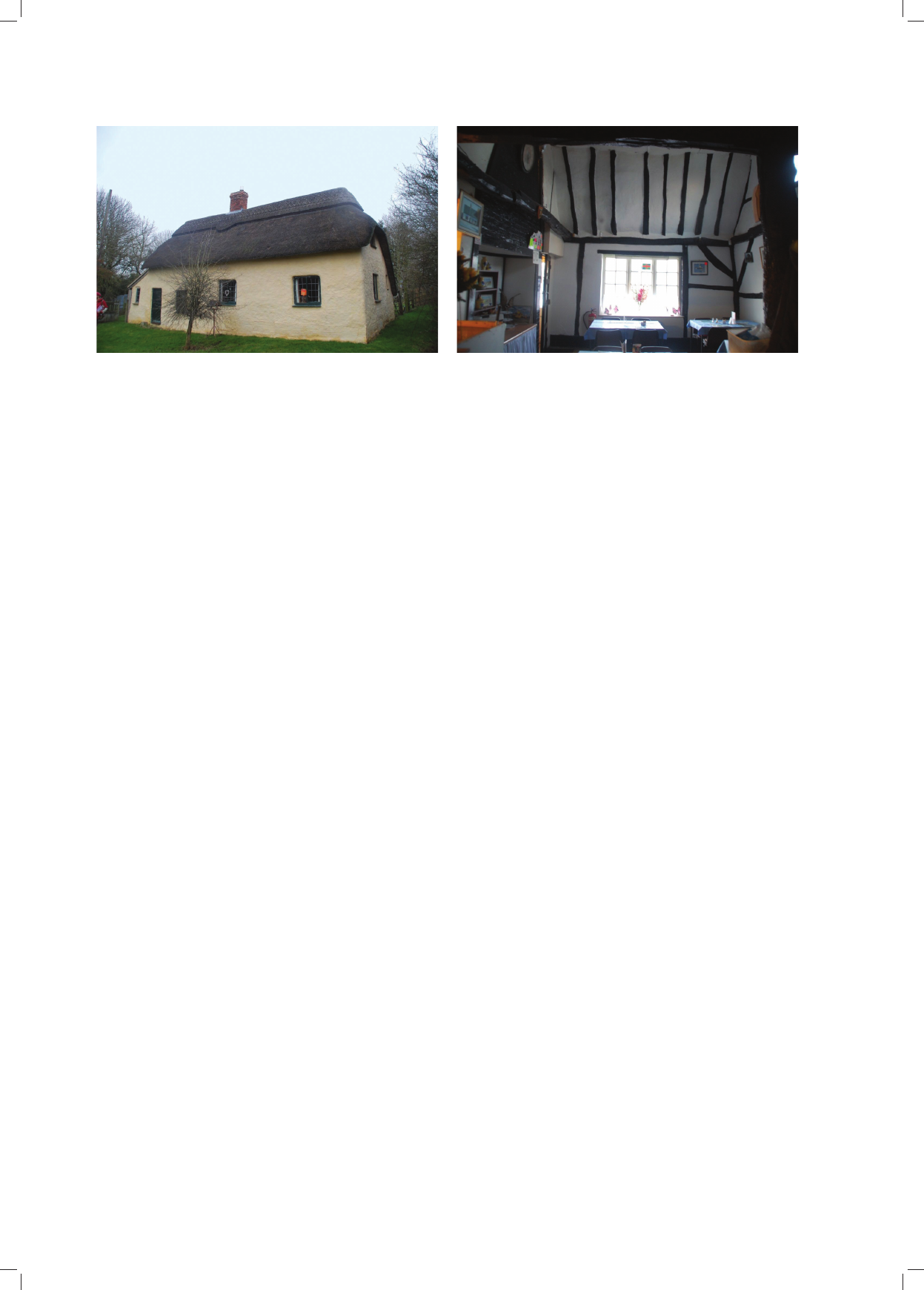
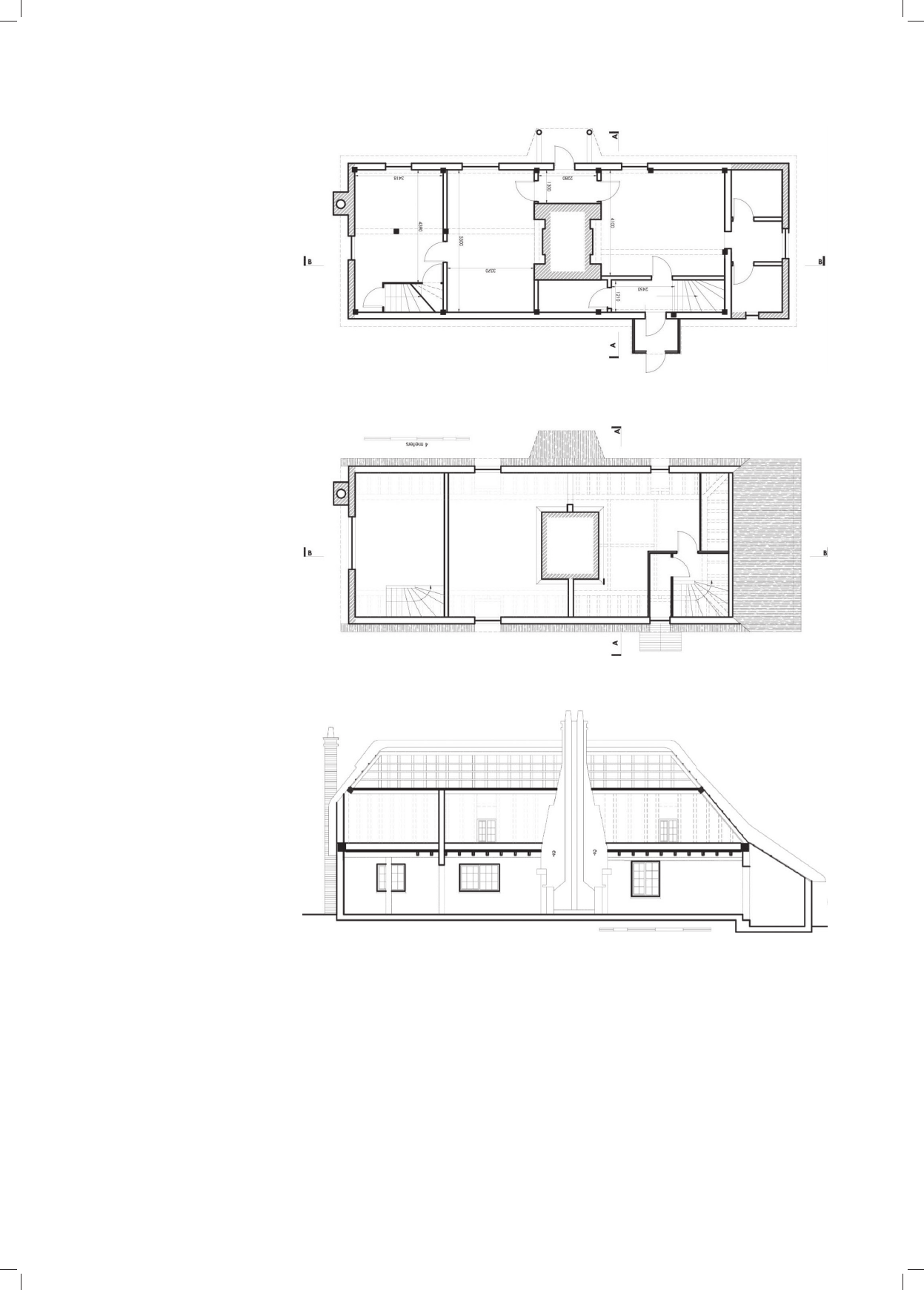
picturesque look (Fig. 1–5). Internally, M&S cottages
usually have a large central chimney stack which divides
the building into two parts. Many M&S buildings have
upper rooms, but surveys of beams and layout indicate
that upper oors were later alterations.
Mixed-methodology and triangulation
The Lincolnshire research posed a series of metho-
dological challenges which have been analysed and dis-
cussed among the author and collaborators: Magdalena

O tym, jak mierzyć architektoniczne szczęście/How to measure well-being in architecture 23
Baborska-Narożny (Wrocław University of Science and
Technology) and Ian Keeling (Cundall Johnston and Part-
ners). Discussions on appropriate methods which should
be applied reflected a series of identi fied limi tations.
Firstly was the availability and re pre sentative ness of
the research group. Although surveys and invitations
for collaboration in the research were sent to all avail-
able addresses of M&S cottages, the risk has been iden-
tified that the occupants who accepted the invitation to
participate in research were those inhabi tants who are
particularly enthusiastic and proud of their homes. Their
opinions, which were by all means valuable and relevant,
might not be representative of the whole community of
M&S inhabitants. Secondly, the cottages were occupied
in very different ways in terms of how they were used
and how many people lived in them. Some inhabitants
accepted the fact that a historical building may be cold-
er, while others were ready to accept the fact that living
in such cottages must be associated with higher occupa-
tional costs. This created the risk that monitoring could
be misrepresented. Thirdly, researched cottages present-
ed a variation of different typologies in terms of layout,
the extent of changes introduced over the cen turies and
even the wall fabric (two of them – despite being called
earth buildings – were cladded with brick approximate-
ly one hundred years ago). The typolo gical differences
were so great that even researchers such as Field dis-
puted the notion of whether the term “M&S” should
be used at all from a building histo rians point of view
[29]. Despite these and other challenges described later
in this paper, the author of this paper and the collabora-
tors mentioned above came to the conclusion that this
unique type of architecture, its importance and phenom-
enon linked with a group of inhabitants of M&S houses
deserves a better insight, understanding and closer inves-
tigation. Questions of “What is it like to live in these
houses?” and “Who are the people occupying them?”,
“How do they perceive well- being in relation to their
buildings?” seemed to be re levant questions which could
allow a comparison be tween the culture associated with
M&S and other types of historical architecture across
the world.
As a result of the discussion among researchers, the
conclusion has been reached that a single qualitative or
quantitative methodology would distort the view and un-
derstanding of the subject. Instead, researchers decided to
follow the concept of a pragmatic approach developed by
Johnson and Onwuegbuzie [32] 2004. Thus, researchers
decided to reject traditional dualisms such as rationalism
vs. empiricism and endorse the pluralism of perspectives
in observation strategies and human enquiry which is de-
scribed by Johnson and Onwuegbuzie as […] what we do
in our day-to-day lives as we interact with our environ-
ments [32, p. 14].
The inspiration also came from “multi-strategy re-
search design” advocated by Robson in the Real World
Research, where he writes: The rise of multi-strategy re-
search is, at least in part attributable to weariness with
qualitative/quantitative hostilities; the appreciation by
practicing researchers that it was actually possible to do
budownictwa, archeolożki Field [29]. Historyk archi-
tektury Cousins [30] oraz architekt Glew [31] są przeko-
nani, że ten regionalny styl jest charakterystycz ny niemal
wyłącznie dla wschodniej części hrab stwa Lincolnshire.
Wielu entuzjastów i właścicieli domów M&S jest
członkami towarzystwa budowli wykonanych z ziemi
EMESS (East Midlands Earth Structure Society – Stowa-
rzyszenie Budownictwa Ziemnego z Centralnej Anglii).
W myśl popularnej wśród członków tej grupy opinii, że
jakość życia w domach M&S jest wyjątkowo wysoka,
można powiedzieć, iż są one ciepłe w zimie oraz zimne
w lecie. Teoretyczne obliczenia współczynnika przeni-
kania ciepła U wskazują jednak, że przepuszczalność
cieplna ścian domów M&S jest dużo niższa niż obecnie
wymagane normy.
Przeprowadzone badanie miało na celu zwerykowa-
nie twierdzeń głoszonych przez miłośników M&S oraz
uzyskanie lepszego wglądu w kwestie dotyczące dobro-
stanu i jakości życia mieszkańców tych domów. Poniż-
sza część pracy skupia się na metodach zastosowanych
w czasie badania jakości życia w tych domach.
Technika budowy domów M&S
Według Barleya (1952) domy M&S są wyjątkowe.
Były one budowane zwykle dla najbiedniejszej części
mieszkańców wsi w latach 1400–1850 zgodnie z techni-
kami typowymi dla hrabstwa Lincolnshire tamtych cza-
sów [28]. Członkowie towarzystwa EMESS podają, że
obecnie istnieje zaledwie 200–400 domów M&S i nie
wszystkie z nich zachowały swój pierwotny charakter.
Hrabstwo Lincolnshire to rzadko zaludniony rejon
Wielkiej Brytanii, bogaty w glinę, gdzie jednak brakuje
terenów zalesionych. Warunki te przyczyniły się do
rozwoju techniki budowlanej wykorzystującej ziemię
i niewymagającej użycia dobrej jakości drewna. Ściany
domów M&S, o grubości około 250 mm zbudowane są
z cienkiej drewnianej ramy, wzmocnionej jeszcze cień-
szymi listewkami, wypełnionej ziemią. Nie mają one żad-
nych wystających na zewnątrz elementów drewnianych,
a elementy nośne są przykryte z zewnątrz warstwą ziemi.
Takie rozwiązanie eliminuje pęknięcia mogące powodo-
wać wnikanie powietrza do środka. Drewno jest jednak
wyeksponowane w środku i razem z belkami sutowymi
tworzy charakterystyczny wystrój często bardzo lubiany
przez mieszkańców. Z zewnątrz białe ściany z małymi
oknami oraz dachy naczółkowe kryte strzechą nadają tej
architekturze uroczy wygląd (il. 1–5). W swoim wnę-
trzu domy M&S zwykle mają duży komin usytuowany
po środku, który dzieli budynek na dwie części. Wiele
domów M&S ma pokoje na piętrze, ale badania belek
i rozkład pokoi wskazują, że pomieszczenia na piętrze
powstawały w późniejszym okresie.
Mieszane metody badawcze i triangulacja
Badanie przeprowadzone w hrabstwie Lincolnshire
sta-
nowiło duże wyzwanie metodologiczne, które było analizo-
wane i omawiane przez autora i współpracowników:
Mag-
dalenę Baborską-Narożny (Politechnika Wrocławska)
24 Marcin Mateusz Kołakowski
research with both qualitative and quantitative elements
without dire consequences; and the realisation […] that
pragmatism provided a highly compatible theoretical un-
derpinning to mixing the two types of methods in the same
project [33, p. 29–30].
It allowed triangulation of data whereby results
achieved from one method could be cross-checked against
results obtained from other methods. The set of applied
methods consisted of (a) historical research, (b) question-
naires, (c) interviews with inhabitants, (d) 18-month mon-
itoring of indoor temperature and humidity, (e) survey, (f)
thermal imaging, (g) interviews with historians, builders
and people involved in M&S.
The research is still on-going and will nish in 2017.
Nevertheless, the data already analysed allow assessing
the usefulness of the applied methodology.
The following paragraphs show how the process of
triangulation allowed cross-checking one method vs. an-
other in order to allow a more objective insight.
• Historical research vs. questionnaires
In 1799, Young encouraged landowners to build M&S
for its cheapness, suitability and well-being for peasantry:
Smaller sort brick cottage for one family will cost £50.
But of mud and stud, one third less [34, p. 34].
Cousins, the best known enthusiast-expert of those cot-
tages, is the author of the only book entirely dedicated
M&S in which he wrote these cottages are known for
being cozy and warm in winter but cold in summer [30,
p. 36]. Perhaps some researchers who based their meth-
odology merely on literature would consider these refer-
ences as a sufcient indication of the quality of M&S.
More skeptical scientists, however, should like to check
these claims vs. other methods. The author of this paper
contacted Cousins who had been keeping and updat-
ing a list of all known M&S buildings. In the rst phase,
addresses were double checked, 85 cottages with original
features were selected and questionnaires sent out to those
addresses with returned stamped envelopes. 23 question-
naires were returned. Questionnaires comprised several
i Iana Keelinga (Cundall Johnston and Partners). Podczas
dyskusji dotyczących tego, jakie metody powinny być za-
stosowane, pojawiło się wiele ograniczeń. Po pierwsze,
wątpliwości dotyczyły dostępności i reprezentatywności
badanej grupy. Pomimo wysłania materiałów i zaproszeń
do uczestnictwa w badaniu na wszystkie dostępne adresy
domów M&S zauważono, że zaproszenie zechciały przy-
jąć przede wszystkim osoby, które są szcze gólnie entu-
zjastyczne i dumne ze swoich siedzib. Ich opinie, choć
są oczywiście bardzo cenne i ważne, mogą nie być repre-
zentatywne dla całej społeczności miesz kań ców domów
M&S. Po drugie, domy były zamiesz ki wa ne i wykorzy-
stywane w bardzo różny sposób, a także liczba ich miesz-
kańców była różna. Niektórzy z nich zaakceptowali fakt,
że budynek zabytkowy może być zimniejszy, a inni byli
gotowi pogodzić się z tym, że miesz ka nie w takich do-
mach musi wiązać się z wyższymi kosztami utrzymania.
To sprawia, że obserwacje mogą być niereprezentatywne.
Po trzecie, rozkład pomieszczeń w badanych domach był
różny, a modernizacje w tym zakresie wprowadzane przez
wieki. Obejmowały one nawet zmianę materiału, z które-
go wykonane były ściany (ściany dwóch domów – mimo
że ciągle nazywano je domami zbudowanymi z ziemi –
obłożone były cegłami około stu lat temu). Typologiczne
różnice były tak duże, że nawet tacy badacze jak Field
podważali, jako historycy budownictwa, używanie w sto-
sunku do nich określenia „domy M&S” [29]. Pomimo
tych i innych wyzwań opisanych poniżej, autor niniejszej
pracy oraz wspomniani współpracownicy doszli do wnio-
sku, że ten wyjątkowy rodzaj architektury, jego znaczenie
oraz fenomen powiązane z grupą mieszkańców domów
M&S zasługują na lepsze opracowanie, zrozumienie i do-
kładniejsze zbadanie. Pytania: „Jak się mieszka w takich
domach?”, „Kim są mieszkańcy tych domów?” czy też
„Jak oni oceniają dobrostan w odniesieniu do tych budyn-
ków?” wydawały się odpowiednie do porównania kultury
powiązanej z domami M&S i innymi rodzajami architek-
tury zabytkowej na świecie.
Dyskusja badaczy doprowadziła do konkluzji, że zasto-
sowanie pojedynczych metod jakościowych i ilościowych
Il. 1. Typowy dom M&S w hrabstwie Lincolnshire
(fot. M.M. Kołakowski)
Fig. 1. Typical Lincolnshire
M&S
cottage
(photo by M.M. Kołakowski)
Il. 2. Dom M&S – elementy drewniane wewnątrz
(fot. M.M. Kołakowski)
Fig. 2. Internally exposed timber in a
M&S
cottage
(photo by M.M. Kołakowski)
O tym, jak mierzyć architektoniczne szczęście/How to measure well-being in architecture 25
Il. 3. Typowy plan parteru domu
M&S z dużym kominem
w środku
(rys. M.M. Kołakowski)
Fig. 3. Typical ground floor plan
in a M&S cottage
with a large chimney stack
in the middle
(drawing by M.M. Kołakowski)
Il. 5. Przekrój typowego
domu M&S
(rys. M.M. Kołakowski)
Fig. 5. Section through a typical
M&S cottage
(drawing by M.M. Kołakowski)
Il. 4. Typowy plan piętra
domu M&S
(rys. M.M. Kołakowski)
Fig. 4. Typical first floor plan
in a M&S cottage
(drawing by M.M. Kołakowski)
parts. This paper concentrates on the part relating to well-
being and satisfaction.
In the questionnaire, two open questions without any
prompts asked for the “positive” and “negative” aspects
of living in an M&S cottage to be listed. These type of
questions allowed researchers to identify the values of
M&S houses that are important to inhabitants. The results
give a good insight into the value systems of M&S in -
ha bitants. It was possible to group positive values most
commonly mentioned into: aesthetics (47% answers),
connection to history (39%) and unique character (31%).
Negative aspects most commonly mentioned were: low
zniekształciłoby ogląd i zrozumienie zagadnienia.
W związ ku z tym postanowili zastosować „podejście
prag matyczne” opracowane przez Johnsona i Onwuegbu-
zie [32] w 2004 r. – odrzucili tradycyjne podziały takie
jak racjonalizm i empiryzm i opowiedzieli się za plura-
lizmem perspektyw w strategii obserwacji oraz ludzką
dociekliwością opisaną przez cytowanych powyżej au-
torów jako […] to, co robimy w naszym codziennym ży-
ciu, kiedy wchodzimy w interakcję z naszym środowiskiem
[32, s. 14].
Inspiracją było też „projektowanie badań z wykorzy-
staniem zróżnicowanych strategii analitycznych” propo-

26 Marcin Mateusz Kołakowski
nowane przez Robsona w książce pod tytułem Real World
Research, gdzie pisze on, że: Pojawienie się badań wy-
korzystujących zróżnicowane strategie analityczne jest
przy najmniej częściowo przypisywane znużeniu swoistą
ry walizacją badań jakościowych z ilościowymi; do strze-
żeniu przez praktykujących badaczy faktu, że jest jednak
możliwe prowadzenie badań zarówno z elementami ja-
kościowymi, jak i ilościowymi bez niepożądanych skut-
ków; oraz zrozumieniu […], że pragmatyzm zapewnił
od powiednią teoretyczną podbudowę mieszania dwóch
rodzajów metod badawczych w tym samym projekcie [33,
s. 29–30].
Umożliwiło to triangulację danych, dzięki czemu wy-
niki uzyskane jedną metodą mogły być porównane z wy-
nikami uzyskanymi inną metodą. Zestaw zastosowanych
metod obejmował: (a) badania historyczne, (b) kwestiona-
riusze, (c) wywiady z mieszkańcami, (d) 18-miesięczny mo -
nitoring wewnętrznej temperatury i wilgotnoś ci, (e) son
daż,
(f) badania termowizyjne, (g) wywiady z hi sto ry ka mi, bu-
downiczymi i ludźmi oddanymi idei domów M&S.
Badanie ciągle trwa i zakończy się w 2017 r. Niezależ-
nie od tego, przeanalizowane już dane umożliwiają ocenę
użyteczności zastosowanej metodologii.
Poniższe paragrafy wskazują, jak proces triangulacji
umożliwił porównanie różnych metod w celu uzyskania
bardziej obiektywnego wglądu.
• Badanie historyczne a kwestionariusze
W 1799 r. Young zachęcał właścicieli ziemskich do
budowania domów M&S ze względu na ich niski koszt,
dopasowanie oraz dobrostan dla chłopstwa: Dom z małej
cegły dla jednej rodziny kosztuje £50, a dom z gliny i słu-
pów jedną trzecią mniej [34, s. 34].
Cousins, najbardziej znany entuzjasta-ekspert tych
domów i autor jedynej książki w całości poświęconej
domom M&S pisze w niej, że […] domy te znane są
z tego, że są przytulne i ciepłe w zimie oraz zimne w lecie
[30, s. 36]. Być może niektórzy badacze, którzy opar-
li swoją metodologię tylko na literaturze przedmiotu,
uznaliby te referencje za wystarczająco przedstawiające
jakość domów M&S. Jednak bardziej sceptyczni woleliby
zwerykować te twierdzenia przy użyciu innych metod.
Autor niniejszej pracy kontaktował się z Cousinsem,
który prowadzi i stale uaktualnia wykaz wszystkich zna-
nych domów M&S. Najpierw ponownie sprawdzono
adresy, wybrano 85 domów z zachowanymi oryginal-
nymi elementami i wysłano na te adresy kwestionariu-
sze z kopertami zwrotnymi. Odesłano 23 wypełnione
kwestionariusze, złożone z kilku części. Niniejsza praca
skupia się na części dotyczącej dobrostanu i za dowolenia.
Dwa otwarte pytania w kwestionariuszu bez żadnych
podpowiedzi dotyczą wymienienia „pozytywnych” i „ne-
gatywnych” aspektów mieszkania w domu M&S. Tego
typu pytania umożliwiły badaczom zidenty kowanie za-
let, które są ważne dla ich mieszkańców. Wyniki pozwoli-
ły poznać systemy wartości mieszkańców domów M&S.
Możliwy również był podział najczęściej wymienia -
nych zalet na grupy: estetyka (47% odpowiedzi), przy-
wiązanie do historii (39%) oraz unikatowy charak ter
(31%). Najczęściej wymieniane negatywne aspekty to:
thermal performance (52%); high cost of living and main-
tenance (52%), or restric tions connected with living in
a historical building (39%).
Since low temperature performance has been men-
tioned by so many respondents it was obvious that the
common opinion that M&S is warm in winter and cold in
summer is not shared by everyone. However, this raised
the question: how could this opinion be so popular and
widely spread?
• Arithmetic mean vs. separate groups
Researchers who analyse merely an arithmetic mean
from the answers about comforts could come to the con-
clusion that people who live in M&S houses do not like
the buildings since half of those questioned reported poor
thermal quality. Unfortunately, this methodology could
overlook the fact that 17% of inhabitants answered with-
out any prompt that the positive aspect of those buildings
is the fact that “they are well insulated and warm in win-
ter” and 21% that the building “has an atmosphere which
makes you feel good”.
While the calculated mean values would be hard to in-
terpret, it was the ethnographical perspective which of-
fered a more useful insight. In terms of calculating means,
what turned out to be very useful was to identify two dis-
tinctively dissimilar groups among respondents with dif-
ferent paradigms and value systems – enthusiasts of M&S
and those sceptical of the technique. Assuming that they
create one group could be misleading particularly when
conducting research dealing with well-being and satisfac-
tion. In other words, if we deal with two groups where
one is extremely happy and the other extremely dissatis-
ed it would be very misleading to say that on average
they are “so-so” – not too happy, not too dissatised.
The awareness that we are dealing with two separate
groups turned out to be particularly relevant during an-
other stage of research – interviews. It has been realised
that mainly people who are enthusiastic about M&S were
the ones to invite us for further research.
• Interviews vs. measurements
The next step of the Lincolnshire research project
was identifying 11 properties, establishing contact with
those M&S inhabitants who expressed an interest in par-
ticipating in the research, visiting their properties, con-
ducting interviews and taking thermal images of their
properties.
During most of the semi-structured interviews, it was
obvious that all inhabitants felt very positive emotions to-
wards their cottages. When asked: Are you happy with this
house? All of them answered yes and offered additional
explanations. One third of them praised their thermal
properties claiming that the houses are cosy and warm in
winter. When asked Does the building you live in meet
your expectations regarding thermal performance? one
of the typical answers was: Oh, yes. It’s fantastic. I don’t
know why more people don’t build out of mud.
A researcher who would only rely on interview metho-
dology could fall under the impression that indeed those
houses have excellent properties. However, the qualita-

O tym, jak mierzyć architektoniczne szczęście/How to measure well-being in architecture 27
niska wydajność cieplna (52%); wysoki koszt zamieszka-
nia i utrzymania (52%), ograniczenia związane z miesz-
kaniem w budynku zabytkowym (39%).
Ze względu na to, że niska wydajność cieplna była
wymieniana przez tak wielu respondentów, uznano, że
nie wszyscy podzielają obiegową opinię, że domy M&S
są ciepłe w zimie, a zimne w lecie. Pojawiło się zatem
pytanie: „Jak to możliwe, że ta opinia jest tak popularna
i szeroko znana?”.
• Średnia arytmetyczna a różne grupy badanych
Badacze, którzy analizują jedynie średnią arytmetycz-
ną odpowiedzi dotyczących komfortu, mogli dojść do
wniosku, że ludzie mieszkający w domach M&S nie lubią
ich, ponieważ połowa z pytanych wspomniała słabą ja-
kość izolacji cieplnej. Niestety, stosując tę metodologię,
można było przegapić to, że jednak 17% mieszkańców
odpowiedziało bez żadnych podpowiedzi, że pozytywną
cechą tych budynków jest fakt, że są one dobrze ocieplo-
ne i ciepłe w zimie, a 21%, że atmosfera budynku spra-
wia, że dobrze się czujesz.
Chociaż trudno byłoby zinterpretować wyliczone war-
tości średnie, to właśnie dzięki perspektywie etnogracz-
nej można było uzyskać bardziej pożyteczną wiedzę. Jeśli
chodzi o wyliczanie wartości średnich, szczególnie po-
mocne okazało się zidentykowanie dwóch wyraźnie róż-
nych grup respondentów stosujących różne paradygmaty
i systemy wartości – entuzjastów domów M&S oraz scep-
tyków wobec tej technologii. Założenie, że tworzą oni
jedną grupę, mogłoby być mylące, szczególnie przy wy-
konywaniu badań dotyczących dobrostanu i zadowolenia.
Innymi słowy, jeśli mamy do czynienia z dwoma grupa-
mi – jedną obejmującą osoby bardzo zadowolone, a dru-
gą osoby bardzo niezadowolone – byłoby bardzo mylące
twierdzenie, że średnio nie są oni ani zbyt zadowoleni, ani
zbyt niezadowoleni.
Świadomość tego, że mamy do czynienia z dwiema
osobnymi grupami respondentów, okazała się szczególnie
ważna podczas drugiej fazy badania, obejmującej wywia-
dy. Badacze zdali sobie sprawę, że ci, którzy zadeklaro-
wali dalszy udział w projekcie, to głównie osoby nasta-
wione entuzjastycznie do domów M&S.
• Wywiady a pomiary
Następny etap projektu badawczego w hrabstwie Lin-
colnshire obejmował rozpoznanie 11 domów M&S, na-
wiązanie kontaktu z ich mieszkańcami, którzy wyrazili
zainteresowanie uczestnictwem w badaniu, odwiedzenie
tych domów, przeprowadzenie wywiadów i wykonanie
w nich badań termowizyjnych.
Podczas większości częściowo ustrukturyzowanych
wywiadów okazało się, że wszyscy mieszkańcy odczu-
wali bardzo pozytywne emocje w stosunku do swoich
domów. Na pytanie: Czy jesteś szczęśliwy/szczęśliwa
w tym domu? wszyscy odpowiadali Tak i udzielali dodat-
kowych wyjaśnień. Jedna trzecia z nich chwaliła właści-
wości cieplne swych domów, twierdząc, że są one przy-
tulne i ciepłe w zimie. Na pytanie: Czy dom, w którym
mieszkasz, spełnia twoje oczekiwania dotyczące wydaj-
ności cieplnej? jedna z typowych odpowiedzi brzmiała:
tive methodologies have been cross-checked with quanti-
tative data from sensors which had been installed in those
properties for 18 months as well as thermal imagining.
Because this paper discusses chosen mix-method meth-
odology there is not enough space to present and analyse
all gathered data. Yet it is important to mention the be-
net of triangulation between qualitative and quantitative
research on the example of correlation of the measured
internal temperature, satisfaction and paradigms of in-
heritance. In more than half of the monitored cottages
readings of measured monthly temperatures are far below
national standards which according BRE should range
from 18.5°C to 21.5°C [35]. In some researched cottages,
the internal temperature in winter fell below 10°C and in-
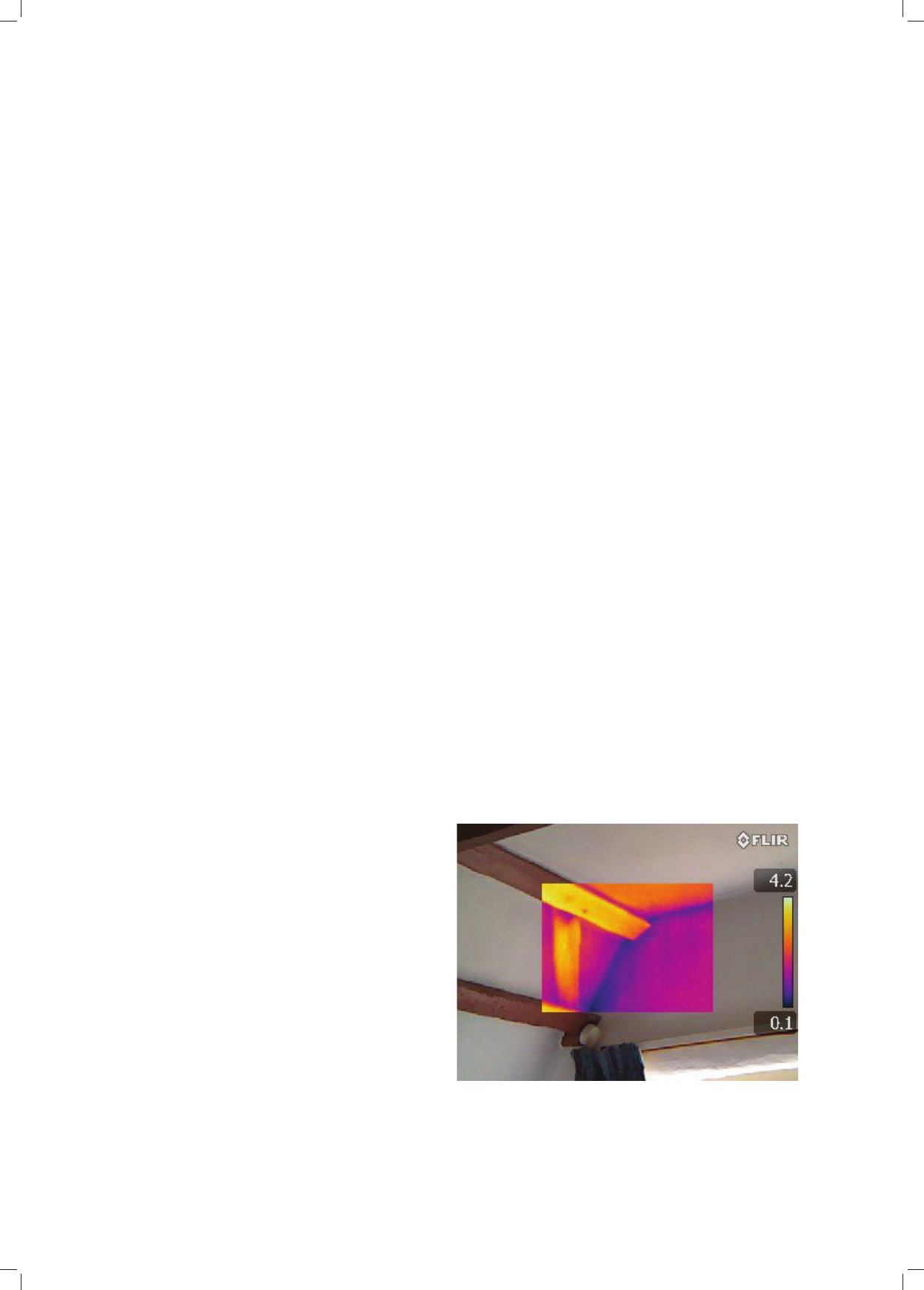
ternal wall temperature could even be close to 0°C (Fig. 6).
• Forgiveness graphs vs. direct questions
An attempt was made to investigate the forgiveness
factor by drawing a correlation between (a) general satis-
faction from the cottage one lives in; (b) New Ecological
Paradigm (NEP); (c) Historical Paradigm (HP).
Ad a)
Satisfaction with M&S has been measured on ve-
level Likert scale by asking respondents to agree or disa-
gree with the following statements concerning the build-
ing they live in: (1) It meets my expectations regarding
thermal comfort; (2) It is affordable in terms of utility
bills; (3) It is easy to maintain and easy to modify; (4) If
it was to be modied, I would try to use M&S technique;
(5) Living in a historical building is associated with
higher cost; (6) Living in a historical building is linked
with lower comfort. In questions 1–4 answers “strongly
agree” scored 5 and “strongly disagree” – 0. In questions
5 and 6 “strongly agree” scored 0 and “strongly disagree”
scored 5.
Ad b)
15 standard NEP questions as described by Dunlap and
Van Liere [24] have been included in the questionnaire.
Ad c)
HP-questions have been measured on a ve-level
Likert scale by asking respondents to agree or disagree
with the following statements: (1) Historical architecture
is not protected or promoted enough; (2) If historical ar-
chitecture does not respond to current needs, it should
be changed, retrotted or modernised; (3) Living in his-
torical buildings is particularly attractive because of their
specic qualities and character; (4) Historical architecture
is interesting for historians and ethnographers but in or-
der to meet current needs it would be better to invest in
new high-quality architecture; (5) There should be no in-
terventions to historical buildings, they are unique. Once
something is lost it is irreplaceable.
In questions 1, 3 and 5, the answer “strongly agree”
scored 5 and “strongly disagree” – 0. In questions 2 and 4,
“strongly agree” scored 0 and “strongly disagree” – 5. The re -
sults have been correlated in the form of 3 graphs (Fig. 7, 8).
Researchers using this methodology only could draw
a conclusion that forgiveness for M&S cottages is proved
by the positive correlation between satisfaction with
the house someone lives it and his or her NEP and HP.
28 Marcin Mateusz Kołakowski
O tak. Wydajność jest fantastyczna. Nie rozumiem,
dlaczego więcej ludzi nie buduje domów z gliny.
Badacz, który opierałby się wyłącznie na wywiadach,
mógłby dojść do wniosku, że rzeczywiście te domy mają
doskonałe właściwości cieplne. Metody jakościowe zo-
stały jednak porównane z danymi ilościowymi zebranymi
z czujników zainstalowanych w tych domach przez 18
miesięcy, jak również z badaniami termowizyjnymi. Ze
względu na to, że niniejsza praca omawia wybrane me-
tody mieszane, nie ma tu dość miejsca na przedstawie-
nie i analizę wszystkich zgromadzonych danych. Ważne
jest jednak, aby wspomnieć korzyści z triangulacji ba-
dań jakościowych i ilościowych na przykładzie korela-
cji zmierzonej temperatury wewnętrznej, zadowolenia
oraz paradygmatów dziedziczenia. Odczyty temperatury
mierzonej co miesiąc w większości monitorowanych do-
mów są znacznie niższe niż normy krajowe, które według
BRE powinny oscylować w zakresie 18,5°C–21,5°C [35].
W niektórych badanych domach temperatura wewnątrz
w zimie spadła poniżej 10°C, a wewnętrzna temperatura
ścian mogła być nawet bliska 0°C (il. 6).
• Wykresy wybaczania a pytania bezpośrednie
Podjęto próbę zbadania czynnika wybaczania poprzez
wyznaczenie korelacji między:
a) ogólnym zadowoleniem z zamieszkiwanego domu;
b) Nowym Paradygmatem Ekologicznym (NEP);
c) Paradygmatem Historycznym (HP).
Ad a)
Zadowolenie z domów M&S mierzono według pięcio-
stopniowej skali Likerta, prosząc respondentów, aby zgo-
dzili się lub nie z następującymi stwierdzeniami dotyczą-
cymi zamieszkiwanych przez nich domów: (1) Spełnia
on moje oczekiwania dotyczące komfortu cieplnego; (2)
Ceny rachunków za media są przystępne; (3) Jest łatwy
w utrzymaniu i przeróbkach; (4) Gdyby miał być prze-
robiony, wybrałbym technologię M&S; (5) Mieszkanie
w budynku zabytkowym kojarzy się z wyższymi kosz-
tami; (6) Mieszkanie w budynku zabytkowym wiąże się
z niższym komfortem. W pytaniach 1–4 odpowiedzi „sta-
nowczo się zgadzam” oceniano na 5, a „stanowczo się nie
zgadzam” na 0 punktów. W pytaniach 5 i 6 „stanowczo
się zgadzam” oceniano na 0, a „stanowczo się nie zga-
dzam” na 5 punktów.
Ad b)
Kwestionariusz obejmował 15 standardowych pytań do-
tyczących NEP opisanych przez Dunlapa i Van Lie re’a [24].
Ad c)
Pytania dotyczące HP mierzono według pięciostopnio-
wej skali Likerta, prosząc respondentów, aby zgodzili się
lub nie zgodzili się z następującymi stwierdzeniami: (1) Ar-
chitektura zabytkowa nie jest w dostatecznym stopniu chro-
niona czy też promowana; (2) Jeśli architektura zabytkowa
nie spełnia obecnych potrzeb, należy ją zmienić, odnowić
czy też zmodernizować; (3) Mieszkanie w budynkach za-
bytkowych jest wyjątkowo atrakcyjne ze względu na ich
szczególne właściwości i charakter; (4) Architektura za-
bytkowa jest interesująca dla historyków i etnografów, ale
w celu spełnienia obecnych potrzeb byłoby lepiej inwesto-
wać w nową architekturę wysokiej jakości; (5) Nie powinno
However, it must be pointed out that results are rather in-
conclusive since they are spread widely across the whole
spectrum. Yet, a direct question asked during an inter-
view: Do you believe that the current internal climate
you experience in your home would be acceptable if ex-
perienced within a modern equivalent? gave a much more
poignant result. Surprisingly all inhabitants, even those
who were very enthusiastic about their buildings, admit-
ted that they would expect better thermal quality if they
were to live in a new build. Those answers indicate cor-
relation between positive attitudes and inhabitants ethos
which overshadows lack of comfort. This correlation de-
rived from interviews in even more direct way than BUS
methodology conrms the forgiveness factor phenom-
enon identied by Dunlap and Van Liere [24].
The methodology of generating graphs could seduce
with its scientic objectivity, but it may never be so com-
pelling as interviews during which when asked “Is living
in this house a compromise?” one interlocutor answered
Compromise… What compromise? Yes… I value it for what
it is. Sure… For its history. I feel privileged to have one.
I don’t know how perfect the house is. I don’t know how
much is left of it [of the original fabric]. But whatever
there is I’m pleased to be part of it and pleased to have it.
Well-being and satisfaction despite lower comfort ts
the concept of forgiveness and could be explained by
the “main drive” dened by Pink which is, as mentioned
above, the yearning to do what we do in the service of
something larger than ourselves [19, p. 1].
• Energy kWh per m
2
vs. survey
All inhabitants were very supportive in offering data
from their utility bills as well as allowing the installation
of sensors which collected information on temperature
and humidity for 15 months. Some inhabitants offered
retrospective information from their utility bills and cal-
culations related to energy consumption.
Il. 6. Wewnętrzna temperatura ścian w zimie mogła być bliska 0°C
(4.02.2015 przy temperaturze na zewnątrz –5°C)
(fot. M.M. Kołakowski)
Fig. 6. Internal wall temperature in winter could be close to 0°C
(04 Feb 2015 by outdoor temperature –5°C)
(photo by M.M. Kołakowski)
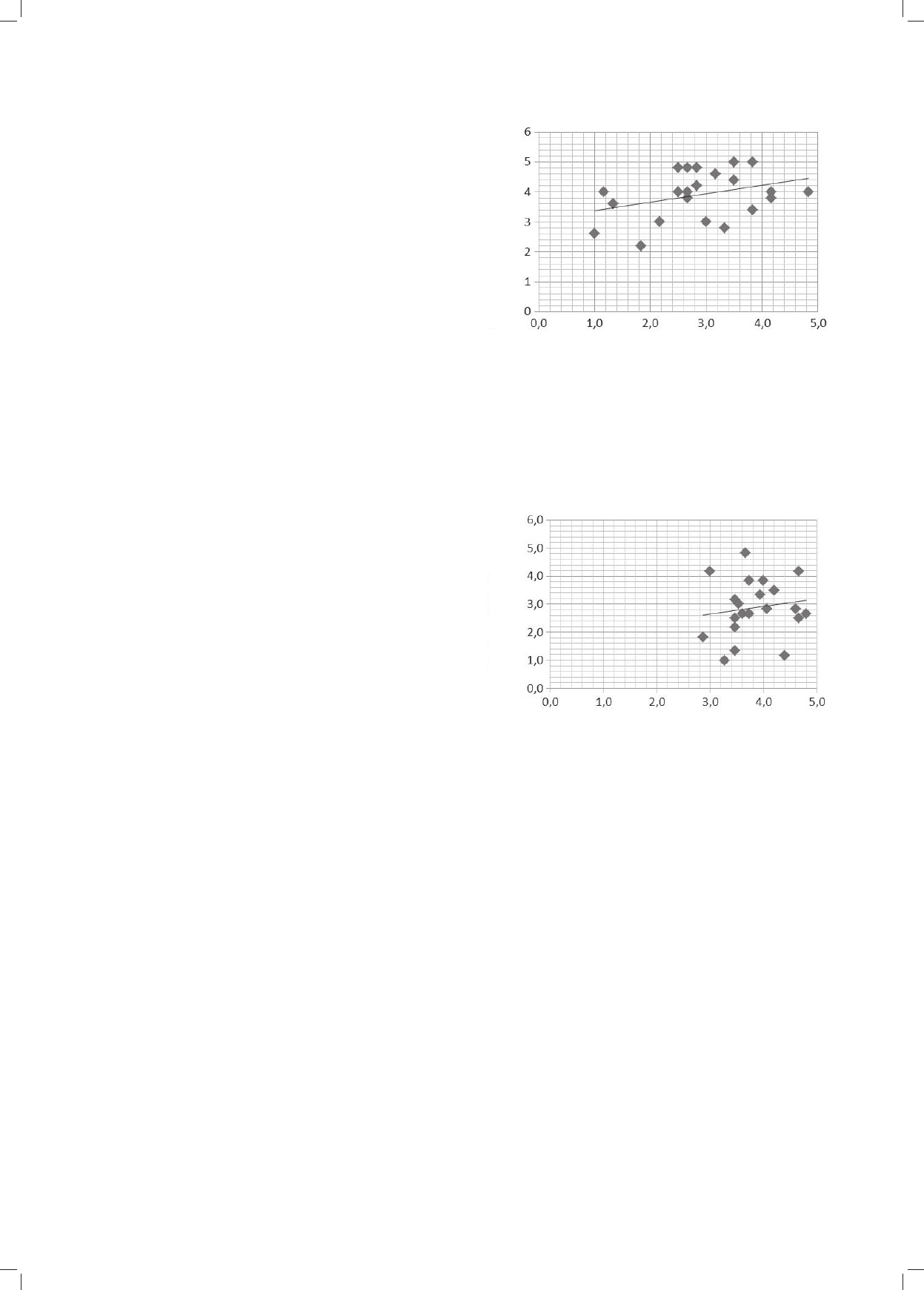
O tym, jak mierzyć architektoniczne szczęście/How to measure well-being in architecture 29
It was expected that the collection of data could give an
indication of energy usage which, divided by the building
surface, would produce a quantiable gure in [kWh/m
2
per year]. In theory, this gure could then be compared
with the national standard and lead to conclusions on the
energy efciency of the building.
But even this seemingly straight forwards procedure
could be misleading if not triangulated against other
research methods. Survey drawings identied that cal-
culating square meterage of M&S buildings could pose
methodological problems. Ceilings of those buildings are
often lower than 2m and upper oor rooms have many
peculiarities and idiosyncratic geometric shapes which
make it difcult to compare with any standards. Addition-
ally, the centrally located large chimneys, sometimes the
size of a small room, could also distort (Fig. 3–5). The
chimneys add to the thermal mass but have to be warmed
się w żaden sposób ingerować w budynki zabytkowe, które
są wyjątkowe. Kiedy coś się straci, nie sposób tego zastąpić.
W pytaniach 1, 3 i 5 odpowiedzi „stanowczo się zga-
dzam” oceniano na 5, a „stanowczo się nie zgadzam” na
0 punktów. W pytaniach 2 i 4 odpowiedzi „stanowczo się
zgadzam” oceniano na 0, a „stanowczo się nie zgadzam”
na 5 punktów. Wyniki skorelowano w formie 2 wy kresów
(il. 7, 8).
Badacze wykorzystujący jedynie tę metodologię mogli
wyciągnąć wniosek, że wybaczanie dla domów M&S jest
wykazane poprzez pozytywną korelację pomiędzy zado-
woleniem z zamieszkiwanego domu a NEP oraz HP jego
mieszkańca. Trzeba jednak przyznać, że wyniki nie są jed-
noznaczne, ponieważ są one rozproszone na całym spek-
trum. Jednocześnie jednak odpowiedzi na pytanie bezpo-
średnie zadane podczas wywiadu: Czy uważasz, że obecny
wewnętrzny klimat, który odczuwasz w swoim domu, byłby
do przyjęcia, gdyby taki sam klimat był odczuwalny w no-
woczesnym budynku? były o wiele bardziej wyraziste. Co
zaskakujące, wszyscy mieszkańcy, nawet ci bardzo entu-
zjastyczni w stosunku do swoich domów, przyznawali, że
oczekiwaliby lepszych właściwości termicznych, gdyby
mieli mieszkać w nowoczesnym budynku. Te odpowiedzi
wskazują na istnienie związku pomiędzy pozytywnym na-
stawieniem mieszkańców M&S do swoich domów a ich
etosem, dzięki któremu postrzegają swój dom jako więcej
niż tylko budynek. Takie nastawienie przeważa brak kom-
fortu. Korelacja ta pochodząca z wywiadów nawet bardziej
bezpośrednio niż z metodologii BUS potwierdza fenomen
wybaczania rozpoznany przez Dunlapa i Van Liere’a [24].
Metodologia generująca wykresy może kusić swo-
im naukowym obiektywizmem, ale nigdy nie może być
ona zbyt przekonująca, ponieważ na pytanie zadawane
w trakcie wywiadu: Czy mieszkanie w tym domu jest pew-
nego rodzaju kompromisem? jeden respondent odpowie-
dział Kompromisem… Jakim kompromisem? Tak… cenię
go za to, że jest taki, jaki jest. Oczywiście… Za jego zabyt-
kowy charakter. Czuję, że to przywilej być właścicielem
takiego domu. Nie wiem, w jakim stopniu jest on idealny.
Nie wiem, ile przetrwało z jego pierwotnej tkanki. Ale ile
by tego było, jestem szczęśliwy, że mogę być jego częścią
i cieszę się, że go mam.
Dobrostan i zadowolenie pomimo niższego komfor-
tu pasują do koncepcji wybaczania i można je wyjaśnić
„główną motywacją” ludzi zdeniowaną przez Pinka,
jak
wspomniano powyżej, jako […] pragnienie robienia tego,
co robimy w służbie czemuś większemu niż my sami [19, s. 1].
• Energia kWh/m
2
a ankiety
Wszyscy mieszkańcy bardzo chętnie podawali dane
z rachunków za media oraz pozwolili na zainstalowanie
czujników, które mogły zbierać informacje dotyczące
temperatury i wilgotności przez 15 miesięcy. Niektórzy
mieszkańcy sami przedstawiali informacje o swoich sta-
rych rachunkach za media oraz kalkulacje zużycia prądu.
Oczekiwano, że zebrane dane wskazałyby poziom zuży-
cia energii, co, po podzieleniu na powierzchnię domu, dawa-
łoby jakąś wielkość kwantykowalną wyrażoną w kWh/m
2
na rok. Teoretycznie tę wielkość można by porównać do
krajowych standardów, co mogłoby prowadzić do wnio-
sków dotyczących wydajności energetycznej budynku.
Il. 7. Korelacja pomiędzy zadowoleniem z domu
a paradygmatem historycznym
(oprac. M.M. Kołakowski)
Fig. 7. Correlation between satisfaction with the house
and historical paradigm
(graph by M.M. Kołakowski)
Il. 8. Korelacja pomiędzy zadowoleniem z domu
a Nowym Paradygmatem Ekologicznym
(oprac. M.M. Kołakowski)
Fig. 8. Correlation between satisfaction with the house
and New Ecological Paradigm
(graph by M.M. Kołakowski)
Zadowolenie z zamieszkiwanego domu
Satisfaction with the house you live in
Zadowolenie z zamieszkiwanego domu
Satisfaction with the house you live in
HP – Paradygmat Historyczny
HP – Historican Paradigm
NEP – Nowy Paradygmat Ekologiczny
NEP – New Ecological Paradigm

30 Marcin Mateusz Kołakowski
up as well which could distort the calculations and make
them incomparable. Some researchers might decide to de-
duct the chimney space from the space heating calculation
not acknowledging the fact that the large solid mass must
be also heated up.
It must be also noted that each surveyed M&S property
has a very different system of heating water, space heat-
ing and cooking. Among 11 researched proprieties, each
pro perty developed a different heating strategy by using
either gas or electric heaters, biomass or coal in wood
burners, radiators, oor heating or oil heaters. Such a va-
riety poses a considerable methodological challenge and
could lead to misrepresentation if lacking careful consid-
eration.
Another challenge derives from the fact that those
buildings are used in very different ways. Some of the re-
searched M&S cottages were inhabited by multi-genera-
tional families, others might only have one person visiting
the house from time to time. Some inhabitants do not heat
certain rooms; others accept the fact that the temperature
inside could be quite low in winter. Interviews identied
the fact that some inhabitants accepted a strategy accord-
ing to which on cold days, instead of increasing the heat-
ing level it is better to “put another jumper on”.
Researchers must question how reliable “hard” quanti-
able data, expressed in kWh/m
2
is without the commen-
tary that derives from mixed-method qualitative research.
Conclusions
The recent revival of interest in well-being and sat-
isfaction in architecture resulted in the emergence of
literature which portrays well-being as a component of
successful economy. Several authors and organisations
produced publications in the form of guidelines and stand-
ards that should help architects to embed consideration of
well-being into various stages of design. This “guideline
literature” could play a positive role in raising standards,
although researchers who rely merely on these method-
ologies and single-method “box-ticking” tools should be
aware of how easily they can be misled.
If we accept that the key component of well-being is not
only hedonia but also eudaimonia – concepts developed
by generations of thinkers which start to be appreciated
by new emerging positive psychology – we have to accept
the complexity of well-being which is not hierarchical or
linear. The forgiveness factor as an architectural concept
and non-Maslowian perspective, presented in the paper are
arguments for not perceiving well-being as a simple value
which could be moved up and down on a linear scale.
The case study of research on M&S cottages illustrates
examples where results from single-method investiga-
tions could lead to false conclusions if not cross-checked
with results from other methodologies. For example, his-
torical accounts could lead to conclusions that the build-
ings have good thermal properties if not confronted with
data obtained from monitoring of temperature. Interviews
could be very wrongly interpreted if one ignored the fact
that researchers investigated two distinctively differ-
ent groups. Questionnaires could reveal only part of the
Ale nawet ta procedura, z pozoru wyglądająca na pro-
stą, mogłaby być myląca bez triangulacji z innymi me-
todami badawczymi. Rysunki sondażowe wykazały, że
obliczeniowy metraż domów M&S mógłby stwarzać
problemy metodologiczne. Suty tych domów są czę-
sto wybudowane niżej niż 2 metry nad podłogą, a po-
mieszczenia na piętrze mają dużo nietypowych rozwią-
zań i kształtów geometrycznych, co sprawia, że trudno
ocenić te domy w oparciu o jakieś przyjęte standardy.
Ponadto centralnie umieszczone duże kominy, czasami
wielkości małego pokoju, mogłyby utrudniać taką oce-
nę (il. 3–5). Kominy dodają masy cieplnej, ale muszą
być również ogrzewane, co mogłoby zniekształcać ob-
liczenia i w rezultacie uniemożliwić porównanie. Nie-
którzy badacze mogliby postanowić odjąć przestrzeń
komina przy obliczaniu powierzchni do ogrzania, igno-
rując fakt, że taka duża masa musi również być ogrzana.
Trzeba też zaznaczyć, że każdy z badanych domów
M&S ma inny system grzania wody, inny system ogrze-
wania oraz gotowania. W 11 badanych domach do ogrze-
wania wykorzystywano np. grzejniki gazowe, elektrycz-
ne, biomasę czy też węgiel, piece na drewno, radiatory,
ogrzewanie podłogowe lub grzejniki olejowe. Taka róż-
norodność stwarza znaczne wyzwanie metodologiczne
i mogłaby prowadzić do błędnych wniosków bez dokład-
nej analizy.
Inną trudność stanowił fakt, że te budynki są używa-
ne w bardzo różny sposób. Niektóre z badanych domów
M&S były zamieszkiwane przez rodziny wielopokolenio-
we; inne odwiedzała jedna osoba od czasu do czasu. Nie-
którzy mieszkańcy nie ogrzewają niektórych pokoi; inni
akceptują to, że temperatura wewnątrz może być dość
niska w zimie. Wywiady wykazały, że część mieszkań-
ców zaakceptowała strategię, zgodnie z którą w zimne dni
zamiast podnoszenia temperatury grzania, lepiej „nałożyć
dodatkowy sweter”.
Badacze muszą kwestionować wiarygodność „twardych”
danych kwantykowalnych, wyrażonych w kWh/m
2
bez
komentarza pochodzącego z badań jakościowych z zasto-
sowaniem metod mieszanych.
Wnioski
Niedawne odrodzenie się zainteresowania dobrosta-
nem i zadowoleniem w architekturze wynika z pojawie-
nia się publikacji przedstawiających dobrostan jako część
składową ekonomii sukcesu. Kilku autorów i pewne
organizacje opublikowały wytyczne i normy, którymi po-
winni się kierować architekci, biorąc pod uwagę dobro-
stan na różnych etapach projektowania. Te tzw. wytyczne
mogą odgrywać pozytywną rolę w podnoszeniu standar-
dów, mimo że badacze, którzy opierają się tylko na po-
jedynczych metodach i narzędziach obejmujących „za-
znaczanie przez respondentów gotowych odpowiedzi”,
powinni zdawać sobie sprawę z tego, jak bardzo może
być to mylące.
Jeśli zaakceptujemy, że głównym elementem skła-
dowym dobrostanu jest nie tylko hedonia, ale również
eudajmonia – koncepcje wypracowane przez pokolenia
myślicieli, co jest coraz częściej doceniane przez nową,

O tym, jak mierzyć architektoniczne szczęście/How to measure well-being in architecture 31
truth if not triangulated with interviews. Even quantitative
energy calculation could give incomparable results if not
critically evaluated against building survey.
This case study shows that nothing could be more mis-
leading than hard “objective” data.
This paper attempts to point out the value of mixed-
methodology research which allows better insight and
wider understanding – values that have always been the
domain of architecture.
wyłaniającą się psychologię pozytywną – musimy zaak-
ceptować złożoność zjawiska dobrostanu, który nie jest
ani hierarchiczny, ani liniowy. Idea wybaczania jako kon-
cepcja architektoniczna i nie-Maslowska perspektywa
po strzegania potrzeb zaprezentowana w tej pracy określa
do brostan jako zjawisko złożone, a nie jako prostą war-
tość liniową, którą można mechanicznie odpowiednio
zwiększać lub zmniejszać.
Studium przypadku dotyczące badania tzw. domów
M&S podaje przykłady, gdzie wyniki badań z wykorzy-
staniem jednej metody mogą prowadzić do fałszywych
wniosków, jeśli nie będzie porównania ich z wynikami
uzyskanymi z badań z wykorzystaniem innych metod. Na
przykład dane historyczne mogą prowadzić do konstata-
cji, że budynki mają dobre właściwości termiczne, jeśli
nie jest to skonfrontowane z danymi uzyskanymi z moni-
torowania temperatury. Wywiady mogą być niewłaściwie
interpretowane, jeśli zignorowany będzie fakt, że badacze
zbadali dwie wyraźnie różniące się grupy respondentów.
Kwestionariusze mogą ujawniać jedynie część prawdy
przy braku triangulacji z wywiadami. Nawet ilościowe
wyliczenia energii mogą dawać nieporównywalne wyni-
ki, jeśli nie są krytycznie zwerykowane w oparciu o ba-
danie budynku.
To studium przypadku wskazuje, że twarde „obiektyw-
ne” dane mogą być bardzo mylące.
Niniejsza praca próbuje wskazać wartość badania wy-
korzystującego mieszane metody badawcze, zapewniają-
ce lepszą wiedzę i głębsze zrozumienie – wartości, które
zawsze były domeną architektury.
Tłumaczenie
Tadeusz Szałamacha
Bibliografia /References
[1] BUS Methodology, Occupant Satisfaction Evaluation, 2016,
www.busmethodology.org.uk [accessed: 29.06.2016].
[2] Groat L., Wang D., Architectural Research Methods, John Wiley &
Sons, New York 2002.
[3] Sale J., Lohfeld L., Brazil K., Revisiting the Quantitative-Qualita-
tive Debate: Implications for Mixed-Methods Research, „Quality
and Quantity” 2002, Vol. 36, Iss. 1, 43–53.
[4] Stiglitz J.E., Sen A., Fitoussi J.-P., Report by the Commission on
the Measurement of Economic Performance and Social Progress,
CMEPSP, Paris 2010.
[5] Easterlin R.A., Well-Being, Front and Center: A Note on the Sar-
kozy Report, „Population and Development Review” 2010, No. 1
(36), 119–124.
[6] Robertson I., Cooper C.L., Well-being: Productivity and happiness
at work, Palgrave Macmillan, London 2011.
[7] Human Spaces, The Global Impact of Biophilic Design in the
Workplace, 2015, http://humanspaces.com [accessed: 29.06.2016].
[8] Bilnger GVA, Report Green to Gold: A need to lead: Insight into
investment attitudes, Bilnger GVA, London 2016, 3.
[9] GRESB BV, Health & Well-being Module Reference Guide,
April 1, GRESB Real Estate, Amsterdam 2016.
[10] IWBI, The Well Building Standard V, 1 February 2016, Delos Liv-
ing LLC, New York 2016.
[11] Hopkirk E., New RIBA President launches major project to prove
value of architecture, „Building Design” 2013, 6 Sept., http://www.
bdonline.co.uk/new-riba-president-launches-major-project-to-
prove-value-of-architecture/5059744.article [accessed: 6.02.2017].
[12] Lupo R., A measure of net well-being that incorporates the effect of
housing environmental impacts, BRE, London 2014, http://www.
bre.co.uk [accessed: 29.06.2016].
[13] Disabato D.J., Goodman F.R., Kashdan T.B., Short J.L., Jarden A.,
Different Types of Well-Being? A Cross-Cultural Examination of
Hedonic and Eudaimonic Well-Being, „Psychological Assessment”
2016, Vol. 28(5), 471–482.
[14] Epicurus, The Art of Happiness, Strodach J.K. (transl., introduc-
tion), Penguin, London 2013.
[15] Seligman M., Flourish, Nicholas Brealey Publishing, London 2011.
[16] Maslow A., Motivation and personality, Harper & Collins, New
York 1954.
[17] Schaller M., Neuberg S., Griskevicius V., Kenrick D., Pyramid
Power: A Reply to Commentaries, „Perspectives on Psychological
Science” 2010, Vol. 5(3), 335–337.
[18] Fromm E., Anantomia ludzkiej destukcyjności, Dom Wydawniczy
Rebis, Poznań 1999.
[19] Pink D., Drive: The Surprising Truth about What Motivates Us,
Canongate, London 2009.
[20] Kraft A., Trump D., Living in Luxury: Inside the World’s Most
Glamorous Homes, Thames & Hudson, London 2008.
[21] Kahn L., Shelter, Shelter Publication, Bolinas 2000.
[22] Awan N., Schneider T., Till J., Spatial Agency: Other Ways of Do-
ing Architecture, Routledge, London 2011.
[23] Leaman A., Bordass B., Are usersmore tolerant of ‘green’build-
ings’?, „Building Research & Information” 2007, Vol. 35(6),
662–673.

32 Marcin Mateusz Kołakowski
Streszczenie
Ostatnie lata przyniosły duży wzrost liczby badań dotyczących szczęścia w architekturze, które deniowane było w różny sposób. Badania i za-
interesowanie szczęściem i dobrostanem zostało nawet nazwane jednym z globalnych megatrendów. Politycy, ekonomiści, deweloperzy i badacze
starają się zrozumieć istotę tej jakości w architekturze. Szereg metod badawczych zaczęto opracowywać, by zajmować się szczęściem w odniesieniu
do budownictwa. Wiele z nich spopularyzowało się w środowisku naukowym. Celem tej publikacji jest przyjrzenie się tym tendencjom i zestawienie
ich z dawno ugruntowanymi koncepcjami dotyczącymi szczęścia, eudemonii i wybaczania. Koncepcje takie były rozwijane od czasów Sokratesa,
a dziś są stosowane przez badaczy z dziedziny psychologii pozytywnej, która może być przydatna w badaniach architektonicznych.
Publikacja ta przytacza argumenty wspierające metody zespolone jako najlepszy sposób badania i zrozumienia zjawiska szczęścia w architekturze.
Studium przypadku badań nad ludźmi zamieszkującymi historyczne budynki w Lincolnshire, w Anglii, oferuje przykłady ilustrujące, jak metody
zespolone mogą korygować potencjalne słabe aspekty pojedynczych metod, które same w sobie mogą być mylące, i doprowadzać do błędnych wnio-
sków, o ile zastosowane są w oderwaniu od kontekstu.
Słowa kluczowe: szczęście, metody zespolone, eudemonia, Mud and Stud (M&S), architektura historyczna
Abstract
Recently, the pursuit of well-being in architecture has been called one of the main global megatrends. Politicians, economists, developers and re-
searchers try to dene the concept. Several methodologies of measuring well-being and satisfaction have been developed and popularised in archi-
tectural research. This paper aims to review those tendencies and juxtapose them with established concepts of happiness, eudemonia and forgiveness,
which have been developed by thinkers and researchers since the time of Socrates and which are being revitalised by positive psychologists today.
The paper builds a case for mixed-method research as the best way of investigating and understanding the complexity of well-being.
The case study of research on heritage houses in Lincolnshire, UK, offers examples illustrating how mixed-method research could correct drawbacks
of single methodologies which could be very misleading if applied individually.
Key words: well-being, mixed-method research, eudemonia, Mud and Stud (M&S), heritage architecture
[24] Dunlap R.E., Van Liere K.D., The “New Environmental Para-
digm”: A proposed measuring instrument and preliminary results,
„The Journal of Environmental Education” 1978, Vol. 9(4), 10–19.
[25] Deuble M., de Dear R., Green occupants for green buildings: The
missing link?, „Building and Environment” 2012, Vol. 56, 21–27.
[26] Gou Z., Prasad D., Siu-Yu Lau S., Are green buildings more sat-
isfactory and comfortable?, „Habitat International” 2013, Vol. 39,
156–161.
[27] Sunikka-Blank M., Galvin R., Irrational homeowners? How aes-
thetics and heritage values inuence thermal retrot decision
in United Kingdom, „Energy Research & Social Science” 2016,
Vol. 11, 97–108.
[28] Barley M., Lincolnshire and the Fens, B.T. Batford, London 1952.
[29] Field N., An Archaeological Resource Assessment of Post Medie-
val Period Lincolnshire (c. 1500–1800), East Midlands Archaeolo-
gical Research Framework: Resource Assessment of Post-Medie-
val Lincolnshire, Lincoln 2000.
[30] Cousins R., Lincolnshire Buildings in the Mud and Stud Tradition,
Heritage Trust of Lincolnshire, Sleaford 2000.
[31] Glew D., New Mud-and-Stud Construction in England and the
Pro blem of Thermal Insulation, [w:] Proceedings of Terra 2012
Terra 2012: XIth International Conference on the Study and Con-
ser vation of Earthen Architectural Heritage (22–27 April 2012),
Pontifical Catholic University of Peru, Lima 2012.
[32] Johnson B., Onwuegbuzie A., Mixed Methods Research: A Re-
search Paradigm Whose Time Has Come, „Educational Resear-
cher” 2004, Vol. 33, No. 7, 14–26.
[33] Robson C., Real World Research: A Resource for Social Scientists
and Practitioner-Researchers, John Wiley & Sons, Oxford 2002.
[34] Young A., General View of the Agriculture of the County of
Lincolnshire, Bulmer and Co., London 1799.
[35] BRE, Report 2: Mean household temperatures: Prepared by BRE
on behalf of the Department of Energy and Climate Change De-
cember 2013: BRE report number 283078, 2013, 3.