2025
3(83)
DOI: 10.37190/arc250315
Published in open access. CC BY NC ND license
Abstract
Changing the appearance of the superciality of a form means transformation, and the basis for transformation is synonymous with the Greek term
metamorphosis.
Transformation describes a transitional state, the moments that accompany transformation, the fullment of an action, the playing out of a process,
the accomplishment of the transformation of a subject or object.
Metamorphosis seems to be or is a reference to something, a memory, an allusion to a process that is autonomous or endogenous – coming from
within, triggered by internal factors.
In this constant process of transformation, architecture can be likened to a living organism that is also subject to internal transformation, that is
constantly undergoing a process of internal transformation.
In these considerations it is crucial to show that transformation and metamorphosis are two ways of exploring one of the most important creations
of civilisation, which are our cities, that the results of the transformation of specic fragments of cities are the results of design processes based on the
idea of the creation of form in the process of its release in the conditions of existing reality.
Key words: osmosis, idea, form, context, creation
Introduction
Experiences of the past inspire the architecture of to-
morrow – this universal truth is borne out in the records of
architectural history, experiences that are often hidden or
underestimated.
In these considerations it is crucial to show that transfor-
mation and metamorphosis are two ways of exploring one of
the most important creations of civilisation, which are our
cities, that the results of the transformation of specic frag-
ments of cities are the results of design processes based on
the idea of the creation of form in the process of its release
in the conditions of existing reality – ideas that should grow
out of Albert Einstein’s beautiful sentence: Enough for me
the mystery of the eternity of life, and the inkling of the mar
-
vellous structure of reality, together with the single-hearted
endeavour to comprehend a portion, be it never so tiny, of
the reason that manifests itself in nature (Einstein 1949, 5).
In the context of this statement by Einstein, delighting in
the beauty of the world, transformation and metamorphosis
can also be understood as “the magnicence of building of
reality” (Zamorska-Przyłuska 1997).
To be the architecture of tomorrow, the “other” – is not
an architectural design philosophy. An architecture that is
“dierent” means striving to consider the fundamental prob-
lems of knowing the essence of architecture, and through it
to understand the overall universal urban image and to seek
“certainty in its creation”.
* ORCID: 0000-0002-0434-4658. Faculty of Architecture and Fine
Arts. Andrzej Frycz Modrzewski Kraków University, Poland, e-mail:
oce@loegler.com.pl.
Design Philosophy
Romuald Loegler*
Osmosis architecture
– an aesthetic link between the past and the future
154 Romuald Loegler
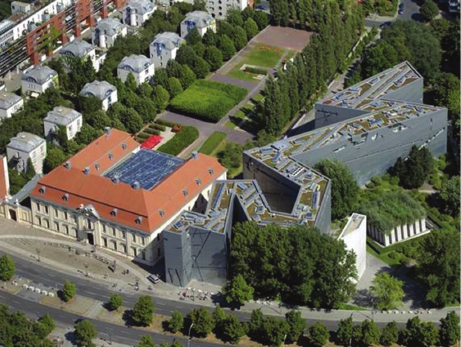
Fig. 1. Jewish Museum Berlin (designed by Studio Libeskind).
A symbol of the integration of citizens of Jewish ancestry expressed by
the contradictory autonomy of architectural forms – “the old and the new”
(photo by Guenter Schneider, source: https://www.german-architects.
com/en/projects/view/jewish-museum-berlin)
Il. 1. Muzeum Żydowskie w Berlinie (proj. Studio Libeskind).
Symbol integracji obywateli żydowskiego pochodzenia wyrażony
sprzeczną autonomią architektonicznych form – „starego i nowego”
(fot. Guenter Schneider, źródło: https://www.german-architects.com/en/
projects/view/jewish-museum-berlin)
Architecture surpasses “ordinary” art, it stands in opposi-
tion to prevailing fashion.
It is not only about shapes and skin – the façade shell.
Architecture embodies a culture derived from the past,
but concerned with the present and future. It is to address
contemporary, up-to-date attitudes to life, “improved” by
the past in the use of space, materials and technology, and
the perception of beauty and balance of values perpetuat-
ed in noniconic buildings – less exciting but cleverly made
– friendly to people and the environment, realised not just
for their original form or pioneering engineering, but creat-
ing a new generation of architecture emerging by osmosis.
The interpenetration of experiences from the past with a vi-
sion of the architecture of the future, which is the setting
for life events for generations to come. It does not matter
how creative or experimental a single building is – it al-
ways changes the whole city! Paying attention to the fact
that architecture is always created in a specic context is
part of the essence of where it is built and the awareness
that it assimilates elements from the wider world, entering
into a relationship with what is local. If architecture draws
exclusively on tradition, if it merely repeats it, it deprives
the community in question of its reference to the world and
its emanation of the contemporary. On the other hand, if the
created architecture “duplicates” and quotes directly from
the global visions, it does not allow the specic values and
importance of what is local to resound in the specic place
of its creation, thus depriving the local community of the
sense of its rootedness in the built environment.
The conviction that, in the rst instance, contemporary
architecture is to be experienced as a physical and phenom-
enological encounter also has the potential to evoke trans-
mitted meanings, interpretations and readings. Its aesthetic
autonomy liberates architecture from its traditional meta-
physics and symbolic content, often geared towards produc-
ing striking and memorable images. Instead of an existen-
tially grounded plastic and spatial experience, architecture
has adopted the psychological strategy of advertising and
instant persuasion; buildings have turned into image prod-
ucts detached from existential depth and sincerity (Pallasa-
maa 2005, 30).
In this context, these reections are another voice in the
debate on architectural innovations for the improvement of
living conditions conducive to the enjoyment of the beauty
of the world and the armation of “cosmic religiosity” – the
eternal law of order of the universe, by releasing the forms
of what exists, forms trapped in the matter of the place of
our future construction. Forms found, not invented, a priori
imposed, giving an impression of completeness and peace,
creating harmony of all manifestations of life!
Vitality of cities
Urban development, an ongoing process accompanying
the vitality of cities, situates society as a great laboratory
in which new solutions and meanings are created and ex-
perimented with, generating practices and relationships in
constant transformation that shape its spaces. A key role in
their creation is played by people in the various manifesta-
tions of their lives. Their inuence as a community on future
urban scenarios is done through initiatives and acting as me-
diators. The two decades of the 21
st
century have clearly
revealed the disharmony of ambiguity, the collapse of all hi-
erarchies ordering reality and the order of nature, and often
the compromise of humanity. It seems that for the order and
peaceful fullness of life – also in architecture – there have
been years of social processes involving a decline in the liv-
ing standards of individuals and collectives testifying to the
need for an intensied dialogue of the new with the existing
natural, material and historical environment.
The architecture of tomorrow should arise from the os-
mosis of the new through the lter of the experiences and
values of what exists, of what is perpetuated by history,
the myth of place, the experiences of people and tradition
(Fig. 1). The architecture of tomorrow, in opposition to the
theory of chaos, should believe in the harmony of the con-
struction of the world, in nature, striving to realise what is
mathematically the simplest – the beautiful and astonishing
harmonia mundi. The beauty that remains in close connec-
tion with mathematics, the numerical laws of architecture
and the subjective power of emotional impact.
Harmonia mundi: sounds vivid and present, enlivens
the imagination, acts on the intellect, stimulates thought
about architecture. It opens up broad perspectives for re-
ection on the meaning and essence of architecture itself.
Har monia mundi does not refer directly to a world that is
be coming, disintegrating, only to be reborn again – it re-
fers to the constant yardstick and pattern of all immediate,
currently happening reality. The desire for harmonia mundi
by projecting the horizon of our dreams for the creation of
architecture and design of the future, responsible for main-
taining the balance between the natural and the man-made
environment – should underline the strong attachment to the
vision of a harmoniously built world and become a message
Osmosis architecture – an aesthetic link between the past and the future 155
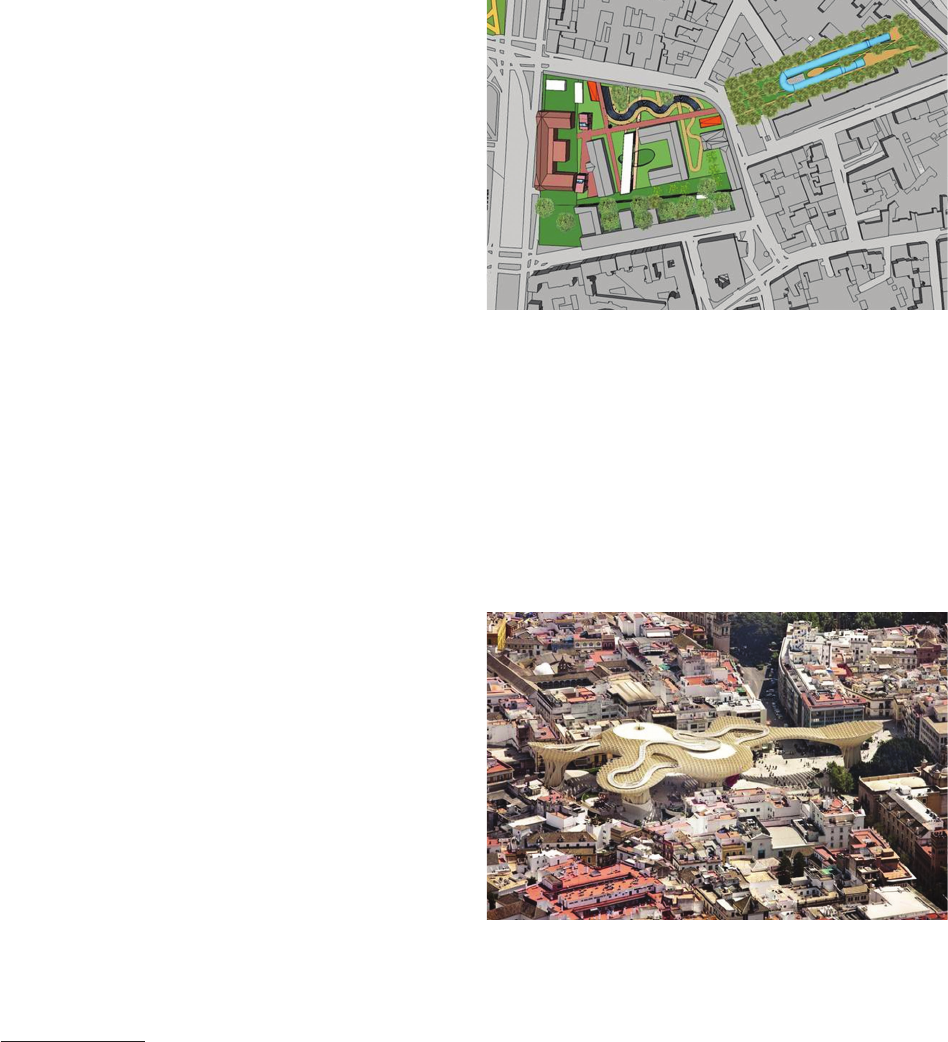
Fig. 3. Metropol Parasol Sevilla (designed by Jürgen Meyer).
As a place of collective memory with an archaeological site, the new
contemporary centre, a unique space of urban activity, demonstrates
a new way of interpreting the urban landscape (photo by David Franck,
source: https://jmayerh.de/metropol-parasol/?n=2083)
Il. 3. Metropol Parasol Sevilla (proj. Jürgen Meyer).
Jako miejsce zbiorowej pamięci ze stanowiskiem archeologicznym,
nowe współczesne centrum, wyjątkowa przestrzeń miejskiej aktywności,
demonstruje nowy sposób interpretacji miejskiego krajobrazu
(fot. David Franck, źródło: https://jmayerh.de/metropol-parasol/?n=2083)
for the creation of an aesthetic order of architecture in its
image. This desire is not accidental, it lies deep within us,
because harmony is synonymous with beauty! Beauty is not
an abstract concept. It is commonly associated with the idea
of goodness, with morality, identied with perfection – it is
a set of qualities that make us like something, also that it has
a positive aesthetic quality of being.
A view justied by the implication of social circles con-
rming that the well-being of cities depends on the quality
and diversity of the systems of public spaces, the physical and
social infrastructure animating urban space and urban life.
Therefore, the vitality of the city, its attractiveness to chang-
ing generations of inhabitants, needs the identication of gen-
eral criteria and universal design solutions, based on which
the quality of existing public spaces can be shaped or rede-
ned in terms of both its physical and social charac teristics.
The threat to the preservation of order and harmony in
urban space stems from the tendencies of modern civilisa-
tion, whose vision of chaos devoid of beauty prompts close
observation of the landscape of modern cities, often lled
with volumes of anonymous buildings devoid of individual
expression and human scale.
Accompanying city centres is the growing disorder of
the periphery – areas often turned into a dump of haphaz-
ard forms on a scale of ugliness that threatens the cultural
landscape. This state of degradation stands in opposition to
the role of architectural form, which Alvar Aalto
1
dened:
The form is a mystery that [...] gives people a feeling of
pleasure [...] (Alto 1997, 179). In this vein, form was under-
stood by other Finnish architects, recognising that the archi-
tectural landscape that surrounds humans should give them
a sense of well-being oering people inspiring spatial expe-
riences and experiences with architecture that is respectful
of its surroundings, expressed in a contemporary language
devoid of pride and lust for showiness.
The eminent architectural critic Alain de Botton, in his
book The Architecture of Happiness (Botton 2008)
2
, observes
that order is fundamental to the objective beauty of geome-
try – a means of defending against the over-complication of
the built environment, whose order of space should result
from the eect of subordination of the parts of the whole.
The validity of this view is justied by the timeless beauty
of the architecture of ancient Greek civilisation (Figs. 2, 3).
Context
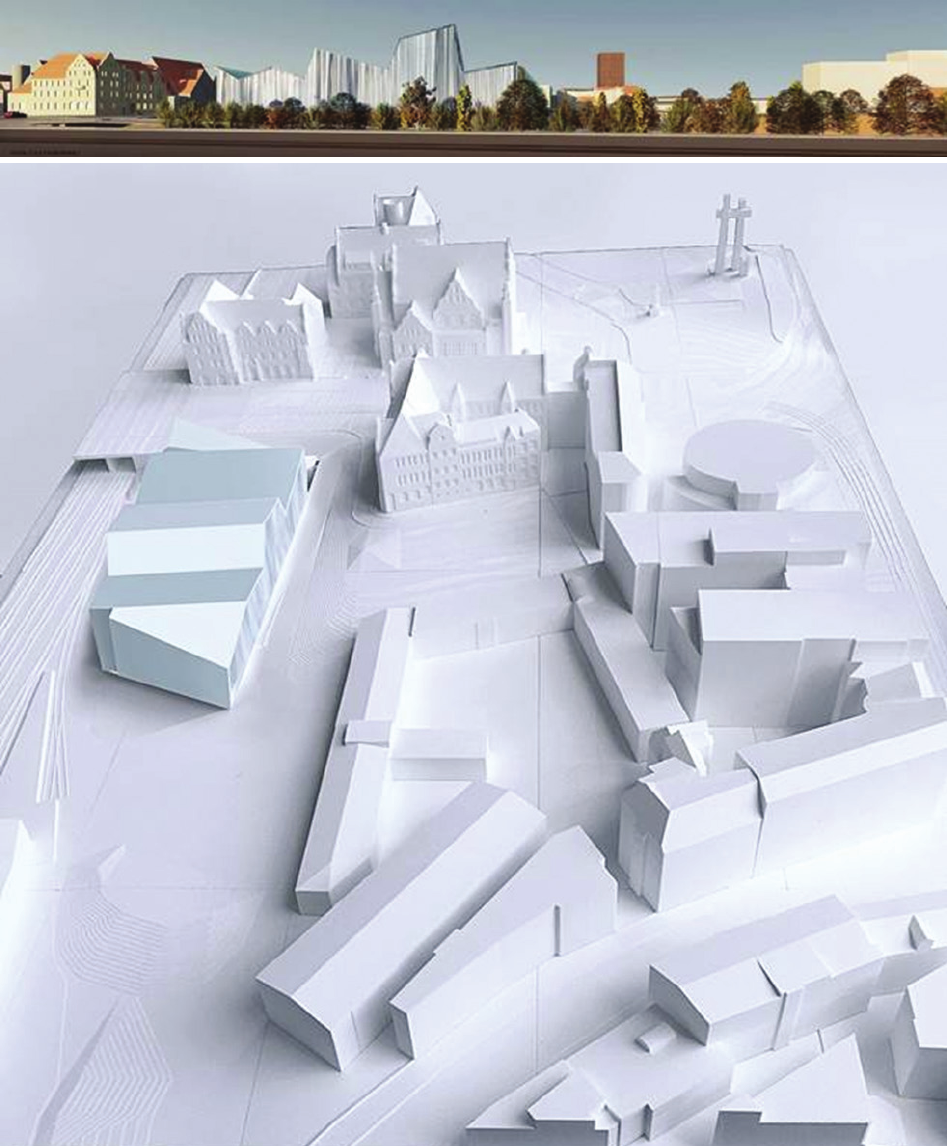
In his discussion of contextualism, Vittorio Gregotti refers
to the “reconciliation” of values between completely contra-
dictory ideas that the word “context” has taken on in its cur-
rent pluralist understanding (Gregotti 1992, 111) (Fig. 4).
Paolo Portoghesi notes, […] that the word “context” has lit-
tle value if it is not considered in a broad sense. This means
not limiting it to “the surroundings”, but extending it to in-
clude the whole continuum of values covered by the bound-
1
Alvar Aalto (1898–1976), Finnish modernist architect esteemed
for his humanist approach to architecture.
2
The bestselling author considers how private homes and public
buildings aect how people feel and how housing can be built to pro-
mote a sense of happiness.
aries of a neighbourhood, a city, a region […]. Portoghesi
notes the need to […] free the doctrine of contextuality from
a limiting understanding of it, which is deeply relevant to the
dreams and desires of our time … and the resulting peaceful
coexistence of tendencies that use entirely new languages
– the scenery and spirit of our time (Portoghesi 1992, 116).
In the ongoing game of the city, shaping our future, new
ideas and trends should be a reection of the position, action
and individuality of the creative architect, who, in creating
the new, […] performs an act of creation and reaction, thus
Fig. 2. Dolne Młyny Kraków (designed by Romuald Loegler).
The search for aesthetic harmony through urban-architectural osmosis
expressed in a dialogue with local conditions, a preservationist-
protected industrial past with new, exclusive residential development
(source: http://loegler.pl/uzytecznosc-publiczna/)
Il. 2. Dolne Młyny Kraków (proj. Romuald Loegler). Poszukiwanie
estetycznej harmonii w drodze urbanistyczno-architektonicznej osmozy
wyrażającej się dialogiem z miejscowymi uwarunkowaniami,
konserwatorsko chronionej przemysłowej przeszłości
i nową, ekskluzywną zabudową mieszkaniową
(źródło: http://loegler.pl/uzytecznosc-publiczna/)
156 Romuald Loegler
crossing the boundaries of architecture as he discovers its
new areas (Loegler 2019, 123). By creating new situations
that respond to current needs, they induce changes in our
behavioural patterns while giving meaning to future life
Fig. 4. Musical Theatre in Poznań (designed by Romuald Loegler). The distinctiveness of
the contemporary, iconic architectural
composition, whose
originality and
aptness in relating to the surrounding
buildings results in a shape that fits in innovatively with the panorama of the downtown district
(source: http://loegler.pl/uzytecznosc- publiczna/)
Il. 4. Teatr Muzyczny w Poznaniu (proj. Romuald Loegler). Wyrazistość współczesnej, ikonicznej architektonicznej kompozycji, której oryginalność
i trafność odniesienia się do otaczającej zabudowy skutkuje kształtem bryły wpisującej się w nowatorski sposób w panoramę śródmiejskiej dzielnicy
(źródło: http://loegler.pl/uzytecznosc- publiczna/)
situations. Urban and architectural design as a function of
the city – […] result-of-innovation-and-experience-of-tra-
dition, the architect’s innate ability to think at a human scale
(Loegler 2019, 123) – naturally locates the problem an-
Osmosis architecture – an aesthetic link between the past and the future 157
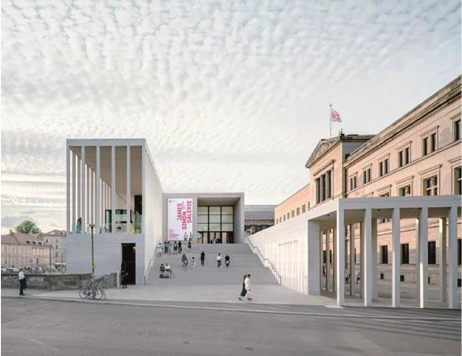
Fig. 5. Jams Simson Galerie Berlin (designed by David Chipperfield).
Combining the old and the new created on the basis of classical
principles and rules of beauty (photo by Simon Menges,
source: https://davidchipperfield.com/projects/james-simon-galerie)
Il. 5. Jams Simson Galerie Berlin (proj. David Chipperfield).
Łączenie starego z nowym kreowane w oparciu o klasyczne zasady
i reguły piękna (fot. Simon Menges, źródło: https://davidchipperfield.com/
projects/james-simon-galerie)
chored in the idea of contextualised architecture. As in her-
meneutic philosophy, a contextual attitude in architecture is
meant to stimulate reection on the time-bound existence of
architecture and its rationality (Loegler 1992; 2011).
The contextual attitude has inuenced and continues to
inuence much of contemporary architecture, whose cre-
ators refer to regionalisms or postmodern presence in the
past. Contextualised architecture is identied by architects in
the relationship between the “old” and the “new” , whereby
the “new” is stimulated by technical and cultural advances,
often to the exclusion of an in-depth analysis of the interac-
tion of the “new” with its place of origin. The great diversity
of the language of newly created architecture raises doubts
as to whether the notion of contextual architecture is not,
above all, a convention intended to ensure the coexistence
of the various options of contemporary pluralism – a kind of
rhetoric that ends up equating the discourse on contextual-
ism with a critique of technological civilisation and a way of
seeking to rediscover local colour and roots (Fig. 5). How-
ever, it is impossible to ignore the reection on architecture
and urbanism in the context of cultural and civilisational
change. Today’s time locates contextualised architecture
in an area of theoretical, geographical and regional partic-
ularisms arising from modes of construction, specicities of
urban culture and traditional typologies. Today’s time adds
new “tools” – contemporary means of construction and ma-
terials that provide a guarantee of authenticity, and it means
creating a present that accepts the need for the “new”, both
from the point of view of the requirements of contemporary
urban planning and in response to current social needs for
universality and comfort in urban life.
Defining the value of a place
In order to function in the “labyrinths” of our cities, it is
necessary to control their forms, which, pushed beyond their
existing boundaries, come into contact with the surrounding
context. The architecture of contemporary buildings often
makes no attempt to t into the public space, failing to es-
tablish the desired relationship with the city. It conrms that
the CITY is unaware of the importance and rank of archi-
tecture. This unawareness manifests itself through signif-
icant slip-ups, which are always committed as a result of
erroneous spatial policy and planning errors stemming from
the city’s lack of the need to achieve contextual coherence,
including a moral context implying a specic treatment of
the role of architecture in the development of modern (con-
temporary?) societies. Its development should be shaped by
the conditions of human activity, not the other way around.
As modern, architecture should be an environment for real-
ising the aspirations of the individual and the community,
an environment whose quality is created by a broadly con-
ceived contextual attitude.
Understanding of context in urban and architectural cre-
ation is subject to the individual viewer. The generalisation
of the understanding of context leads to multiple interpreta-
tions, despite the fact that it is obvious to almost everyone
that any creation – a new architectural intervention – should
be the result of structural regulations occurring in the place
designated for it.
The contextual existence of the “new” is complicated by
the fact that architects have little say in choosing a location
to determine whether it is suitable so that the programmed
“intervention” can be adapted to its surroundings and thus
given the right emotional content.
Understanding of context is most often made through
direct spatial experiences found in the existing, histori
-
cally shaped architectural setting. Fewer experiences are
provided by a processed environment that adequately meets
the needs of the present day, using the imagery and architec-
tural language of the present day, not least because contextu
alism has for many years been, or perhaps still is, dismissed
as a criticism of technology and civilisation. In the belief of
many, contextualism could only be realised through a nos-
talgic return to an existence before the technical revolution.
Summary
The postmodern period has developed almost a stereo-
type of thinking about context, based on the conviction that
the historical fabric of streets and squares denes the basis
for new interventions, and not only with regard to recon-
struction or the reproduction of urban form, not infrequently
with the recommendation to “copy” the historically stylistic
architectural application of buildings found in the vicinity
of the site of the new intervention. The past in terms of the
geometry of space and often also function is also referred
to in completely new urban creations. The question arises,
however, whether the mere fact of subordinating oneself to
the regulations found at the site makes the individual ob-
jects or complexes a fully-edged creation? Is not it more
important how they – the new creations – use the context to
nd their individual expression?
There is certainly no need for the “new” to lead to the
devastation of the old. This does not mean that the place of
158 Romuald Loegler
Fig. 7. Łódź Philharmonic (designed by Romuald Loegler). The architectural composition emphasises the context of the venue
with a neutral, contemporary form expressed in a subtle, tactful and elegant architectural language
(photo by Wojciech Chryński, source: http://loegler.pl/uzytecznosc-publiczna/)
Il. 7. Filharmonia w Łodzi (proj. Romuald Loegler). Architektoniczna kompozycja podkreśla kontekst miejsca neutralną, współczesną formą,
wyrażoną subtelnym, taktownym i eleganckim językiem architektonicznym (fot. Wojciech Chryński, źródło: http://loegler.pl/uzytecznosc-publiczna/)
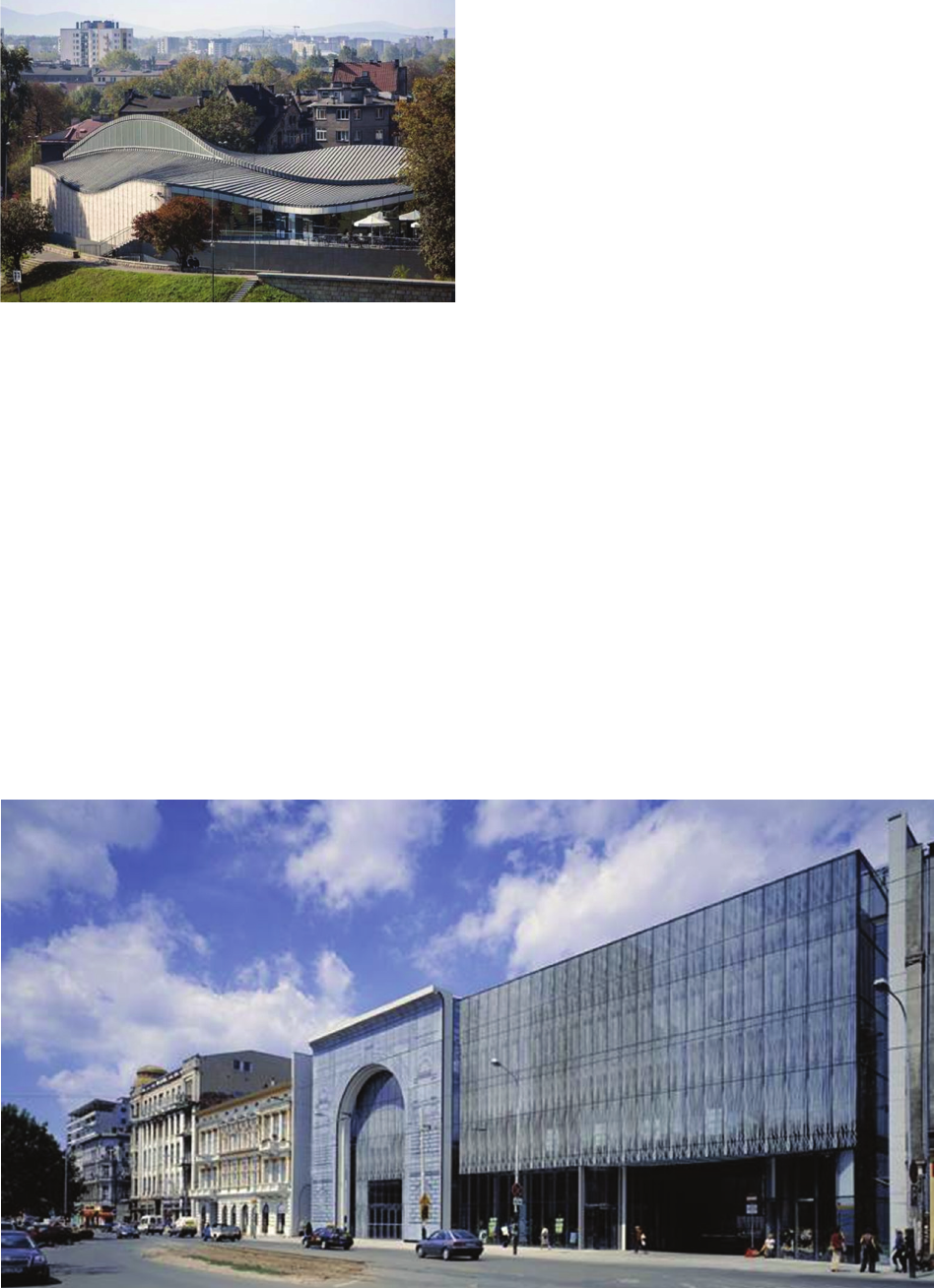
Fig. 6. Manggha Museum of Japanese Art and Technology in Kraków
(designed by Arata Izosaki). Visible from the terrace of Wawel Hill,
integrated into the meanders of the flowing Vistula River, its
undulating lines create the geometry of the building’s roof structure,
which does not disturb the long-lasting genius loci of its location
(photo by J. Ochoński, source: https://dzieje.pl/wystawy/manggha-
przygotowuje-szesc-wystaw-na-temat-buddyzmu)
Il. 6. Centrum Sztuki Japońskiej w Krakowie (proj. Arata Izosaki).
Widoczne z tarasu Wzgórza Wawelskiego, wkomponowane w mean-
dry płynącej rzeki Wisły, jej sfalowanymi liniami tworzy geometrię
konstrukcji dachu budynku, niezakłócającej trwającego od dawna
genius loci miejsca jego lokalizacji (fot. J.Ochoński,
źródło: https://dzieje.pl/wystawy/manggha-przygotowuje-szesc-
wystaw-na-temat-buddyzmu)
contemporary intervention cannot remain what it was be-
fore the intervention, before the appearance of the “new”,
retaining its character but enriched with a new quality that
builds the geological value of the living place and its com-
munity. When analysing the phenomena of architectural or
urban creations, it must be objectively stated that they are
created on the foundations of the past. For each place of
“new construction” is not an abstraction, a utopia, but a real
complex whose recognition and appreciation of its value al-
lows for its development and modication.
Can architectural ideas, then, as a collective legacy, be
separated from the culture of a particular time? Does such an
intellectual stance, which allows architecture to be designed
rooted in its location, mean that it has to give up its own
contemporary face?
Answering these questions is not easy. The denition of
place-related values and the pursuit of the “appropriate form”
should not be the result of the individuality or originality of
the expression of the architecture created, nor should it be
limited by the obligation to speak only with quotations from
the past!
Context – an important aspect of architecture – in the ab-
sence of any binding style rules, should be understood ideo-
logically, politically, historically and culturally – in a word,
broadly! The criterion of harmony of the world – beauty, is
to dene the value of a place as the contextual conditions
for a new architectural or urban creation based on the rela-
tionship between the “old” and the “new” and on reection
on the periodic nature of architecture, which a priori denies
a nostalgic return to the past, sanctioning the existence of
the “new”: a formally dierentiated architectural substance
while maintaining a uniform, equalised degree of aesthetic
quality (Fig. 6).
This understanding of the contextual creation of architec-
ture, of its contextual being realised by the unity of the aes-
thetic level: the found and the new, which is, above all, the
Osmosis architecture – an aesthetic link between the past and the future 159
Aalto, Alvar. “Between Materialism and Humanism.” In Alvar Aalto in
his own worlds, edited by Göran Schildt. Rizzoli, 1997.
de Botton, Alain. The Architecture of Happiness. Vintage Publishing, 2008.
Einstein, Albert, The World As I See It. Translated by Allan Harris. Phil-
osophical Library, 1949.
Gregotti, Vittorio. “The Vices of Architects.” Lotus 74 (1992): 112–3.
Kosiński, Wojciech. Paradygmat miasta 21 wieku: pomiędzy przesz łoś
cią “polis” a przyszłością “metropolis.” Wydawnictwo PK, 2016.
Loegler, Romuald. “Dening the Value of the Site.” Lotus 74 (1992):
118–20.
Loegler, Romuald Maksymilian. Miasto to nie architektoniczna zabawa.
RAM, 2011.
Loegler, Romuald Maksymilian. “Miasto dzisiaj – miasto jutro.” Pań-
stwo i Społeczeństwo 19, no. 3 (2019): 121–31. https://doi.org/
10.34697/2451-0858-pis-2019-3-006.
Pallasmaa, Juhani. The Eyes of the Skin. Architecture and the Senses.
John Wiley and Sons, 2005.
Portoghesi, Paolo. “Setting and Spirit of the Time.” Lotus 74 (1992):
116–8.
Zamorska-Przyłuska, Ewa, ed. …wspaniałość budowy tego, co istnie-
je… O architekturze Romualda Loeglera / Der wunderbare Bau des
Seienden… Über die Architektur Romuald Loeglers. Translated by
Lesław Michalus, Rafał Wędrychowski, Marcin Przyłuski. RAM,
1997.
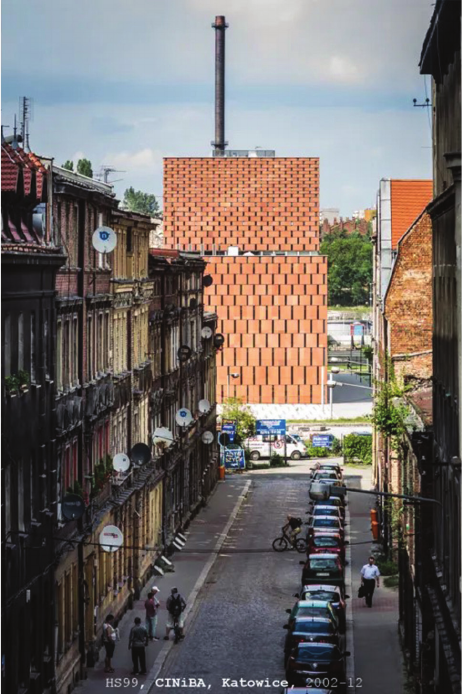
Fig. 8. Scientific Information Center and Academic Library (CINiBA)
Katowice (designed by Dariusz Herman, Piotr Śmierzewski).
With its architecture, its individual language of architectural form,
the library has become the catalyst for a new redevelopment plan
for the university campus – a new time of university expansion
into the life of the city and the region (photo by Jakub Certowicz,
source: https://analog-architecture.com/2002-ciniba/)
Il. 8. Biblioteka Akademicka Katowice (proj. Dariusz Herman, Piotr
Śmierzewski). Biblioteka, swoją architekturą, jej indywidualnym
językiem architektonicznej formy, stała się katalizatorem dla planu
przebudowy kampusu uniwersyteckiego – nowego czasu
uniwersyteckiej ekspansji w życie miasta i regionu (fot. Jakub
Certowicz, źródło: https://analog-architecture.com/2002-ciniba/)
References
result of the ability in the creative process to dene values
in relation to place, to fully experience, understand and ac-
cept it. Neither the so-called “accidents” nor regionalism or
other possible attitudes oer the possibility of objectifying
the contextual being of architecture. Neither does tradition
understood as a value that is not subject to evolution, nor
does the postmodern presence in the past certainly do so.
Architecture, after all, also has its reality in aesthetic terms,
in beauty, which is not a “quality of things” but a human
reaction to them, to the architectural character, to the good
or bad measure of it in relation also to the urban or natural
environment (Figs. 7, 8).
There are many places that conrm the thesis that the
coherence of the architectural quality of the “new” creates
a new value of the contextual setting – an image of the past.
There are many places that prove that the contextual exis-
tence of architecture is conrmed not by stylistic homoge-
neity, tradition or regionalism, but is expressed by the ap-
propriateness of the aesthetic quality of architecture existing
side by side. It is architecture, […] unusual, original urban
composition – immanent, […] but artistic, constituting its
own aesthetic entity dierent from others […], according to
professor Wojciech Kosiński, that is the fourth factor of the
city’s originality (Kosiński 2016, 19).
There are many places demonstrating that relating and
subordinating architecture to the local landscape only
through structural mechanisms does not automatically solve
the problem of the quality of its contextual occurrence.
Contemporary architecture is not meant to deny the roots
and traditions of its place of origin. It has the right to con-
sciously distance itself from the classical tradition… When
creating an aisle of tradition, it is essential to be aware of the
need to accept the valuable things that belong to the past.
Awareness of this fact also means that contemporary archi-
tecture cannot be built according to “yesterday’s” standards.
Its very existence as a genuinely contemporary architecture
must be sanctioned by the right of the “new” to constitute
the present while respecting the authentic values of the past.
Translated by
Jan Urbanik
160 Romuald Loegler
Streszczenie
Architektura osmozy – estetyczny łącznik między przeszłością a przyszłością
Zmiana wyglądu powierzchowności formy oznacza transformację, a bazą dla transformacji jest synonim greckiego pojęcia metamorfoza.
Transformacja opisuje stan przejściowy, momenty towarzyszące przemianie, spełnianie się akcji, rozgrywania się procesu, dokonywania się przemia-
ny danego przedmiotu lub podmiotu.
Metamorfoza zdaje się być lub jest nawiązaniem do czegoś, wspomnieniem, aluzją do procesu, który jest autonomiczny lub endogenny – pochodzący
z wnętrza, wywołany przez wewnętrzne czynniki.
W tym stałym procesie przemian architektura może być porównana do żywego organizmu, który także podlega wewnętrznej przemianie, który stale
podlega procesowi wewnętrznych przeobrażeń.
W niniejszych rozważaniach kluczowe jest wykazanie, że transformacja i metamorfoza to dwie drogi do eksplorowania jednego z najważniejszych
wytworów cywilizacji, jakim są nasze miasta, że rezultaty transformacji konkretnych fragmentów miast to wyniki projektowych procesów opartych na
idei kreacji formy w procesie jej uwalniania w uwarunkowaniach istniejącej rzeczywistości.
Słowa kluczowe: osmoza, idea, forma, kontekst, kreacja