
2025
3(83)
Robert Idem*
Perception of the architect as a profession of public trust in Poland
DOI: 10.37190/arc250314
Published in open access. CC BY NC ND license
Abstract
Since the establishment of the professional self-government of architects, the profession of architect-designer has evolved into a profession of
public trust. This paper presents three perspectives of this perception – the legal perspective, the public opinion perspective and the perspective of the
architects themselves. The aim of the research was to identify the specics and perceptions of the profession of public trust in regard to architects. The
research methodology used was based on literature studies, analysis of legal sources and case law, interpretation of data from public opinion survey
reports, and original quantitative and qualitative social surveys of architects. The research showed that the former two perspectives on the perception
of the profession are fairly convergent. It was found in the survey of architects that practising a profession of public trust has already become part of
their professional identity. However, the position of architects compared to other professions of public trust leaves much to be desired – hence the
importance of building a favourable image of the profession and regulating it more comprehensively.
Key words: profession of public trust, professional body, architects’ profession
Introduction
Practising the architectural profession is subject to spe-
cic conditions resulting from culture, custom or the law
in force. In many countries, the profession is regulated. In
Poland, the profession of architect-designer is not only reg-
ulated, but it also belongs to a limited group of professions
of public trust by virtue of law. Thus, for nearly a quarter of
a century, it has been associated with the functioning of the
professional self-government (Izba Architektów Rzeczpo-
spolitej Polskiej – IARP [The Chamber of Architects of the
Republic of Poland]), which supervises the practice of the
profession
1
. Over the last two decades, the functioning of
the architectural profession as a profession of public trust
has enabled an analysis of its perception from the perspec-
tive of various interested parties.
* ORCID: 0000-0002-0199-9106. Faculty of Architecture, Gdańsk
University of Technology, Poland, e-mail: robert.idem@pg.edu.pl
1
The establishment of the statutorily obliged professional self-gov-
ernment was intended to establish rules of professional ethics and to su-
pervise their observance. It represents a clear temporal caesura in this
case. For nearly a century, the profession was regulated by the public ad -
ministration only in terms of building qualications.
The concept of a profession of public trust is neither clear -
ly dened nor well-established in public awareness. Addi tio -
nally, its specicity varies between professions – its mean ing
diers in the case of such professions as a doctor, a lawyer
and an architect. The following study aims to identify the
specicity and perception of the profession of public trust
regarding architects. The thesis of the work is that practising
a profession of public trust can be seen as an element of
architects’ professional identity.
This article presents three perspectives on the percep tion
of the architectural profession. Firstly, the legal per spec tive,
under which legal provisions for practising professions of
public trust are analysed with reference to architects. Sec-
ondly, the public opinion perspective; based on the results
of social surveys, features that dene the profession of
public trust were distinguished and the perception of the
architect’s profession in comparison with other occupations
was presented. Thirdly, the opinion of the architects them-
selves; based on original research by the author, the archi-
tects’ perception of the practice of the profession of public
trust has been presented. Finally, a comparative analysis of
the attributes of a profession of public trust arising from the
above three perspectives has been made and conclusions
have been drawn.

146 Robert Idem
State of research
A signicant part of the state of research consists of lite-
rature on professions of public trust related to law-making
and law commentary. It consists, inter alia, of post-confer-
ence materials published by the Polish Senate Publishing
House entitled Zawody zaufania publicznego a interes pub -
liczny–korporacyjnareglamentacjaversuswolnośćwyko
ny wa nia zawodu [The professions of public trust and the
public interest – corporate rationing versus freedom of prac-
tice] (Legat, Lipińska 2002), and a thematic study by Biuro
Analiz i Dokumentacji Kancelarii Senatu [Oce of Ana -
lysis and Documentation of the Senate Chancelle ry] (Biu-
ro Analiz i Dokumentacji Kancelarii Senatu, Kras no wols-
ki 2013). An article by Joanna Smarż (2012) is devoted to
the legal aspects of dening the concept of a profession of
public trust. Magdalena Wółkowska (2018; 2024) described
the juridical perspective with regard to the profession of an
architect. Marta Woźniak (2023) presented an overview
publication on the notion of public interest ( inextricably
linked to any profession of public trust) in a spatial con
-
text. Few popular science publications, by ar chitects, on the
practice of a profession of public trust appear in architec-
tural periodicals; among them, Piotr Zbierajew ski presented
a subjective critical account (2023). The state of research is
supplemented by reports of public opinion surveys regard-
ing professions of public trust (CBOS 2004; Zawody zau-
fania… 2008) and on architects themselves (CBOS 2014).
The review of the state of research indicates a gap in scien-
tically detailed research on the practice of a profession of
public trust by architects (in terms of qualications, compe-
tencies, norms of professional deontology, regulation and
image of the profession).
Methods
The research methodology has been adjusted to the type
of research – a chart presenting the course of the research
process with a description of the main data sources, re-
search methods and objectives is presented in Table 1.
Table 1. Diagram of the research process with a description of the methods applied (elaborated by R. Idem)
Tabela 1. Schemat przebiegu procesu badawczego z opisem zastosowanych metod (oprac. R. Idem)
Analysis element Main data sources Research methods Goals
The law
(Konstytucja… 1997;
Ustawa o samorządach zawodowych… 2001;
Ustawa o ułatwieniu dostępu… 2014;
Wyrok Trybunału… 2015)
literature review,
analysis of legal sources
and case-law
synthesis of the features that describe
the legal aspect regarding the practice
of a profession of public trust,
reference to the profession of architect
Public opinion
social opinion survey reports
(CBOS 2004; 2014;
Zawody zaufania… 2008)
analytical interpretation
of data
synthesis of analyses of public opinion
surveys regarding the perception
of professions of public trust and architects
Opinion of
the architectural
community
social survey of architects
*
–
identification of the perception
of the architectural profession
as a profession of public trust
– – quantitative surveys
online surveys
(n = 1006)
– – qualitative research
in-depth interviews
(n = 15)
identifying the dimensions of the perception
of the profession as a profession
of public trust
*
They were performed as part of the author’s original broader study entitled Postawyarchitektówwobecskodykowanychnormetykizawodowej
[Attitudes of architects toward codied standards of professional ethics], the results of which have not been published before (Brosz 2018). Information
about the study:
– The purpose of the study was to measure the attitudes of representatives of the professional group of architects towards codied ethical norms in
the form of Kodeks Etyki Zawodowej Architektów [The Code of Professional Ethics of Architects], and to explore other spheres of professional activity
in terms of the ethical dimension.
– Problems – the main issues: 1) attitude to the norms included Kodeks Etyki Zawodowej Architektów [The Code of Professional Ethics of Archi-
tects], 2) sense of connection with the professional community, 3) perception of the architectural profession as a profession of public trust, 4) copyright
in the perception of architects, 5) competition activity.
– Person responsible: Robert Idem, data processing and report writing: Maciej Brosz.
– Implementation of eld work: May–July 2018.
– Methodology/Method/Sampling: 1. A quantitative survey was conducted using an online survey method, the selection of respondents was pur-
posive based on the operative of the members of The Chamber of Architects of the Republic of Poland. Access to the survey based on the internet link
provided to members of The Chamber of Architects of the Republic of Poland via an email letter sent by The Chamber of Architects of the Republic of
Poland authorities to each member. 2. A qualitative study was conducted using the method of individual in-depth interview. Selection of respondents
– purposive. The purpose of the qualitative study was to identify and deepen the contexts and problem areas surrounding the main issues of concern.
– Research tool: 1. A quantitative survey: an online questionnaire on the limesurvey.org platform, with a high level of standardization, including
22 questions, of which 21 were closed, 1 open, 4 metrics, 3 scalograms. 2. A qualitative study: individual in-depth interview based on dispositions,
covering 5 thematic issues.
– Respondent: licensed architect, member of The Chamber of Architects of the Republic of Poland.
– Sample size: quantitative survey n = 1006, qualitative survey n = 15.

Perception of the architect as a profession of public trust in Poland 147
The results of the work are presented in the next parts
of the article in which perspectives on the perception of
the architectural profession as a profession of public trust
are described. These include the legal perspective, public
opinion and the architectural community perspective. The
conclusions provide a comparative analysis.
Results
Legal perspective
The concept of the profession of public trust rst emerged
in 1997 in the Constitution of the Republic of Poland. Ar-
ticle 17.1 of the Basic Law stipulates that […] by means
of a statute, self-governments may be created within a pro-
fession in which the public repose condence, and such
self-governments shall concern themselves with the prop-
er practice of such professions in accordance with, and for
the purpose of protecting, the public interest (Konstytucja
1997). This provision is found in Chapter I, concerning the
principal rules of the political system, which testies to the
rank of professional self-governments as one of the institu-
tions of a democratic state of law.
The Constitution uses the term “profession of public
trust”, but does not dene this term; neither do other laws.
With no detailed considerations of the denition of this no-
tion (cf. Legat, Lipińska 2002; Smarż 2012), it has been as-
sumed for the purposes of further considerations, following
Waldemar Wołpiuk, that […] the constitutional legislator,
while establishing regulations in which extra-legal notions
are used intentionally, á priori assumes that their meaning
willbeclariedinthemodeofapplicationoftheConstitu-
tion and in the mode of jurisprudence (Wołpiuk 2002, 132).
Kazimierz Ferenc (2011) noted that the public interest,
that is care for spatial order, has been referred to as an ar-
gument for the establishment of the self-government of ar-
chitects. As Marta Woźniak observed, the notion of public
interest belongs to vague terms and is included in the cate-
gory of vague general clauses (yet, on the grounds of plan-
ning and spatial development law, it has its legal denition
that limits this vagueness). However, the […] permanent
state of tension between the public interest and property
rights [...] is observable (Woź niak 2023, 87)
2
.
In 2001, the Act on the Professional Self-government
of Architects, Civil Engineers and Urban Planners (Usta-
wa o samorządach zawodowych… 2001) came into force.
Thereby, the architectural profession is among the few oc-
cupations with statutorily established professional self-go-
vernment. In general, these self-governments can be classi-
ed into four groups representing the professions:
2
The Act on Spatial Planning and Development in Article 2 denes
the terms: public interest ([…] it should be understood as a general-
ized goal of aspirations and activities, taking into account the objecti-
edneedsofthegeneralpublicorlocalcommunities,relatedtospatial
development); and spatial order ([…] it should be understood as such
shaping of space that creates a harmonious whole and takes into ac-
count all functional, socio-economic, environmental, cultural, as well as
compositional and aesthetic conditions and requirements in orderly rela-
tions) (Ustawa o planowaniu i zagospodarowaniu przestrzennym 2003).
– legal (e.g., advocates, legal advisers, notaries),
– medical and related professions (doctors, veterinary
surgeons, pharmacists, nurses and mid-wives),
– business-related (expert auditors, tax advisers, patent
attorneys),
– technical – architects, construction engineers (cf. Wa-
li górski, Pawłowski 2005).
The statutory conrmation of the status of a profession
of public trust through the establishment of professional
self-government is far from certain and unchangeable. Al-
ready in 2004, the draft of the Act on Professions of Public
Trust and amendments to certain acts thereof did not include
the profession of architect (Taczewski 2024). In 2014, on
the basis of the so-called Deregulation Act, the professional
self-government of urban planners was repealed (Ustawa
o ułatwieniu dostępu… 2014). Furthermore, the Constitu-
tional Court considering the constitutionality of this law
ruled that the profession of urban planner bears no charac-
teristics of a profession of public trust
3
.
In the same judgment, the Constitutional Court approved
the previous case law on how the concept of a profession
of public trust should be understood and; taking into ac-
count the views expressed in the legal doctrine, the Court
assumed that the features of such a profession include:
a) the need to ensure that the profession is properly ex-
ercised in a manner that remains consistent with the public
interest […],
b)theprovisionofbenetsandthefactthatthemembers
of the profession in question come into contact with individ-
ualsintheeventofapotentialoractualthreattospecic
goods (e.g., life, health, freedom, dignity, repute),
c) the diligence and care of the representatives of the pro-
fessions in question for the interests of the individuals who
use their services, concern for the personal needs of such
individuals, as well as ensuring the protection of the sub-
jectiverightsofindividualsguaranteedbytheConstitution,
d)therequirementofspecicqualicationsforexercis-
ing the professions in question; this includes not only the
relevant formal education but also the experience acquired
and the provision of warranties for the proper exercise of
the profession in accordance with the public interest, taking
intoaccountthespecicnormsofprofessionaldeontology,
e) the acquisition of information concerning the per-
sonal and private life of individuals who use the services
provided by members of a profession of public trust; such
information constitutes professional secrecy and may be
exemptedfromthatsecrecyundertheconditionsspecied
in the rules of law […],
f) relative independence in the exercise of the profession
[trans. by the author] (Wyrok Trybunału Konstytucyjnego
2015, 15).
3
Judgment of the Constitutional Court of March 24, 2015. (Ref.
K 19/14): As a result of the activities of urban planners, as a general
rule, the individualized well-being of individuals is not threatened […].
Direct relations or special ties between urban planners and individuals
are lacking. Even if an urban planner […] has access to information
regarding the private lives of individuals, it is not essential for the for-
mation of architectural and spatial order (Wyrok Trybunału Konstytu-
cyjnego 2015).

148 Robert Idem
The concept of a profession of public trust generally
refers to a profession exercised rather than learned. How-
ever, while in the case of, e.g., a lawyer (a Master of Laws)
and an advocate, a clear distinction can be made between
a practised and a learned profession, it is not obvious with
regard to architects. The “architect” title is not legally
pro tected in Poland. The professional self-government
(IARP), by virtue of the regulations, unites a small fraction
of architects in total – only those who practice the profes-
sion of a designer (those who hold building qualications
and perform independent technical functions in construc-
tion)
4
. On the other hand, also by virtue of the law, it does
include non-architects (persons with related education,
holding a construction license for design in the architec-
tural specialization to a limited extent). The lack of legal
protection of the “architect” and the confusion as to who
belongs to the IARP may cause consternation in the public
perception.
Certain features link the concept of a profession of pub-
lic trust with the concepts of a liberal profession, a regu-
lated profession and a sectoral profession. The concept of
a liberal profession is of the oldest tradition and lacks a le-
gal denition; it is associated with practising a profession
on the basis of appropriate training, independently, under
one’s own responsibility, oering intellectual or conceptual
services, in the interest of the client or the public (Biuro
Analiz i Dokumentacji Kancelarii Senatu, Krasnowolski
2013). Regulated professions, on the other hand, include
those that require the fullment of certain conditions (in the
form of qualications or licences) in order to practice them.
Several hundred regulated professions can be identied in
Poland. With regard to the profession of an architect, this
refers to the legally regulated standard of education that
prepares for the practice of the profession and for the per-
formance of independent technical functions in construc-
tion. On the other hand, sectoral professions are those in
relation to which the regulations provide for the recogni-
tion of qualications acquired in particular countries of the
European Union (this applies to a narrow group of profes-
sions: architects, pharmacists, doctors, dentists, veterinari-
ans, nurses and midwives).
It is worth remarking, following Wółkowska, that the
regulation of the architectural profession is fragmented
and incomplete (especially in terms of who has the right
to practice it). Among the sectoral professions, only archi-
tects have no act regulating the profession. It is only the
functioning of the self-government and recognition of qual-
ications that are regulated. Therefore, an opportunity for
the appropriate establishment of the profession is seen in
the adoption of the Act on the architectural profession, for
which the self-government has been striving for years. It is
to specify the elements that formally regulate the individual
professions, i.e., the required qualications, protection of
4
There are currently several thousand members of The Chamber
of Architects of the Republic of Poland, while the number of qualied
architects is several times greater. The Chamber does not bring together
architects who do not hold building qualications, nor those who hold
qualications but wish not to belong to the Chamber, nor architects-ur-
ban planners, landscape architects or interior designers.
the professional title, or the forms and principles of exer-
cising the profession (Wółkowska 2024).
Public opinion perspective
According to public opinion surveys on the professions
of public trust (CBOS 2004), people in these professions
should:
– be characterised by irreproachable moral and ethical
attitudes,
– provide high-quality services,
– be obliged to observe professional secrecy,
– practise a profession of importance to the society as
a whole,
–
have completed a prior professional apprenticeship or
internship (as a condition for obtaining the professional li-
cence),
– have a special relationship of trust with the client.
Compliance with the above statements was indicated here
by 96% to 79% of the respondents. In public opinion, man-
datory membership of a professional corporation was not an
immanent feature of the professions. The majority was also
in favour of the postulate to limit the competencies of pro-
fessional self-governments on behalf of independent ethics
committees, namely in terms of deciding on admission to
the profession and controlling its practice in favour of gov-
ernmental bodies, and in terms of dening the rules of pro-
fessional deontology.
The above-indicated obligations describing the social
denition of a profession of public trust were conrmed
in a study Zawody zaufania publicznego w świadomości
Po laków [Professions of public trust in the awareness of
Poles], prepared for The Polish Chamber of Civil Engi-
neers by Pentor Research International S.A (Zawody zau-
fa nia… 2008). According to the majority of respondents,
representatives of these professions should:
– be characterised by irreproachable moral and ethical
attitudes,
– be obliged to comply with statutory regulations and
the code of professional ethics,
– provide high-quality services
– be committed to professional secrecy,
– perform work of major importance to society,
– be subject to verication of their skills (at the comple-
tion of their education and during their profession).
Compliance with the above statements was indicated
here by 89% to 73% of the respondents. Additionally, the
study revealed that:
– awareness of professions of public trust was low – one
in three respondents had no associations with the term;
among the professions most frequently associated sponta-
neously with professions of public trust, doctors, policemen,
judges, teachers, advocates and lawyers were mentioned
– meanwhile, among them, only doctors, judges and advo-
cates are professions of public trust; the results of the survey
placed architects among the little-known professions of pub-
lic trust (it was spontaneously indicated by only 2% of the
res pondents, alongside civil engineers with a result of 3%);
– t
he social esteem for architects as a profession of public
trust was average – it was held in high or very high esteem
Perception of the architect as a profession of public trust in Poland 149
by 40% of Poles (civil engineers – 41%, urban planners
– 27%); greater esteem was enjoyed by the medical pro-
fessions (doctors, pharmacists and pharmacists, nurses and
midwives – over 60%) and the majority of the legal profes-
sions (judges, solicitors, notaries, legal advisers – between
60% and 45%);
– architects belonged to the group of occupations whose
recognition as a profession of public trust was relatively
rare (support of 48%, similar to that for civil engineers; less
legitimacy was given to urban planners – 38%); greater so-
cial legitimacy of public trust status was enjoyed by medical
professions (doctors, nurses and midwives, pharmacists and
chemists – from 88% to 70%), and legal professions (judg-
es, lawyers, notaries, legal advisers – from 87% to 75%).
Additional information about the public perception of the
profession was provided by the results of the public opin-
ion survey Polacy o architektach [Poles about architects]
(CBOS 2014). According to the results, the percentage of
people using the services of an architect stood at as low as
20%. Respect for the profession was higher among those
who use its services (68%) than those who do not (55%). Al-
most half of the respondents agreed with the opinion that ar-
chitects are generally reliable and honest, and are concerned
with delivering their work for the benet of others – at the
same time, 38% of respondents shared the opinion that they
use their knowledge and acquaintances mainly for mercan-
tile purposes. The aesthetics of Polish cities were accepted
by 67% of respondents – at the same time, it was indicated
that the appearance of urban areas is mainly inuenced by
local authorities (55%); only 11% of respondents indicated
architects in this case. Respondents most often associated the
architectural profession with a craftsman who designs build-
ings, a specialist responsible for the technical side of build-
ings, or a draftsman. Applying the results of these surveys to
the present considerations, due to the weak link between as-
sociations with competence and care for the public interest,
these surveys basically conrm the previously mentioned
unfavourable social assessment of the architectural profes-
sion in the context of exercising a profession of public trust.
The perspective of the architectural community
(IARP architects)
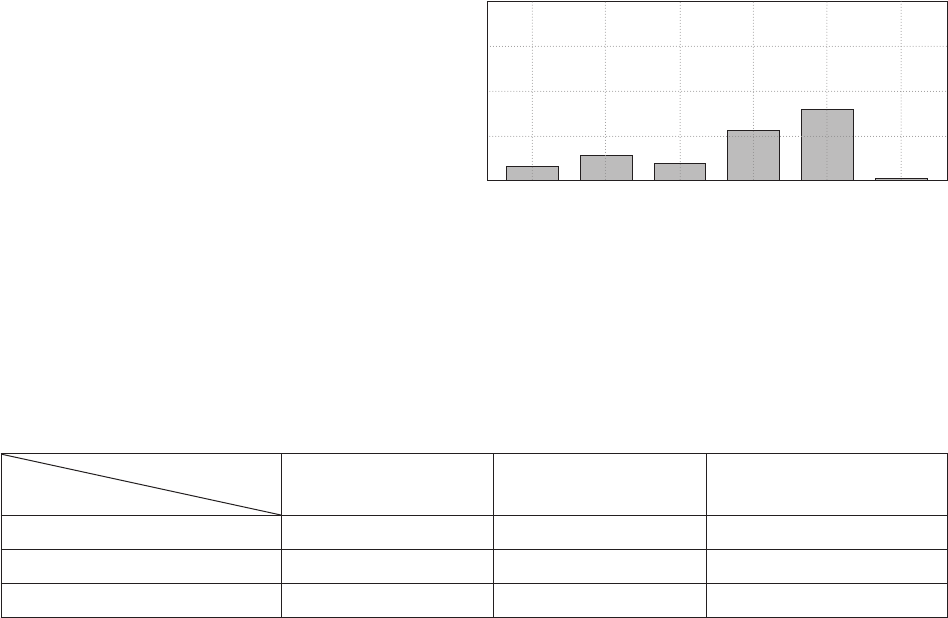
In the architectural community, the prevailing belief is that
their profession is a profession of public trust (Fig. 1). When
asked about the perception of the architectural profession as
a profession of public trust, the vast majority – two-thirds
(67.6%) of respondents provided an armative answer, in-
cluding a total of “denitely yes” and “rather yes” answers.
The largest group of respondents, accounting for 39.9%, is
denitely convinced of this fact (“denitely yes” answer).
The perception of the professional activity performed in
terms of public trust is not inuenced by the demographic
variables included in the survey (gender, age, nature of the
professional function), except the territorial scope of the
activity performed. As visible in Table 2 below, the per-
centage of armative responses is higher among respon-
dents whose professional practice extends beyond the local,
voivodeship extent. Thus, the highest percentage was noted
among architects declaring their practice to be nationwide
(72.9%), and a slightly lower percentage was observed
among those who considered their practice to be nation-
wide and international in scope (69.7%).
Respondents who replied in the armative to the ques-
tion concerning the perception of the architectural profes-
sion as a profession of public trust were asked two addition-
al questions. The rst question concerned the perception of
ethical obligations that result from such a profession, and
the second question addressed any potential experience of
diculties in the implementation of such obligations.
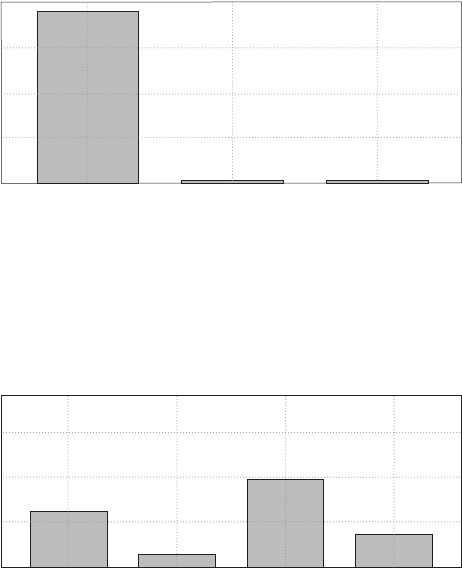
The existence of ethical obligations arising from the rec-
ognition of the fact that architects are a profession of public
trust was noted by almost all respondents (Fig. 2). It can,
therefore, be concluded that ethical motives are closely as-
sociated with the concept of a profession of public trust. In
this case, these obligations will be of a particular kind.
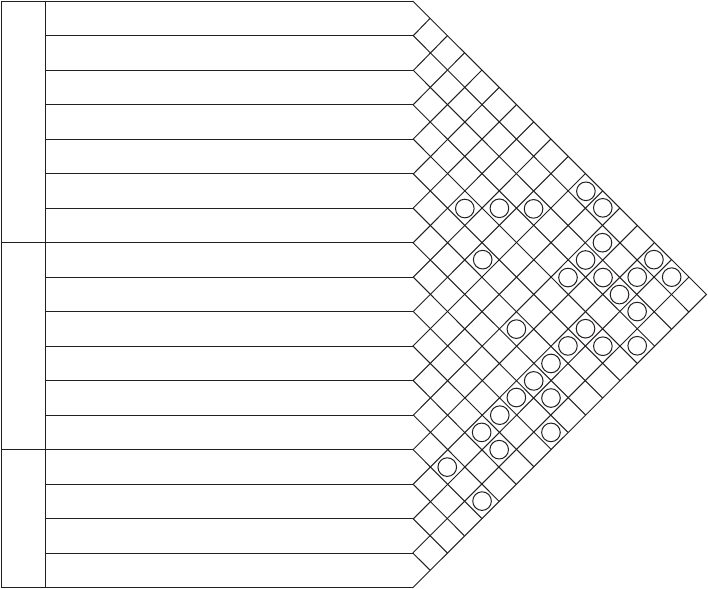
While the distribution of responses to the question on ethi-
cal obligations is almost uniform in form, this is no longer
the case when it comes to experiencing diculties in ful-
lling ethical obligations. Nearly a third of the respondents
Fig. 1. Sense of exercising a profession of public trust
among architects (n = 1006) (elaborated by M. Brosz)
Il. 1. Poczucie wykonywania zawodu zaufania publicznego
wśród architektów (n = 1006) (oprac. M. Brosz)
Table 2. Perception of the profession of public trust compared to the scope of professional activity of architects (n = 1006) (elaborated by M. Brosz)
Tabela 2. Poczucie wykonywania zawodu zaufania publicznego na tle zasięgu działalności zawodowej architektów (n = 1006) (oprac. M. Brosz)
Definitely not, rather not
[%]
Neither no, neither yes
[%]
Rather yes, definitely yes
[%]
Social, voivodeship 24.2 11.8 64.0
Nationwide scope 17.8 9.3 72.9
Nationwide and international scope 24.3 5.9 69.7
definitely
not
7.5%
1.2%
27.7%
39.9%
rather
not
rather
yes
definitely
yes
I don’t know,
I have never
considered it
neither yes,
nor not
Answer
Scope of activity
9.6%
14.1%
150 Robert Idem
The concept of a profession of public trust in the con-
text of the activities of architects involves – or should in-
volve – a deeply rooted awareness of the consequences of
the actions taken. On the one hand, this involves a sensi-
tivity towards the sense of quality of life of the recipients
of architecture as a living context, and on the other hand,
responsibility for the long-term consequences of one’s ac-
tions. The actions of architects […] remain for years, leav-
ing an almost historical mark, […] which creates the risk of
devastation for generations (respondent’s opinion, in:
Brosz
2018, 14). In this context, it is worth remembering the in-
dividualistic tendencies of architects to leave their mark on
space, […] the key element here is the inter-play of individ-
ual elements, […] and in this environment, a saturation of
individualists is present. One building next to another does
not form a whole (respondent’s opinion, in: Brosz 2018, 15).
Respondents emphasised the importance of balancing
the interests of dierent groups that are included in the pro-
fessional sphere of architecture. Among these groups, re-
spondents mentioned clients, investors, principals and end
users, i.e., people who directly benet from the individual
developments – residents, passers-by, users of public space.
According to respondents working in clerical positions,
stakeholders also included petitioners/interested parties in
oces where architects work. Balancing the interests of
the dierent groups is, according to the respondents, a key
issue and is directly linked to the aforesaid responsibility.
The whole trust aspect is about interacting with people and
this cannot be forgotten. Designing to the dictates of the
investor without consideration of the welfare of later users
is, well… a disaster in this profession (respondent’s opi-
nion, in: Brosz 2018, 15). In describing the dierent dimen-
sions of the balance between stakeholders, the respondents
directly included elements of thinking about the world in
architectural terms, referring to functional and economic
designandthenalarchitecturalform (respondent’s opi-
nion, in: Brosz 2018, 15).
The third dimension of trust inherent in the architectur-
al professional role is related to competence expectations.
Respondents uniformly spoke of expertise and knowledge
of the eld, […] trust is made very simple when the con-
tractingpartyiscondentthatthearchitectknowshisorher
profession and, in addition, adheres to common law, con-
struction law and professional ethics (respondent’s opinion,
in: Brosz 2018, 15).
Conclusions
A comparison between the jurisprudential requirements
in regard to professions of public trust, and the social ex-
pectations towards practitioners of those professions, and
with the characteristics specic to the profession of public
trust in regard to architects, shows no contradiction (Fig. 4).
Juridical requirements basically overlap and are com-
plementary with social expectations; a particularly strong
correlation can be seen in the area of qualications and
professional deontology standards. The architectural pro-
fession meets the legal requirements and social expecta-
tions arising from professions of public trust. The qualities
indicated by architects in qualitative studies to be the sense
(29.8%) had never experienced diculties. Almost half of
the respondents (46.6%) had encountered diculties of this
kind several times in their professional practice. Notewor
-
thy is the fact that the “yes, often” response was given by
17.2% of respondents (Fig. 3).
The community of respondents who experienced di-
culties in fullling ethical obligations which accompany
practising a profession of public trust constitutes a total of
70.2% of the respondents (however, it should be remember -
ed that this percentage of persons was drawn from the
com munity of respondents who consider the architectural
profession to be a profession of public trust). The fact of
experiencing diculties in fullling ethical obligations re-
mains unrelated to gender, age, professional role and scope
of activity.
What are the dimensions associated with the percep-
tion of the architectural profession as a profession of pub-
lic trust? What dimensions constitute this aspect of ethical
attitudes in professional activity? The qualitative comple-
mentary research undertaken made it possible to transcend
the limitations imposed by the standardised form of the
questionnaire used in the quantitative online survey. In
the opinions addressing the denition of the meaning and
signicance of the architectural profession as a profession
of public trust, three narrative plans can be distinguished.
Those relate to the spheres of (1) awareness of the role per-
formed with emphasis on sensitivity and responsibility, (2)
balancing against the interests of the stakeholders of one’s
activities, and (3) competence-related expectations.
Fig. 2. Architects’ perception of the existence of ethical obligations
resulting from the recognition of architects as a profession
of public trust (n = 680) (elaborated by M. Brosz)
Il. 2. Dostrzeganie przez architektów istnienia zobowiązań etycznych
wynikających z uznania faktu, iż architekt to zawód
zaufania publicznego (n = 680) (oprac. M. Brosz)
Fig. 3. Architects experiencing difficulties in fulfilling
ethical obligations (n = 680) (elaborated by M. Brosz)
Il. 3. Doświadczanie przez architektów trudności w realizacji
zobowiązań etycznych (n = 680) (oprac. M. Brosz)
never yes, once
yes no I don’t know
yes, often
yes, several times
6.4%
17.2%
29.8%
46.6%
98.4%
0.7%
0.9%
Perception of the architect as a profession of public trust in Poland 151
and meaning of practising a profession of public trust (such
as sensitivity, responsibility, balancing public and private
interests, or competence) – fall within the juridical require-
ments and social expectations.
According to the results of public opinion surveys (de-
scribed in subsection entitled Public opinion perspective),
the position of the architectural profession, as compared
to other professions of public trust (legal and medical) is
far from being the strongest; these surveys place architects
among the lesser known professions of public trust. In turn,
the regulation of the architectural profession is incomplete
from the standpoint of the legal system.
In the community of active architects, the prevailing
conviction is that their profession has the character of a pro-
fession of public trust. Among those who believe so, almost
all perceive the existence of ethical obligations resulting
from this fact. Thus, it is possible to positively verify the
hypothesis stated in the introduction, namely that practising
a profession of public trust is an element of the professional
identity of architects.
Summary
In the above paper, a juxtaposition of three perspectives
on the perception of this phenomenon has been achieved
and a general convergence of jurisprudential characteris-
tics, social expectations and architects’ self-reection has
been demonstrated. The examination of architects perceiv-
ing their occupation as a profession of public trust is a new
approach that complements the previous state of research.
It also makes it possible to conclude that practising a pro-
fession of public trust has already become part of archi-
tects’ professional identity.
However, the position of the architectural profession as
a profession of public trust is unsteady – despite its formal
status, it still appears in statu nascendi. The absence of full
regulation of the profession (in the form of enactment of
the act on the architectural profession) and issues regard-
ing the perception of the profession by the public indicate
the need to support the professional self-government with
research on detailed standards of professional deontology,
qualications and competencies, or a methodical manner of
balancing public and private interests in design.
Finally, it is worth emphasising that a state of division
of the professional community into architects (who are pre-
pared to shape three-dimensional space) and urban planners
(who shape mainly two-dimensional plans) results from le-
gal regulations. This divide diminishes the signicance of
the spatial vision of towns and villages and thus reduces the
role of the profession. Appropriate legal regulations could
serve as a tool for raising the status of the profession (and
thus the quality of space); unfortunately, negative changes
in this respect may also have an adverse eect.
Translated by
EmiliaMełgieś
Fig. 4. Matrix of characteristics
of a profession of public trust in
terms of comparing perspectives:
legal, public opinion and the
architectural community
(common references are marked)
(elaborated by R. Idem)
Il. 4. Matryca cech zawodu zau-
fania publicznego w ujęciu
porównawczym perspektyw:
prawnej, opinii publicznej
i środowiska architektonicznego
(zaznaczono wspólne odniesienia)
(oprac. R. Idem)
competencies
The architectural
community perspective
data source: social survey
striking the balance between public and private interests
responsibility
sensitivity
special relationship of trust with the client
verification of professional experience and skills in the course
of professional work
observance of professional secrecy
acquisition of personal and private information
that constitutes professional secrecy
exercising the profession in accordance with the public interest
contacting individuals in the event
of a threat to goods of a special nature
attending to the interests of clients, caring for their personal needs,
ensuring the protection of the subjective rights of individuals
specific qualifications (training and experience)
acquisition of personal and private information
that constitutes professional secrecy
independence in exercising the profession
impeccable moral and ethical conduct,
compliance with the code of professional ethics
providing of high quality services, compliance with regulations
exercising a profession of importance to society as a whole
The public perspective
data sources:
CBOS 2024; Zawody zaufania … 2008
The legal perspective
data source: Judgment of the Constitutional Court
(Wyrok Trybunału … 2015)
Acknowledgements
The author would like to thank the authorities of IARP for their support
inconductingtheresearchonattitudesofarchitectstowardcodiedstan
dards of professional ethics, and Maciej Brosz, for compiling the data and
editing the social research report.
152 Robert Idem
References
Biuro Analiz i Dokumentacji Kancelarii Senatu, Andrzej Krasnowol-
ski. Zawody zaufania publicznego, zawody regulowane oraz wolne
zawody. Geneza, funkcjonowanie i aktualne problemy. Kancelaria
Senatu, 2013.
Brosz, Maciej, ed. “Postawy architektów wobec skodykowanych norm
etyki zawodowej. Raport z badań socjologicznych.” [n.p.], 2018.
[Manuscript in: Politechnika Gdańska, Wydział Architektury, Katedra
Projektowania Środowiskowego].
CBOS. Opinia społeczna natematzawodów zaufaniapublicznego. Ko-
munikat z badań BS/73/2004. Centrum Badania Opinii Społecznej,
2004. Accessed October 11, 2024, at https://www.cbos.pl/SPISKOM.
POL/2004/K_073_04.PDF.
CBOS. Polacy o architektach. Komunikat z badań Nr 161/2014. Fun-
dacja Centrum Badania Opinii Społecznej, 2014. Accessed October
11, 2024, at https://www.cbos.pl/SPISKOM.POL/2014/K_161_14.
PDF.
Ferenc, Kazimierz. “Jak zdobywano tę ustawę.” Zawód: Architekt, no. 2
(20)
(2011): 12–4.
“Konstytucja Rzeczypospolitej Polskiej z dnia 2 kwietnia 1997 r.” Dz. U.
1997 Nr 78, poz. 483 z późn. zm. Accessed October 11, 2024, at https://
isap.sejm.gov.pl/isap.nsf/download.xsp/WDU19970780483/U/
D19970483Lj.pdf.
Legat, Sławomir, Małgorzata Lipińska, eds. Zawody zaufania publicz-
nego a interes publiczny – korporacyjna reglamentacja versus wol-
nośćwykonywaniazawodu. Dział Wydawniczy Kancelarii Senatu,
2002.
Smarż, Joanna. “Deniowanie pojęcia »zawód zaufania publicznego«.”
Studia Prawnicze 3, no. 191 (2012): 123–155. https://doi.org/ 10. 37232/
sp.2012.3.5.
Taczewski, Tomasz. “Zawód zaufania publicznego.” Published January
1, 2000. Accessed October 11, 2024, at https://sztuka-architektury.pl/
article/4437/zawod-zaufania-publicznego.
“Ustawa z dnia 15 grudnia 2000 r. o samorządach zawodowych architek-
tów, inżynierów budownictwa oraz urbanistów.” Dz.U. 2001 Nr 5,
poz. 42 z późn. zm. Accessed October 11, 2024, at https://isap.sejm.
gov.pl/isap.nsf/DocDetails.xsp?id=WDU20010050042.
“Ustawa z dnia 27 marca 2003 r. o planowaniu i zagospodarowaniu prze-
strzennym.” Dz.U. 2003 nr 80 poz. 717 z późn. zm. Accessed October
11, 2024, at https://isap.sejm.gov.pl/isap.nsf/DocDetails.xsp?id=w-
du20030800717.
“Ustawa z dnia 9 maja 2014 r. o ułatwieniu dostępu do wykonywania nie-
których zawodów regulowanych.” Dz.U. 2014, poz. 768. Accessed
October 11, 2024, at https://isap.sejm.gov.pl/isap.nsf/download.xsp/
WDU20140000768/O/D20140768.pdf.
Waligórski, Michał A., Sławomir Pawłowski. Samorządzawodowyigo-
spodarczy w Polsce. Forum Naukowe, 2005.
Wołpiuk, Waldemar. “Samorząd zawodu zaufania publicznego a interes
pub liczny.” In Zawody zaufania publicznego a interes publiczny – kor-
poracyjnareglamentacjaversuswolnośćwykonywaniazawodu, edited
by Sławomir Legat, Małgorzata Lipińska. Dział Wydawniczy Kance-
larii Senatu, 2002.
Woźniak, Marta. “Materialnoprawne desygnaty interesu publicznego w pla-
nowaniu i zagospodarowaniu przestrzennym. Przegląd literatury i orze-
cznictwa.” Studia BAS 1, nr 73 (2023): 87–101. https://doi.org/ 10.31268/
StudiaBAS.2023.07.
Wółkowska, Magdalena. “Architekt – zawód zaufania publicznego. Cz. I.”
Published December 26, 2018. Accessed October 11, 2024, at http://
www.prawodlaarchitekta.pl/zawod-zaufania-publicznego.
Wółkowska, Magdalena. “Prawne aspekty regulacji zawodu architekta.”
Zawód: Architekt, nr 92 (March 2024): 34–39.
“Wyrok Trybunału Konstytucyjnego z dnia 24 marca 2015 r.” Sygn. akt
K 19/14. Dz.U. 2015 poz. 476. Accessed October 11, 2024, at https://
isap.sejm.gov.pl/isap.nsf/download.xsp/WDU20150000476/T/
D20150476TK.pdf.
“Zawody zaufania publicznego w świadomości Polaków. Raport przygo-
towany dla PIIB – marzec 2008.” InżynierBudownictwa, nr 4 (April
2008): 15–21. Accessed October 11, 2024, at https://dos.piib.org.pl/
wp-content/uploads/2020/03/ib_04_08.pdf.
Zbierajewski, Piotr. “Architektura – zawód zawiedzenia zaufania publicz-
nego.” Published January 13, 2023. Accessed October 11, 2024, at
https://www.architekturaibiznes.pl/architektura-zawod-zawiedze-
nia-zaufania-publicznego.
Streszczenie
Postrzeganie profesji architekta jako zawodu zaufania publicznego w Polsce
Od czasu ustanowienia samorządu zawodowego architektów zawód architekta-projektanta stał się zawodem zaufania publicznego. W pracy przed-
stawiono trzy perspektywy jego postrzegania – perspektywę prawną, opinii społecznej oraz samych architektów. Celem badań było rozpoznanie specy-
ki i postrzegania zawodu zaufania publicznego w odniesieniu do architektów. Zastosowana metodyka badań opierała się na studiach literaturowych,
analizie źródeł prawa i orzecznictwa, interpretacji danych z raportów badań opinii publicznej oraz oryginalnych ilościowych i jakościowych badaniach
społecznych architektów. Wykazano, że dwie pierwsze perspektywy postrzegania profesji są w miarę zbieżne, a badania przeprowadzone wśród archi-
tektów pozwoliły stwierdzić, że wykonywanie zawodu zaufania publicznego stało się już elementem ich tożsamości zawodowej. Pozycja architekta
na tle innych zawodów zaufania publicznego nie jednak jest najlepsza, dlatego ważne jest budowanie dobrego wizerunku zawodu oraz jego pełniejsza
regulacja.
Słowa kluczowe: zawód zaufania publicznego, samorząd zawodowy, architekt