Presentations
This work is a summary of diploma project at the fac-
XOW\RI:URFáDZ8QLYHUVLW\RI7HFKQRORJ\±$UFKLWHFWXUH
DQG 8UEDQ 'HVLJQ ,W KDV ZRQ WKH SUHVWLJLRXV =E\V]HN
=DZLVWRZVNL0DLQ$ZDUGE\7KH3ROLVK$UFKLWHFWV$VVR-
FLDWLRQ±'LSORPDRIWKH\HDU
The complex of monastic buildings
with St. Michael the Archangel Orthodox Church in Jaroszówka
Author: $GDP6WD¿QLDN0(QJ$UFK
6XSHUYLVRU6WDQLVáDZ/RVH'(QJ$UFK
Introduction
$OWKRXJKWKHWHUPPRQDVWLFLVPPRQDVWHU\GHULYHVIURP
Greek PRQDFKRVPHDQLQJDORQHDQGPRQDVWHULRQ, hermit’s
FHOOWKHHVVHQFHRIWKDWIRUPRIUHOLJLRXVOLIHLVDFRPPXQLW\
ZKLFKFRPELQHVWKHKXPDQGHVLUHVWRDFKLHYHDVSLULWXDOSHU-
IHFWLRQFKDVWLW\PRGHVW\DQGSRYHUW\&RQVHTXHQWO\DPRQ-
DVWHU\LVQRWRQO\WKHEULFNVSURWHFWLQJWKHPRQNV$PRQDV-
WHU\LVWKHPRQNV±SHRSOHZKRGHYRWHWKHLUOLYHVWR*RGLQ
SUD\HUVDQGZRUN+RZHYHUZKDW¶VPRQDVWLFZLOOQRWIRUPLQ
PDQ ZLWKRXW WKH DWPRVSKHUH ZLWKRXW VHFOXVLRQ without
DUFKLWHFWXUHZLWKRXWVDFUHGVSDFH
Monasticism
,WFDQEHDVVXPHGWKDWDJUHDWPDMRULW\RI(DVWHUQ2UWKR-
GR[PRQDVWHULHVZHUHQRWRULJLQDOO\GHVLJQHGDVFRPSOH[HV
RIEXLOGLQJV7KH\UDWKHUHYROYHGLQWKHSURFHVVRIGHYHORS-
PHQWGULYHQE\QHHGDQGUHVWULFWHGE\SRVVLELOLWLHV6RPH
SDWWHUQVKRZHYHUFDQEHLGHQWLILHGLQWKHZD\RIFUHDWLQJ
PRQDVWLF VSDFHV ZKLFK DUH UHSHDWHG ERWK LQ WKH FDVH RI
GHVLJQLQJQHZPRQDVWHULHVDQGH[WHQGLQJROGRQHV0RVW
PRQDVWHULHVKDYHFHQWUDORIVHPLFHQWUDOOD\RXWZKHUHWKH
VDFUHGVSDFHFKXUFK LVµSURWHFWHG¶E\VXUURXQGLQJEXLOG-
LQJVRUPRQDVWLFZDOOV7KHUHDVRQVZK\VXFKVROXWLRQVDUH
XVHGLQFOXGHDQHFHVVLW\WRPDLQWDLQWKHGHIHQVLYHFKDUDFWHU
RIPRQDVWLFEXLOGLQJV$OWKRXJKLWZDVLQGHHGWKHXQGHUO\-
LQJUHDVRQPRQDVWLFZDOOVGHIHQGHGPRQDVWLFVQRWVRPXFK
DJDLQVW WKH DWWDFNV RI FRQTXHURUV EXW DJDLQVW WKH KXPDQ
SV\FKH
6SLULWXDOJURZWKDVDKXPDQQHHGLVRQHRIWKHKLJKHVW
QHHGVDQGLQRUGHUWRVDWLVI\LWWKHPRVWVWULFWFRQGLWLRQV
PXVW EH PHW$OO ORZHUQHHGVHVSHFLDOO\ WKH EDVLF RQHV
VXFKDVSK\VLRORJLFDOQHHGVDQGVHFXULW\PXVWEHVDWLVILHG
3LOJULPVDUHRIIHUHGPHDOVDQGDSODFHWRVWD\7KHGHIHQ-
VLYH FKDUDFWHU RI WKH ZDOOV HYRNHV D VHQVH RI VDIHW\ LQ
WKHPDVZHOODVPDNHVZKDWLVSURWHFWHGE\WKHZDOOVPRUH
QREOH :KHQ \RX GR QRW QHHG WR FDUH IRU HYHU\GD\ OLIH
QHFHVVLWLHV\RXFDQMRLQWKHOLIHRIDPRQDVWHU\SUD\HUV
DQGZRUN:KDWLVVLJQLILFDQWDWWKLVVWDJHRIFRJQLWLRQLV
DUFKLWHFWXUHZKLFKVKRXOGFUHDWHDQDWPRVSKHUHRISHDFH
DQG RUGHU LQVLGH RI WKDW VHFOXGHG IURP WKH µWXUPRLO¶ RI
HYHU\GD\OLIHRXWVLGH7KDWVHSDUDWLRQ LVWKHLGHDEHKLQG
WKHGHYHORSPHQWRIHYHU\PRQDVWLFVSDFH,QRUGHUWRFUH-
DWH VXFK D VSHFLILF ERUGHUOLQH WKDW FDQ EH FURVVHG DQG
Guidelines
DOI: 10.5277/arc120115
134 Presentations
%\ DQDORJ\ WKH GHVLJQ VXJJHVWV GLUHFWO\ WKH VDPH
approach as the one applied in urban planning as in fact
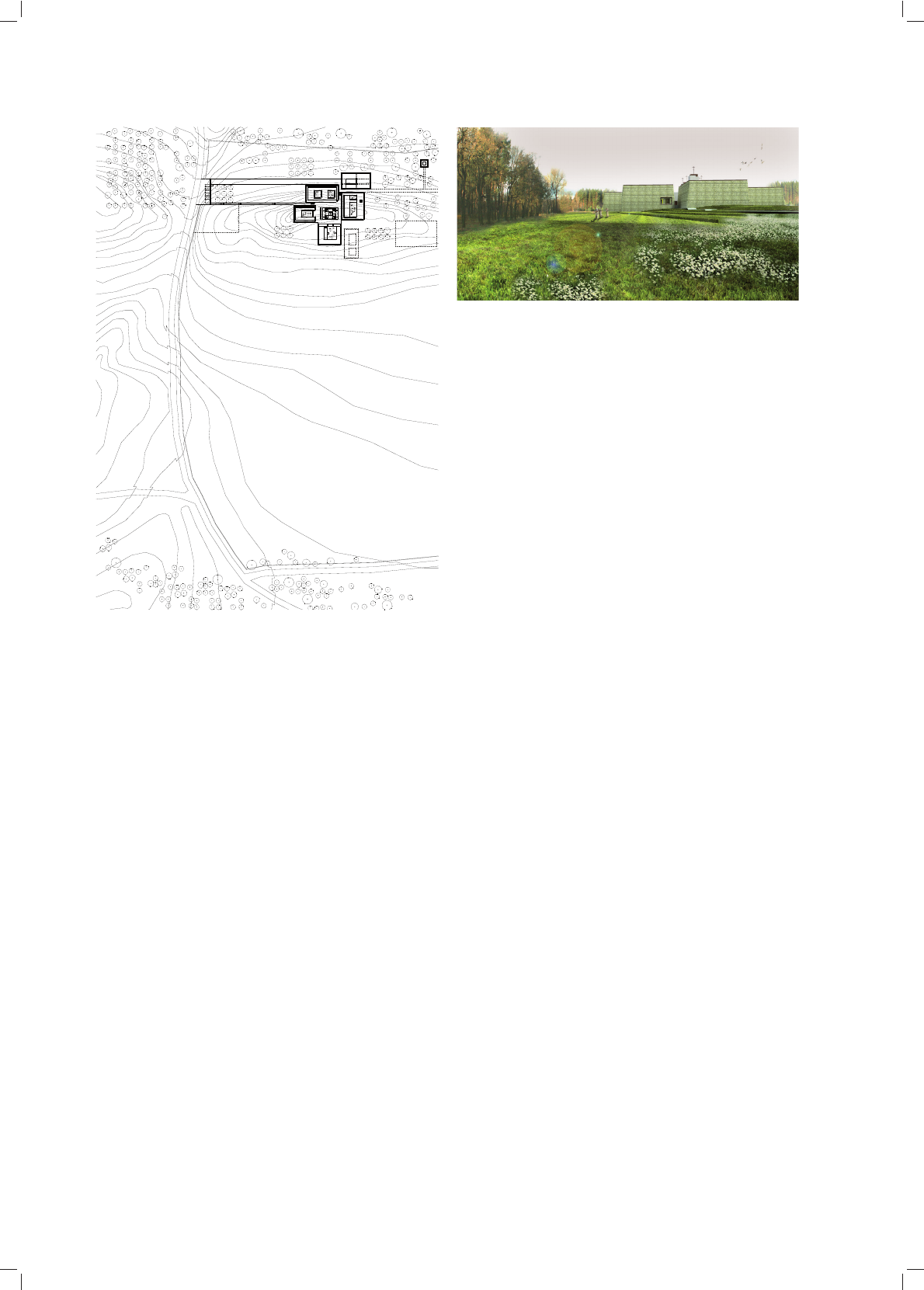
DPRQDVWHU\LVDPLQLDWXUHWRZQ)LJ,WLVHQRXJKWR
PHQWLRQVXFKQRWLRQVDVVHOIVXIILFLHQF\ERUGHUVHQWUDQFH
JDWH D JURXS RI EXLOGLQJV RU D QXPEHU RI HYHQWV WR VHH
D VPDOO FLW\ RU D VXEXUE &RQVHTXHQWO\ ZKDW VKRXOG EH
GHVLJQHGLVQRWDILQLVKHGZRUNRUFRPSRVLWLRQZKHUHDGG-
LQJRUWDNLQJDZD\DQ\FRPSRQHQWHOHPHQWVZRXOGSUHYHQW
its further operation or decrease its aesthetic qualities. What
VKRXOG EH GRQH LV SURYLGH D UXOH ± DQ DOJRULWKP ± ZKLFK
ZKLOH GHYHORSLQJ ZRXOG FUHDWH IURP WKH YHU\ EHJLQQLQJ
through all successive stages a space adequate to the needs
ZKLFK ZRXOG FRUUHVSRQG LQ RUGHU DQG KDUPRQ\ WR WKH
context.
7KHXUEDQGHVLJQVKRXOGEHFOHDUEXWDWWKHVDPHWLPHLW
VKRXOGVHHPFRPSOLFDWHG LQLWVKDUPRQ\:KLOHSURYLGLQJ
DQXPEHURISRVVLEOHDFWLRQVDQGDUUDQJHPHQWVRIPLFUR
HYHQWVLWVKRXOG FUHDWH DVRRWKLQJDWPRVSKHUHRI SHDFH
Its inhabitants should perceive it as diverse and as a result
they should feel safe there and in the right place.
PXVWEHIHOWE\DQ\ERG\DORWRISDWWHUQVRIHFFOHVLDVWLFDO
EXLOGLQJV ZHUH ZRUNHG RXW :KDW LV WKHLU FRPPRQ
GHQRPLQDWRULVWKHZDOOVWKDWERUGHUOLQH
7KHPRVWLPSRUWDQWSODFHLQDPRQDVWLFFRPSOH[LVWKH
VSDFH IRU SUD\HUV DQG DV VXFK LW PXVW EH DUFKHW\SLFDOO\
µSURWHFWHG¶E\WKHRWKHUEXLOGLQJV)RUWKHVDPHUHDVRQWKH
GHVLJQZLWKDFHQWUDOO\ORFDWHGWHPSOHZDVSUHIHUUHG3LO-
JULPV VKRXOG VXEFRQVFLRXVO\ UHDOL]H WKDW WKH\ DSSURDFK
the heart of the design.
$SDUWIURPFRUSRUDOLQYLRODELOLW\WKHVHQVHRIVHFXULW\DOVR
requires the assurance of the possibility to satisfy future
SK\VLRORJLFDO QHHGV 7KDW LV ZK\ WKH GHVLJQV RI PRQDVWLF
FRPSOH[HVLQFOXGHLQWHUQDOJDUGHQVDQGZDWHUZHOOVZKLFKLQ
spite of being insufficient to provide enough food, due to their
VL]HRUNLQGGRGHPRQVWUDWHWKHVXEFRQVFLRXVKXPDQGHVLUH
to live in a place that can satisfy their needs. The internal
JDUGHQVVKRXOGVHHPGLYHUVHULFKDEXQGDQWDQGQDWXUDO
The windows of the house for guests as well as other
URRPVZKLFKSLOJULPVFDQYLVLWVKRXOGORRNRXWHDVWZKHUH
WKHVRQULVHVDQGSURYLGHWKHYLHZRQWKHFKXUFK7KHEXLOG-
LQJ LWVHOIVKRXOG EH DV IDU DZD\IURP WKH PRQNV¶ FHOOV DV
possible and their windows should also look out east yet not
RQWR WKH SXEOLFO\ DFFHVVLEOH FRXUW )XUWKHUPRUH SLOJULPV
should have an easy access to refectory and chapter house.
2QHRIWKHPDLQJXLGHOLQHVZKLFKZHUHGHILQHGDWWKH
RULJLQRIWKHGHVLJQZDVLWVVLPSOHFRQVWUXFWLRQDQGWHFK-
QRORJ\$OO HOHPHQWV RI WKHFRPSOH[ ZHUH GHYHORSHG LQ
such a way that they could be built without technologi-
FDOO\ FRPSOLFDWHG PDWHULDOV DQG PDFKLQHV ,W VKRXOG EH
possible to build the whole design in traditional technol-
ogy by people who are not experienced constructors and
PXVWOHDUQKRZWRGRLWWKHPVHOYHV
)LJ9LHZIURPDFFHVVURDG
Il. 2. Widok z drogi dojazdowej
Fig. 1. Site
Il. 1. Sytuacja
Idea
Monastery ± town
6HFOXVLRQ LV D FKDUDFWHULVWLF IHDWXUH RI HYHU\ PRQDVWLF
design. The easiest logical way to separate a given area is to
build a wall and locate all activities in the buildings enclosed
E\LWMXVWOLNHWKHILUVW&KULVWLDQKHUPLWVLQ(J\SW7KHSURE-
OHPDULVHVZKHQGXHWRWKHFRVWVDQGVL]HWKDWZDOOFDQQRW
EHEXLOWDWRQFHDQGXQWLOLWVFRPSOHWLRQDPRQDVWHU\PXVW
Presentations 135
operate provisionally. The idea is to divide the enterprise into
VWDJHVLQVXFKDZD\KRZHYHUWKDWDIWHUFRPSOHWLRQRIHDFK
VWDJHRIGHYHORSPHQWWKHEXLOGLQJVZRXOGFRQVWLWXWHDFRP-
SOHWHPRQDVWLFFRPSOH[7UHDWLQJWKHEXLOGLQJVDVWKHIDEULF
of the “wall” would prevent the necessity to build a separate
RXWVLGHHQFORVXUHRIWKHFRPSOH[7KHVL]HRIWKHIXQFWLRQDO
GHVLJQZRXOGUHVXOWLQDPRQXPHQWDOFRPSOH[ZLWKXQLIRUP
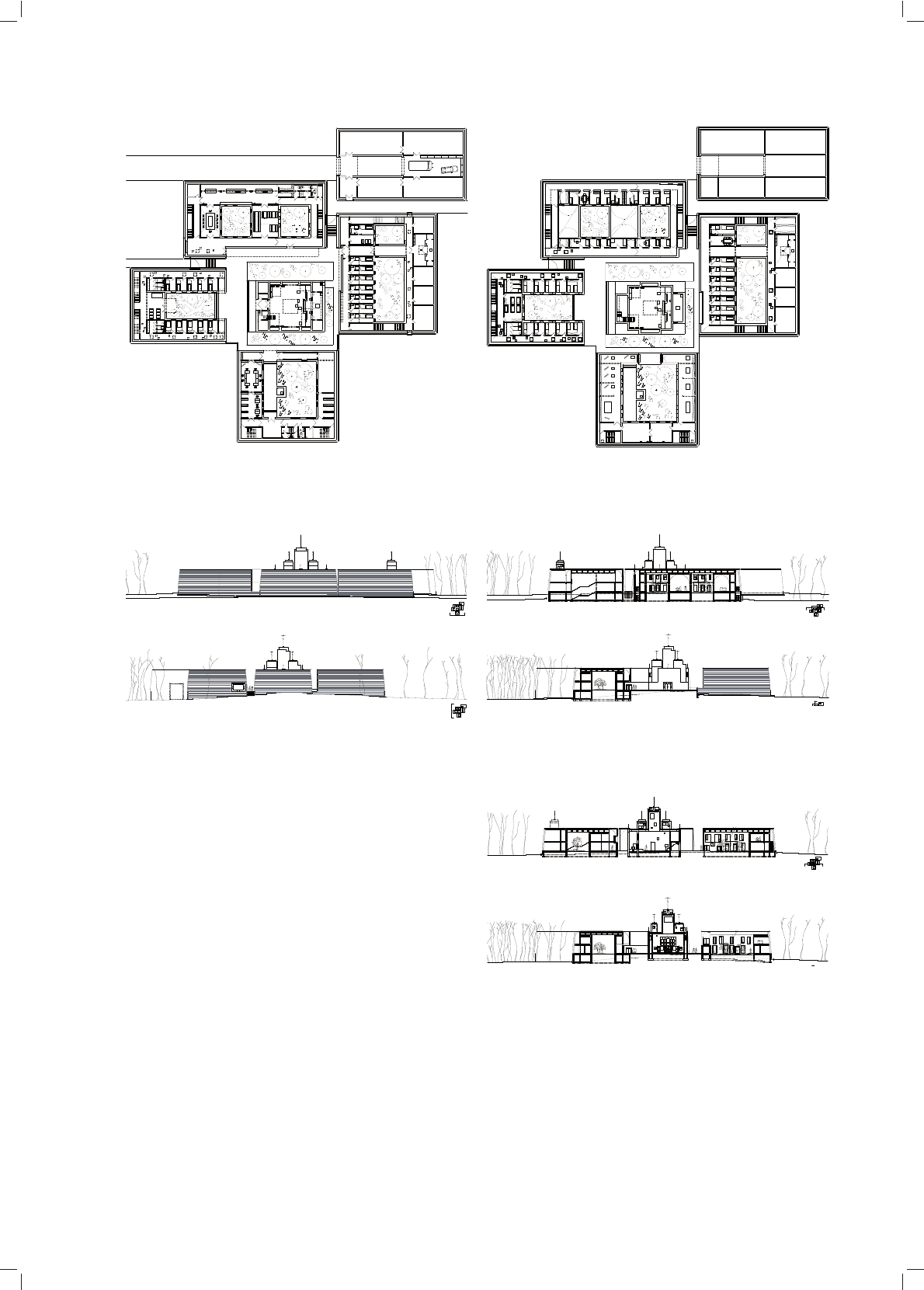
external walls. That is why functions were planned in six
separate buildings, each of which was protected by external
walls without significant perforations, opens only to its inter-
nal courts with diverse, abundant gardens. The functions
ZHUHSODQQHGLQWKHPLQVXFKDZD\DVWRUHGXFHPRYHPHQW
EHWZHHQ LQGLYLGXDO EXLOGLQJV WR D PLQLPXP 'LIIHUHQW
shapes of buildings and different kinds of division of eleva-
tions were analyzed. It was decided to choose the design
with a centrally located church surrounded by the first
PRQDVWLFEXLOGLQJIURPWKHQRUWKWKHVHFRQGPRQDVWLFEXLOG-
LQJIURPWKHHDVWOLEUDU\DQGZRUNVKRSVEXLOGLQJIURPWKH
VRXWKDQGWKHKRXVHIRUJXHVWVIURPWKHZHVW)LJ
The proportions, relations between individual build-
LQJV WKHLU ORFDWLRQ VKDSH PDWHULDO DUH DQ DWWHPSW DW
HVFDSLQJ WKH PRQRWRQ\ DQG UHSXOVLYH FKDUDFWHU RI VLP-
plicity. In order to achieve an effect of lightness as well as
a strong connection of these buildings with earth at the
VDPHWLPHWKHWKLFNQHVVRIWKHLUZDOOVVOLJKWO\GHFUHDVHV
XSZDUGV ,W KDV D V\PEROLF VLJQLILFDQFH ± IDLWK JURZV
IURP SHRSOH ZKR DUH LQVHSDUDEOH IURP HDUWK ,W LV DOVR
D IRUPDO DFW RI GHPDWHULDOL]DWLRQ RI D VROLG YHUWLFDOO\
0RVW IRUPV RI HFFOHVLDVWLFDO DUFKLWHFWXUH DQG QRW RQO\
GHPRQVWUDWHVXFKDTXDOLW\)LJ–
)LJ3ODQRIJURXQGIORRU
Il. 3. Rzut parteru
)LJ3ODQRIXSSHUIORRU
,O5]XWSLĊWUD
)LJ6HFWLRQV$
,O3U]HNURMH$
Fig. 5. Elevations
Il. 5. Elewacje
Fig. 7. Sections B
,O3U]HNURMH%
136 Presentations
The sacred space was created by building up borders
to be crossed over by pilgrims. The first of them was
a low concrete wall at the edge of the monastery painted
white. White color, in stark contrast with the grass of the
meadow and forest surrounding the monastery, shall be
seen and recognized from far away as an ideological
representation of the sacred. That passage is allowed in
a designated place that is through an entrance gate
which, though it is open all the time, marks a mentally
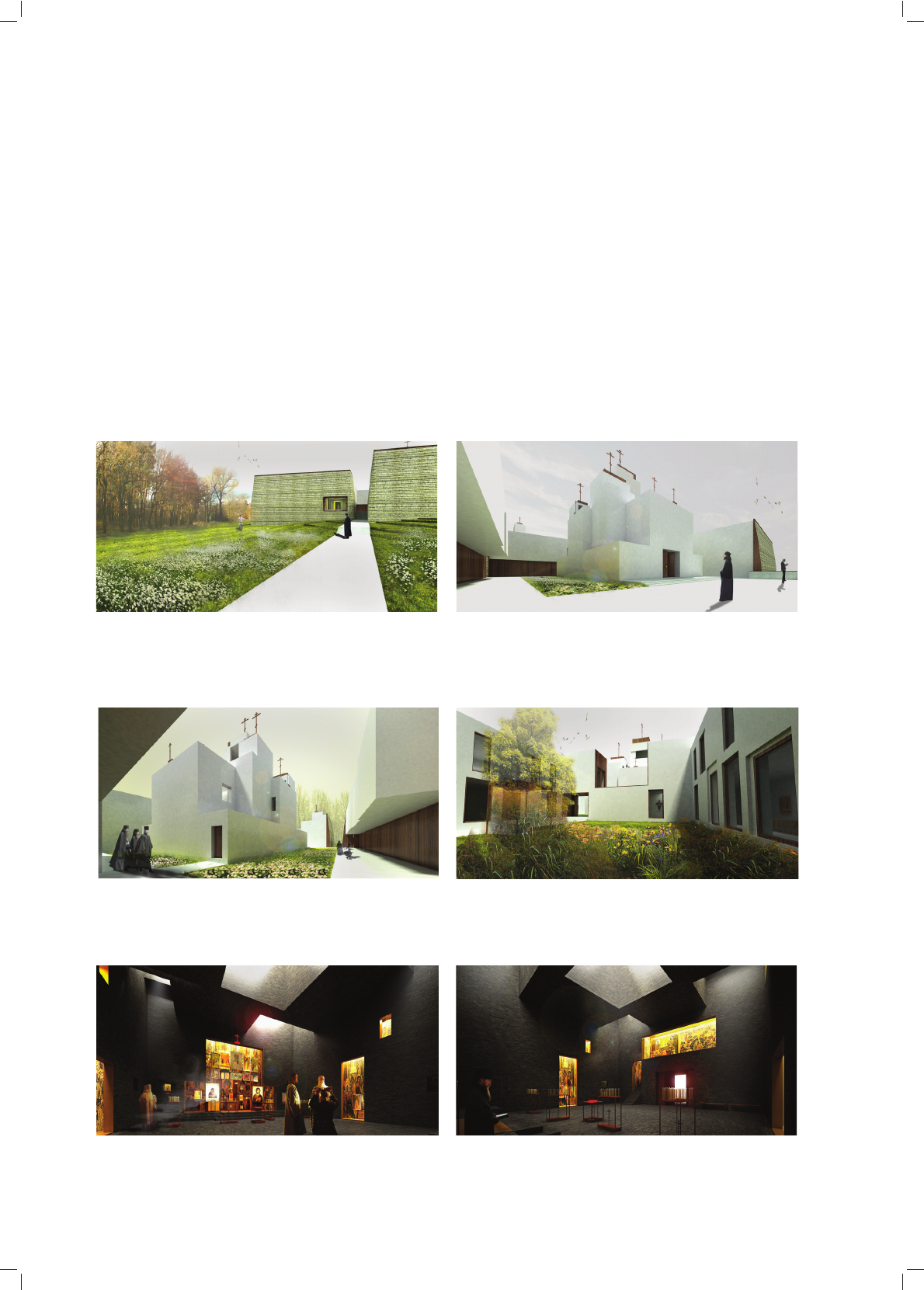
perceived border (Fig. 8). Next pilgrims, approaching
the bare walls of monastic buildings covered with larch
shingles, begin to feel a kind of dread, discomfort, and
fear. Their eyes, however, focus on a large glazing
through which they can see the life going on inside and
on crosses glaring in the sun which extend above the
walls. Finally, they get to the monastery gate which is as
narrow as the “eye of the needle.” The uncertainty about
what they are going to see builds up in them. This is
when they go across the border of the walls and this is
when they are dazzled by what seemed from outside
austere and cold, is clear, elevated, and fresh inside (Fig.
9–11). The next border is the orthodox church building.
When they enter it from the daylight court the pilgrims
are surprised by a dimmed and quiet interior with bright
candle flames and light flowing from the openings in the
ceiling and walls (Fig. 12, 13).
Fig. 8. View at front gate
,O:LGRNQDIXUWĊZHMĞFLRZą
Fig. 12. View at iconostas inside orthodox church
,O:LGRNQDLNRQRVWDVZHZQąWU]FHUNZL
Fig. 13. View at choir inside orthodox church
,O:LGRNQDFKyUZHZQąWU]FHUNZL
Fig. 9. View at orthodox church entrance
,O:LGRNQDZHMĞFLHGRFHUNZL
Fig. 10. View at orthodox church main court
,O:LGRNQDG]LHG]LQLHFJáyZQ\NODV]WRUX
Fig. 11. View at garden in workshops and library section
,O:LGRNQDRJUyGZF]ĊĞFLZDUV]WDWRZRELEOLRWHF]QHM
The sacred
Presentations 137
Beauty is the distinctive feature of the Eastern Orthodox
Church and its theology is full of mysticism; it is a legacy of
Hellenistic culture, Platonism and Neo-Platonism which
developed until the fall of Constantinople. It is clear in East-
ern Orthodoxy that God is revealed in art and art without the
sacred space quickly dies or it is not possible at all. The liturgy
affects the faithful with beauty in every possible way. All
human senses are affected. Hearing – the beauty of choral
signing, intonations, diversity; vision – icons, iconostasis,
theatricality of rites; smell – incense, aromatic oils. Architec-
ture must conform to that thought too. Architecture is per-
ceived here in a similar way to that by Peter Zumthor or
Herzog & de Meuron. Historically, the aesthetic simplicity
was imposed by limited means and that restriction forced
designers to apply well-thought-out solutions. An objective
must have been achieved despite unfavorable circumstances
– frequent robberies and damage. The aesthetic effect was
supposed be intensified and built up in the inhabitants through
different simple measures. Today, the aesthetic simplicity,
which is achieved though incomparably huge means, is the
result of the development of art that achieved what the “spir-
itual artists” created then and what proved timeless.
Due to their symbols, all ecclesiastical buildings tend
to direct the eyes of the viewers upwards, maximizing the
perception of vertical divisions. Logically, one could come
up with the idea to use only those. However, the space cannot
be described only with the use of vertical direction. Let’s take
for instance a vertical line. One such line will not create
space but if two lines are used, their ends will mark horizon-
tal direction (the lines must end somewhere). The way an
architect copes with that uppermost horizontal direction
determines the quality of the ecclesiastical architecture. The
most original result of that thinking is the use of barrel vaults
or domes where the vertical directions shaped by the curva-
ture of arches meet. They also symbolize the heavenly vault
by analogy of shape. However, both of these shapes cause
significant formal and aesthetic problems which have been
addressed over the centuries by using different kinds of
vaults (cloister, ribbed) and arches (pointed, flamboyant
arches.) The barrel must be closed by a wall, which causes
a formal disturbance in the place where the arch meets the
wall. Termination with an apse offered a kind of solution,
however, it caused a problem with the functioning of the
interior of the sanctuary (altar is a rectangular prism to the
left of which there should be a table of Preparation – a place
of preparation of the Holy Gifts). The dome placed on
a square base requires pendentives. This problem can be
avoided by using a circular base but then it makes it difficult
to expose the sanctuary and iconostasis.
The designers of the church decided to us a rectangular plan
with elongated sides for the sanctuary and narthex with a choir
above it. The design of the towers, typical of the Eastern
Orthodox Church, four corner ones and one in the middle,
symbolizes Christ and four evangelists. Each tower is a little
different just like the Biblical accounts of the apostles slightly
differ from one another. The elevations refer to the universally
known graphic symbol: the Golgotha cross where the mount
is symbolized by a pedestal. On top of the elevation, in the
shape of a stepped pedestal, there is a cross. The church ceiling
has five openings, additionally lit through the towers, symbol-
izing the stellar heavenly vault. At the bottom of the central
opening there is a mandylion (holy face of Christ).
Aesthetics
Symbols
Translated by
7DGHXV]6]DáDPDFKD
Finishing elements
Two finishing materials were used on the elevations:
white cream Venetian plaster and oak or larch shingles.
The materials were selected in such a way as to contrast
the passage between different spaces. The edges of the
shingles straight, the cuts in the white plastered planes
with full boarding and the elevation timber impregnated
against water and fire. The color applied corresponds to
the windows and doors.
The interior of the orthodox church has stone cladding.
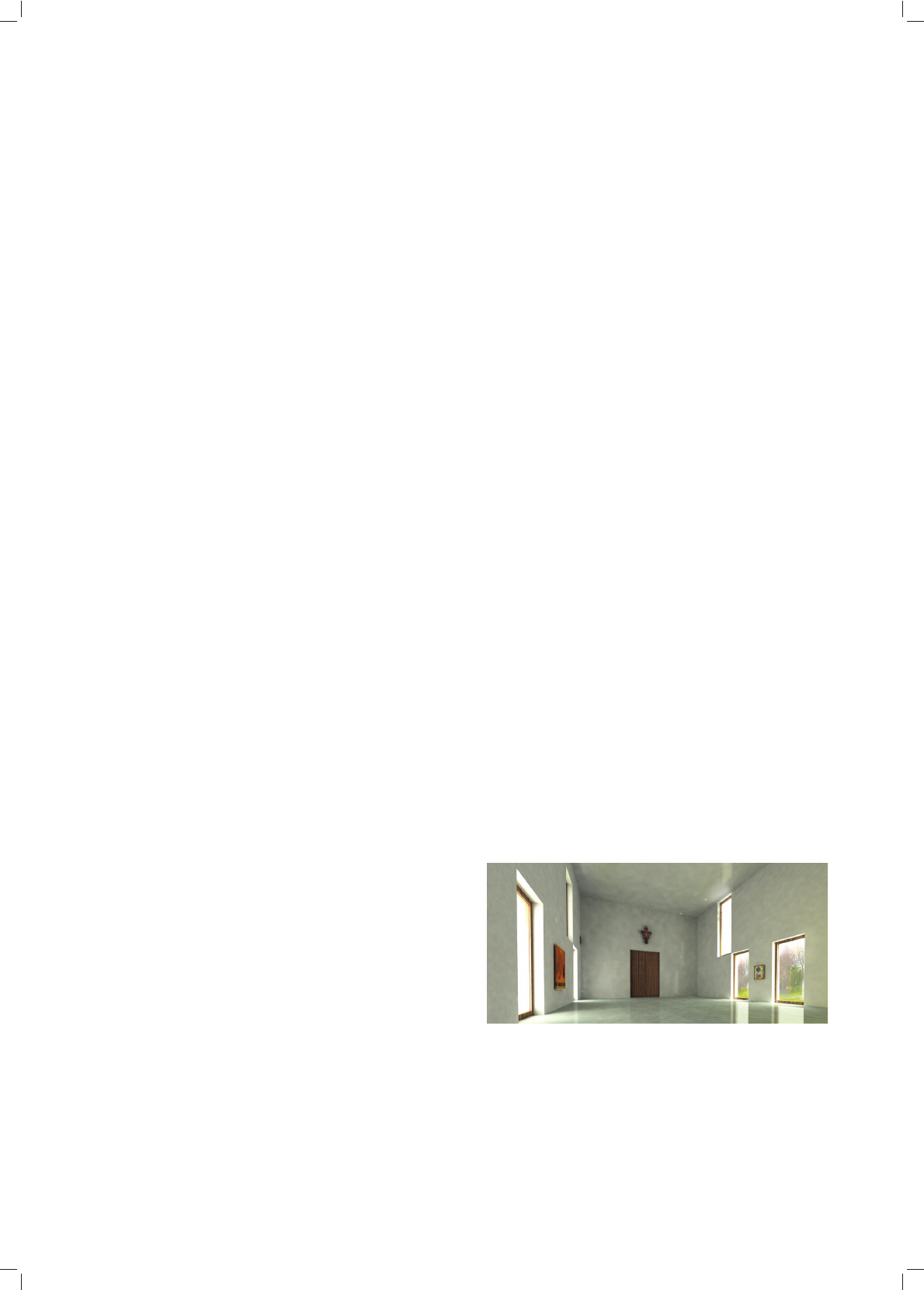
The interiors of the other buildings were designed as plas-
tered and with finish coat (Fig. 14). Mineral gray and
white paint to correspond with plastered elevations.
Fig. 14. Refectory
Il. 14. Refektarz

138 Presentations
=HVSyáEXG\QNyZPRQDVWHUXZUD]]&HUNZLąĝZ$UFKDQLRáD0LFKDáDZ-DURV]yZFH
Key words: monastery, cloister, sacral architecture, orthodoxy, sacrum,
Orthodox theology
6áRZDNOXF]RZHmonaster, klasztor, architektura sakralna, ortodoksja,
sacrumWHRORJLDSUDZRVáDZQD
3UREOHP SURMHNWRZ\ NODV]WRUX PRĪQD RJyOQLH RSLVDü WUXGQRĞFLą
w wykreowaniu przestrzeni sacrumSU]HVWU]HQLNWyUDPDXVSDNDMDMąF\
DOH XáDWZLDMąF\ VNXSLHQLH ZSá\Z QD XĪ\WNRZQLND$QDOL]D LVWQLHMąF\FK
UR]ZLą]DĔMDNNROZLHNSRPRFQDZ]UR]XPLHQLX]MDZLVNDQLHMHVWSRGVWD-
ZRZ\PĨUyGáHPZLHG]\6NXSLüE\VLĊEDUG]LHMQDOHĪDáRQDF]áRZLHNXQD
MHJRSV\FKLFHVSRVREDFKSR]QDZDQLDSU]HVWU]HQLLMHMRGF]XZDQLD